
Chisato · · 4 min read What Is a Northbridge and Southbridge? The Chipset
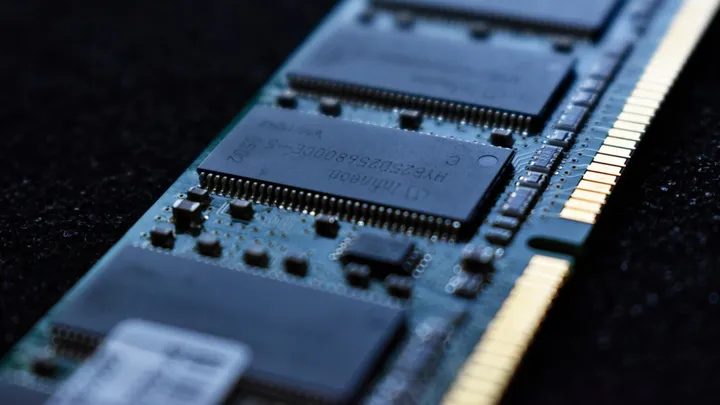
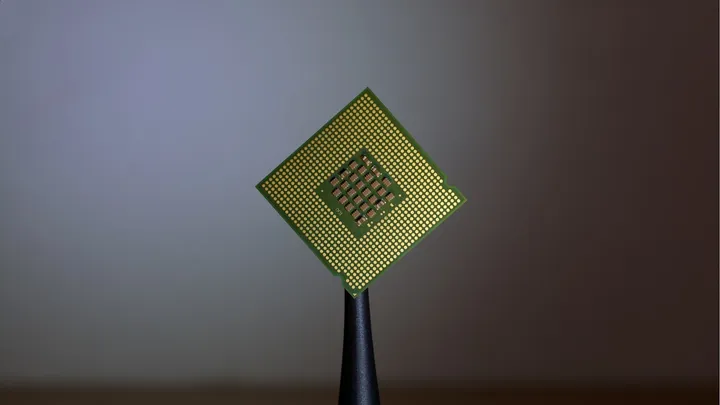
The northbridge and southbridge were the two chips that routed data between a CPU, memory, and peripherals before modern SoCs absorbed their jobs.
Topic
75 posts tagged “Computer Science”.
Chisato · · 4 min read The northbridge and southbridge were the two chips that routed data between a CPU, memory, and peripherals before modern SoCs absorbed their jobs.
The Lycoris Team · · 4 min read The producer-consumer problem is a classic concurrency pattern: coordinating producers and consumers around a shared, bounded buffer safely.
Chisato · · 4 min read Virtual memory gives every process its own private address space, mapped to physical RAM by the OS and CPU — enabling isolation, swapping, and overcommit.
The Lycoris Team · · 4 min read Regular expressions are matched by finite automata or backtracking engines. How regex engines parse patterns, and why some patterns run slowly.
The Lycoris Team · · 4 min read P is problems solvable quickly; NP is problems whose solutions are quickly checkable. Whether P equals NP is one of computing's open questions.
The Lycoris Team · · 5 min read Little's Law relates the number of requests in a system, their arrival rate, and how long each one takes — a simple formula for sizing capacity.
The Lycoris Team · · 5 min read LRU evicts whatever hasn't been used in the longest time; LFU evicts whatever has been used the fewest times. How each policy behaves and when to pick it.
Chisato · · 5 min read Simultaneous multithreading lets one physical CPU core run two instruction streams at once, filling idle execution units to raise throughput.
Chisato · · 4 min read A TLB is a small CPU cache that stores recent virtual-to-physical address translations, avoiding a slow page-table walk on every memory access.
The Lycoris Team · · 4 min read The Knuth-Morris-Pratt algorithm finds a pattern inside a text in linear time by never re-examining characters it has already matched.
Chisato · · 5 min read Cache coherence keeps each CPU core's private cache consistent with the others. The MESI protocol is the classic mechanism that makes it work.
The Lycoris Team · · 5 min read A ring buffer is a fixed-size array that wraps its read and write pointers around, giving O(1) enqueue and dequeue without ever resizing.
The Lycoris Team · · 5 min read A Fenwick tree, or binary indexed tree, answers prefix-sum queries and point updates in O(log n) with far less memory than a segment tree.
Chisato · · 5 min read Memory interleaving spreads consecutive addresses across multiple memory banks so the system can access them in parallel instead of one at a time.
The Lycoris Team · · 4 min read Dependency injection passes an object's dependencies in from outside rather than letting it construct them, making code easier to test and swap.
Chisato · · 5 min read Endianness decides whether a multi-byte number's most or least significant byte is stored first in memory. Why it matters and how to spot it.
Chisato · · 4 min read Speculative execution lets a CPU guess ahead and run instructions before it knows they're needed, buying speed at the cost of the timing side channels behind Spectre and Meltdown.
The Lycoris Team · · 4 min read A monad is a wrapper type with rules for chaining operations that might fail, be async, or carry extra context — like Promise or Optional, generalized.
The Lycoris Team · · 5 min read Raft is a consensus algorithm that lets a cluster of servers agree on a shared state even when some nodes fail. How leader election and log replication work.
The Lycoris Team · · 4 min read Bit manipulation uses operators like AND, OR, XOR, and shifts to work directly on binary representations — the basics behind flags, masks, and fast math.
The Lycoris Team · · 4 min read Amortized analysis measures the average cost of an operation over a sequence of calls, not its worst case. How dynamic array resizing gets O(1) amortized inserts.
Chisato · · 4 min read SIMD lets a CPU apply one instruction to multiple data points at once. How vectorization works, why compilers auto-vectorize loops, and its limits.
Chisato · · 4 min read DMA lets peripherals move data to and from memory without the CPU copying every byte, freeing the processor to do other work during transfers.
The Lycoris Team · · 4 min read When two keys hash to the same slot, a hash table needs a collision strategy. Chaining and open addressing solve it differently — here's the tradeoff.
Chisato · · 4 min read Branch prediction guesses which way an if-statement will go before the CPU knows, and out-of-order execution reorders instructions to keep pipelines full.
The Lycoris Team · · 5 min read A segment tree answers range queries — sum, min, max — over an array in logarithmic time, and supports updates without rebuilding the whole structure.
Chisato · · 4 min read Thermal throttling automatically reduces a chip's clock speed when it gets too hot, trading performance for safety. How it works and how to spot it.
The Lycoris Team · · 4 min read MVCC lets readers and writers work on a database concurrently without blocking each other, by keeping multiple versions of each row instead of locking it.
Chisato · · 4 min read A buffer overflow happens when a program writes past the end of a fixed-size memory buffer, corrupting adjacent data. How it works and how modern systems defend against it.
The Lycoris Team · · 4 min read Backtracking solves problems by building candidate solutions incrementally and abandoning any path that can't lead to a valid answer. How it works, with examples.
The Lycoris Team · · 4 min read The saga pattern coordinates a multi-step transaction across services using local commits and compensating actions instead of a distributed lock.
Chisato · · 4 min read TDP is the amount of heat a cooling system must dissipate for a chip, not a hard limit on its power draw. Why TDP and actual power draw often diverge.
The Lycoris Team · · 5 min read Union-find tracks a collection of disjoint sets and answers 'are these two items connected?' in near-constant time. How it works and where it's used.
Chisato · · 4 min read UEFI is the firmware that initializes hardware and boots the OS on modern computers, replacing BIOS with faster boot times, larger disk support, and Secure Boot.
The Lycoris Team · · 4 min read Topological sort orders the nodes of a directed acyclic graph so every dependency comes before what depends on it. How it works and where it's used.
The Lycoris Team · · 5 min read Two pointers walk a sorted array or string from both ends (or in tandem) to solve problems in one linear pass instead of nested loops.
The Lycoris Team · · 4 min read An LSM tree batches writes in memory and flushes them as sorted files on disk, trading read complexity for the fast, sequential writes many databases rely on.
The Lycoris Team · · 5 min read Two-phase commit coordinates a transaction across multiple databases with a prepare phase and a commit phase, trading availability for strong consistency.
The Lycoris Team · · 4 min read The sliding window technique tracks a moving subrange of an array or string, turning many O(n²) brute-force problems into a single O(n) linear pass.
The Lycoris Team · · 6 min read Dijkstra's algorithm finds shortest paths by exploring uniformly outward; A* reaches the same answer faster by using a heuristic to aim at the goal.
Chisato · · 4 min read A CRDT is a data structure that merges concurrent edits from multiple replicas automatically, without coordination or conflicts, using math instead of locks.
Chisato · · 4 min read NUMA gives each CPU its own local memory bank, so access speed depends on which processor is asking. How NUMA nodes and remote access latency work.
The Lycoris Team · · 4 min read A Merkle tree hashes data in pairs up to a single root hash, letting huge datasets be verified for integrity without downloading all of them.
Chisato · · 4 min read PCIe (PCI Express) is the high-speed serial bus connecting GPUs, SSDs, and network cards to a CPU. How lanes, generations, and bandwidth work.
The Lycoris Team · · 4 min read A skip list is a layered linked list with shortcut pointers giving O(log n) search, insert, and delete — a simpler alternative to balanced trees.
Chisato · · 4 min read SSDs store data in flash memory chips with no moving parts; HDDs use spinning magnetic platters. How that difference plays out in speed, cost, and durability.
The Lycoris Team · · 5 min read Greedy algorithms commit to the locally best choice at each step; dynamic programming weighs every subproblem. When each one actually works.
Chisato · · 4 min read Bandwidth measures how much data memory moves per second; latency measures how long one access takes. Why chips need both, not just one.
Chisato · · 4 min read Eventual consistency guarantees that replicas converge over time, not instantly. How it differs from strong consistency and when it's acceptable.
The Lycoris Team · · 4 min read Red-black and AVL trees both keep binary search trees balanced, but trade off rebalancing cost against lookup speed differently. How each works.
The Lycoris Team · · 4 min read A quantum computer uses qubits in superposition and entanglement to explore many possible states at once, rather than one bit value at a time.
Chisato · · 4 min read ECC memory detects and corrects single-bit errors in RAM automatically, using extra parity bits — critical for servers where silent corruption is costly.
Chisato · · 4 min read DDR and GDDR are both DRAM, but optimized for opposite goals: DDR minimizes latency for CPUs, GDDR maximizes bandwidth for GPUs. Here's how they diverge.
The Lycoris Team · · 4 min read A finite state machine models a system as a fixed set of states and the transitions between them. How FSMs work and where they show up in real software.
The Lycoris Team · · 4 min read An LRU cache evicts the least recently used item first when it runs out of room, keeping the most useful data in memory. Here's how it's built.
The Lycoris Team · · 4 min read Recursion solves a problem by calling itself on smaller inputs; iteration solves it with a loop. Same results, different trade-offs in memory and clarity.
The Lycoris Team · · 4 min read A B-tree is a self-balancing tree that keeps data sorted with logarithmic search, insert, and delete time — the structure behind most database indexes.
The Lycoris Team · · 5 min read Quicksort and mergesort are the two classic O(n log n) sorting algorithms — how they differ in memory use, stability, and worst-case behavior.
The Lycoris Team · · 4 min read Consistent hashing maps keys and nodes onto the same ring so adding or removing a server only reshuffles a small fraction of keys, not all of them.
The Lycoris Team · · 5 min read Graphs model networks of connected nodes; BFS and DFS are the two core ways to traverse them. How each works, and which to reach for.
The Lycoris Team · · 4 min read Stacks remove the most recent item first (LIFO); queues remove the oldest first (FIFO). How each works, their operations, and where they show up.
The Lycoris Team · · 4 min read A trie stores strings by sharing common prefixes across tree branches, making prefix lookups and autocomplete fast. How it compares to hash tables and BSTs.
Chisato · · 4 min read SRAM is fast, expensive, six-transistor memory used for CPU caches; DRAM is slower, cheaper, one-transistor memory used for main system memory.
The Lycoris Team · · 4 min read A heap is a tree-based structure that keeps the smallest or largest element at the root, enabling priority queues and heap sort in logarithmic time.
Chisato · · 5 min read L1, L2, and L3 CPU caches sit between the processor and main memory, trading capacity for speed at each level. How the hierarchy actually works.
The Lycoris Team · · 5 min read A Bloom filter is a compact data structure that tests whether an item might be in a set, using far less memory than storing the set itself.
The Lycoris Team · · 4 min read Memoization caches a function's return value by its input, skipping recomputation on repeat calls. How it works and when it actually helps.
The Lycoris Team · · 4 min read A linked list stores elements as nodes linked by pointers rather than contiguous memory, trading fast random access for cheap insertion and removal.
The Lycoris Team · · 4 min read Dynamic programming solves complex problems by breaking them into overlapping subproblems and caching results, avoiding redundant recomputation.
Chisato · · 4 min read CAP theorem says a distributed system can't guarantee consistency, availability, and partition tolerance all at once. What the trade-off means in practice.
Chisato · · 4 min read A race condition occurs when a program's correctness depends on the unpredictable timing of concurrent operations. Why they happen and how to prevent them.
Chisato · · 4 min read Moore's Law is the observation that transistor density on a chip roughly doubles every couple of years. Why it drove decades of gains, and why it's slowing.
The Lycoris Team · · 4 min read A binary search tree keeps every left descendant smaller and every right descendant larger than its parent. How lookups, inserts, and balance work.
The Lycoris Team · · 4 min read A hash table maps keys to array slots with a hash function for near O(1) lookups. How hashing, collisions, and resizing actually work under the hood.
The Lycoris Team · · 5 min read Big O notation describes how an algorithm's time or memory grows as input grows. The common classes, what they mean, and how to reason about them.