What Is Thermal Design Power (TDP)?
TDP is the amount of heat a cooling system must dissipate for a chip, not a hard limit on its power draw. Why TDP and actual power draw often diverge.
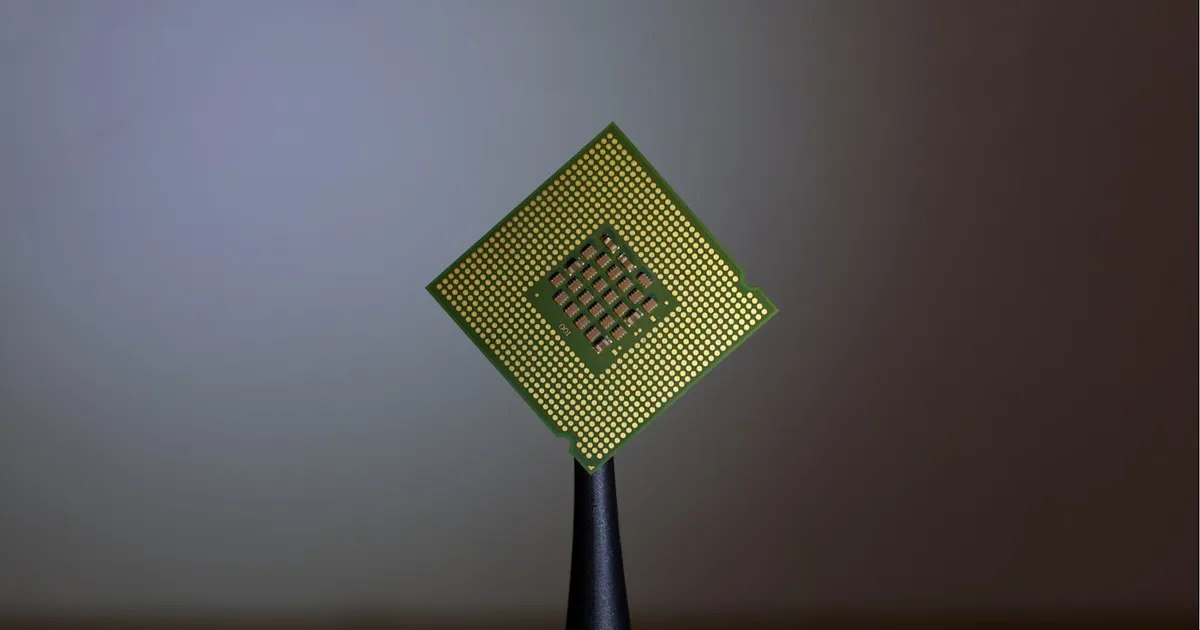
Thermal design power, or TDP, is a manufacturer’s rating of how much heat a chip’s cooling solution needs to be able to dissipate under sustained, typical workloads — measured in watts. It’s a specification aimed at system builders and cooler manufacturers, telling them what capacity of heatsink, fan, or liquid cooler to design around. What it is not is a hard ceiling on how much power the chip will ever actually draw, which is the single most common misunderstanding about the number.
What TDP actually measures
TDP represents a sustained thermal design target, not a peak power draw or an average power draw across all possible workloads. A chip rated at a given TDP is expected to stay within a cooling system built for that number during normal sustained operation — but “normal sustained operation” is doing a lot of work in that sentence. Short bursts of higher power draw during demanding tasks are common and expected; modern CPUs and GPUs regularly exceed their rated TDP for brief periods as part of normal boost behavior, then settle back down once thermal or power limits are reached.
This is why TDP is best understood as a cooling-system sizing spec rather than a power-consumption spec. Two chips with identical TDP ratings can have meaningfully different real-world power draw under load, because TDP methodology varies between manufacturers and even between chip generations from the same manufacturer.
Why actual power draw diverges from TDP
Modern processors dynamically adjust their clock speed and voltage based on workload, temperature, and available power headroom — a mechanism generally called boost or turbo behavior. When a chip has thermal and power headroom available (a well-cooled system, a workload that doesn’t sustain maximum load continuously, or both), it can temporarily run well above its baseline TDP-rated clock speed, drawing more power than the TDP number alone would suggest. Once temperatures or sustained power draw hit their limits, the chip throttles back down to stay within its designed operating envelope.
This is why some platforms expose multiple power figures instead of a single TDP number — a base or sustained power figure alongside a separate short-term boost power figure. The base figure is closer to what a cooling solution needs to handle indefinitely; the boost figure represents the ceiling the chip can briefly reach when conditions allow.
TDP and cooling system sizing
For someone building or specifying a system, TDP is the number to size a cooler against — but sizing exactly to the rated TDP with no margin tends to produce a system that throttles under any workload that pushes into boost behavior for more than a few seconds. Cooling solutions are generally chosen with headroom above the rated TDP specifically to accommodate boost behavior without immediately hitting thermal limits and clocking back down.
This matters more in dense environments — laptops, small-form-factor systems, and datacenter racks — where physical space constrains how much cooling capacity is actually available. A chip that would happily sustain boost clocks in a well-cooled desktop tower may spend most of its time throttled back to near its base TDP in a thinner chassis, simply because there’s nowhere for the extra heat to go. This is one reason the same chip model can perform noticeably differently across different physical systems, independent of anything the CPU cache or clock speed spec sheet would suggest.
TDP across chip types
TDP applies to CPUs, GPUs, and other processors alike, but the scale differs enormously by category and use case — a chip built for a battery-powered device is designed against a very different thermal budget than one built for a workstation or a datacenter accelerator. This is part of why comparing CPUs, GPUs, and TPUs purely on TDP doesn’t tell you much on its own: the number needs to be read alongside the workload the chip is built for, since a lower-TDP chip optimized for a narrow task can outperform a higher-TDP general-purpose chip on that specific task while drawing meaningfully less power.
Why TDP isn’t a reliable efficiency metric on its own
Because TDP methodologies differ across manufacturers and chip generations, comparing raw TDP numbers between two different chip families to judge efficiency is unreliable — a lower TDP rating doesn’t automatically mean lower real-world power draw or better performance-per-watt, especially once boost behavior and differing thermal headroom are accounted for. Meaningful efficiency comparisons need actual measured power draw under equivalent workloads, not just the rated TDP figure printed on a spec sheet. The same caution applies across chip categories more broadly — the semiconductor process node a chip is built on affects power efficiency independently of its TDP rating, and a smaller process node doesn’t automatically translate into a proportionally lower TDP.
The takeaway
TDP tells a system builder how much heat a cooling solution needs to dissipate under sustained operation — it’s a thermal design target, not a hard power ceiling. Chips routinely draw more than their rated TDP during boost behavior and less during idle or light workloads, which is why TDP alone is a poor stand-in for real-world power consumption or cross-chip efficiency comparisons. When sizing a cooling solution, build in headroom above the rated number rather than treating it as a strict maximum.
Keep reading
 Chisato · · 4 min read
 Thermal Interface Materials Explained
Thermal interface material fills microscopic gaps between a chip and its heatsink so heat can actually transfer to the cooler.
Chisato · · 4 min read Clock Speed vs. IPC: What Actually Makes a CPU Fast
Clock speed measures cycles per second; IPC measures work done per cycle. Real CPU performance is the product of both, not either one alone.
 Chisato · · 4 min read
 UMA vs NUMA: Memory Architecture Explained
UMA gives every CPU core equal-latency memory access; NUMA gives each core faster access to its local memory bank. How the two architectures differ.