Clock Gating vs Power Gating Explained
Clock gating and power gating both cut chip energy use by disabling idle circuit blocks, but one stops the clock while the other cuts power entirely.
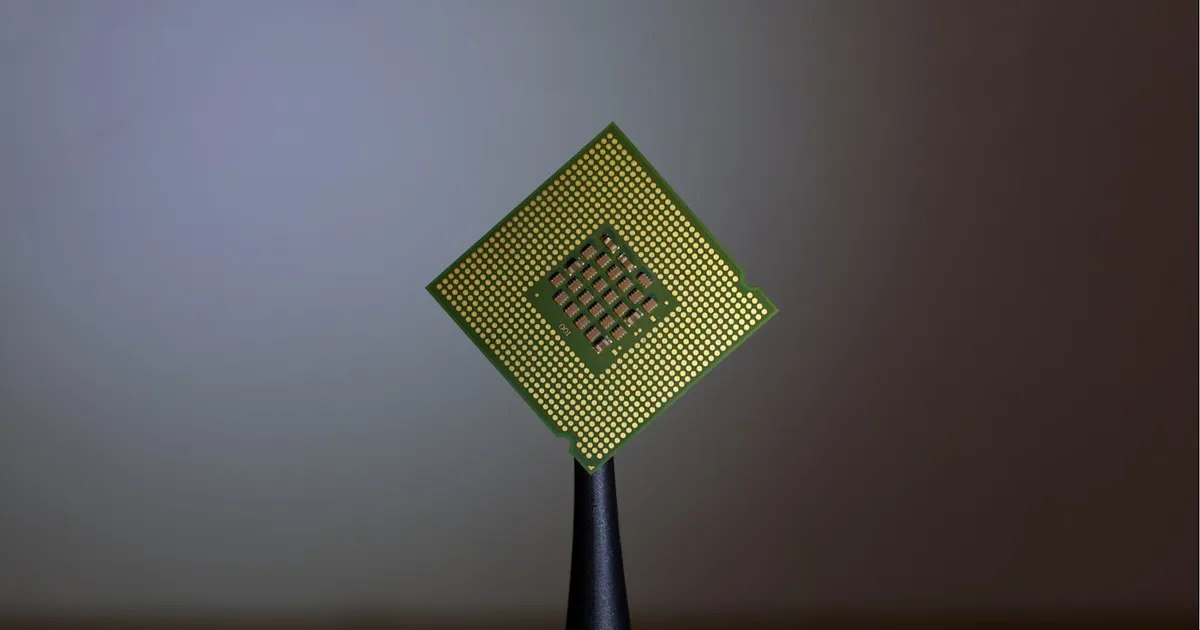
Clock gating and power gating are both techniques chip designers use to cut energy use by disabling parts of a circuit that aren’t currently doing useful work, but they act on different resources: clock gating stops a block’s clock signal so its transistors stop switching, while power gating cuts off its power supply entirely. The difference matters because they save different kinds of energy, at different costs, and are usually applied together rather than as a choice between one or the other.
Why idle circuitry still costs energy
A digital circuit built from CMOS transistors — the technology behind essentially every modern processor — burns power in two distinct ways. Dynamic power is consumed when transistors actually switch state, driven by the clock signal ticking through the circuit; more clock cycles doing work means more dynamic power. Static (leakage) power is consumed continuously just by transistors being powered on, whether they’re switching or not, because at very small process nodes, even an “off” transistor leaks a small but real amount of current.
This distinction is exactly why two different gating techniques exist: clock gating targets dynamic power, and power gating targets static leakage power. A block that’s idle but still receiving a clock signal isn’t doing useful work, but its transistors are still switching in response to that clock — wasting dynamic power. A block that’s idle and has had its clock stopped still leaks a small amount of static power just by being powered on at all.
How clock gating works
Clock gating inserts a simple logic gate — typically an AND gate combined with a latch to avoid glitches — into the clock signal’s path to a particular block, such as a functional unit inside a CPU core that isn’t needed for the instruction currently executing. When an enable signal indicates the block isn’t needed this cycle, the gate blocks the clock pulse from reaching it, and the block’s transistors simply stop switching for that cycle. No state is lost — registers keep whatever values they held — and the block can resume immediately on the next cycle the clock is re-enabled, with no delay for waking back up.
This makes clock gating cheap to apply liberally and fast to toggle: modern processors gate the clock to unused execution units on a near cycle-by-cycle basis, since there’s essentially no overhead to turning it back on. The tradeoff is that it only addresses dynamic power — a clock-gated block is still fully powered and still leaking static current, just not switching.
How power gating works
Power gating goes further: it inserts a switch — usually a large transistor called a “sleep transistor” or “header/footer switch” — between a block and its power supply rail, and cuts the actual power delivery to that block when it’s not needed. With no power flowing at all, both dynamic and static leakage power drop to essentially zero for that block.
The cost is that cutting power also erases any state the block was holding, since registers and latches need continuous power to retain their values. Re-enabling a power-gated block means re-powering it, waiting for voltage to stabilize, and often reloading whatever state it needs — a process that takes measurably longer than re-enabling a clock-gated block, sometimes thousands of clock cycles. Power gating also requires more design effort: isolation cells to prevent floating, undefined signals from a powered-off block from corrupting logic elsewhere, and retention registers for any state that must survive the sleep period.
Side-by-side comparison
| Clock gating | Power gating | |
|---|---|---|
| Targets | Dynamic (switching) power | Static (leakage) power and dynamic power |
| State preserved when idle | Yes | No, unless retention registers are used |
| Wake-up latency | Near-instant | Slower — power and voltage must stabilize |
| Design complexity | Low | Higher — needs isolation cells, sleep transistors |
| Typical granularity | Fine-grained, per functional unit, per cycle | Coarser-grained, per larger block, over longer idle periods |
Why both are used together
Chip designers don’t choose one technique over the other for a whole design — they layer them, matched to how long a block is likely to stay idle. A functional unit that goes unused for a single cycle is a perfect candidate for clock gating: the overhead is negligible and the block needs to be ready instantly. A large block — an entire GPU shader cluster, a whole CPU core in a multi-core chip, or a peripheral controller — that might sit idle for milliseconds or longer is a better candidate for power gating, since the wake-up latency is amortized over a much longer idle period, and eliminating leakage power actually matters over that timescale.
This layered approach is a big part of why thermal design power and real-world power draw diverge so much from a chip’s theoretical peak: most workloads leave large parts of a modern chip idle at any given moment, and aggressive gating is what keeps that idle silicon from burning power — and generating heat that contributes to thermal throttling — for no benefit.
Where this shows up beyond CPUs
The same principles extend to any chip with distinct functional blocks that aren’t all needed simultaneously — a system-on-chip integrating a CPU, GPU, image processor, and radio, for instance, power-gates entire subsystems independently, since a phone actively using its camera doesn’t need its radio’s baseband processor running at full power, and vice versa. Multi-core chips with simultaneous multithreading also lean on both techniques at the individual-core level, gating cores or hardware threads that the scheduler currently has nothing to run on.
The takeaway
Clock gating and power gating both save energy by disabling idle circuitry, but they solve different problems: clock gating stops switching activity cheaply and instantly to cut dynamic power while preserving state, and power gating cuts power delivery entirely to eliminate leakage as well, at the cost of losing state and a slower wake-up. Real chip designs use both, applying clock gating at fine granularity for brief idle periods and power gating at coarser granularity for longer ones — matching each technique’s tradeoffs to how long a given block actually sits unused.
Keep reading
 Chisato · · 4 min read
 Thermal Interface Materials Explained
Thermal interface material fills microscopic gaps between a chip and its heatsink so heat can actually transfer to the cooler.
Chisato · · 4 min read Clock Speed vs. IPC: What Actually Makes a CPU Fast
Clock speed measures cycles per second; IPC measures work done per cycle. Real CPU performance is the product of both, not either one alone.
 Chisato · · 4 min read
 UMA vs NUMA: Memory Architecture Explained
UMA gives every CPU core equal-latency memory access; NUMA gives each core faster access to its local memory bank. How the two architectures differ.