SanDisk Q4 FY2026 Earnings: Revenue, Guidance, HBF
SanDisk's fiscal Q4 2026 revenue jumped 372% to $8.97B with 84.6% gross margin as datacenter NAND booms. Here are the numbers, guidance, and what to watch.
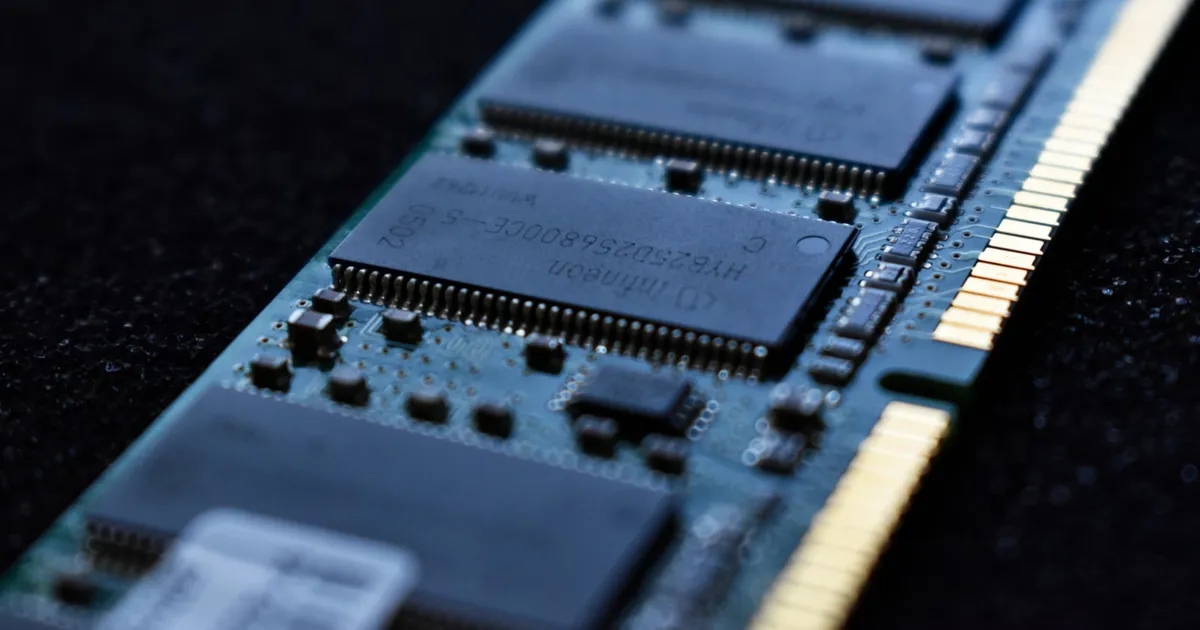
The memory boom just produced one of its most startling earnings reports yet. After the closing bell on Wednesday, August 5, 2026, SanDisk (Nasdaq: SNDK) reported fiscal fourth-quarter revenue of $8.965 billion, up 372% from a year earlier and ahead of Wall Street estimates, as surging demand for NAND flash in AI data centers lifted both volumes and — even more — prices. The company posted a gross margin of 84.6%, authorized an additional $14 billion in share buybacks, and guided current-quarter revenue to a midpoint of $10.55 billion, well above where analysts had modeled the business only months ago.
The results cap a remarkable turnaround for a company that spun out of Western Digital in early 2025 as a standalone flash-memory maker, and they hand investors fresh evidence that the AI memory supercycle has spread well beyond high-bandwidth memory into the broader NAND market.
The headline numbers
The scale of the beat was in the margins as much as the top line. SanDisk reported:
- Revenue of $8.965 billion, up 372% year over year and up sequentially, with roughly two-thirds of the sequential gain coming from higher pricing and about one-third from higher volume — a mix that shows how tight the flash market has become.
- Gross margin of 84.6%, an extraordinary figure for a NAND supplier in a business historically defined by brutal price cycles and thin margins.
- GAAP net income of $6.90 billion, or $43.97 per diluted share, with adjusted EPS of $39.25 — roughly 14% above consensus.
- A new $14 billion buyback authorization, lifting total remaining repurchase capacity to about $15.5 billion.
The engine was the data center. Datacenter revenue reached $2.98 billion in the quarter, more than doubling sequentially from $1.47 billion, and for the full fiscal year datacenter sales rocketed 437% to $5.15 billion. What was a rounding error in SanDisk’s mix two years ago is now its fastest-growing and most strategically important segment.
David Goeckeler, SanDisk’s chairman and chief executive, said the company “closed fiscal 2026 with a leading technology portfolio, established datacenter as a key growth pillar, and deepened our customer partnerships,” pointing to the enterprise SSD and high-capacity NAND products that AI operators are buying to feed inference clusters.
Why NAND prices are exploding
The dynamic behind the numbers is the same shortage reshaping the entire memory industry. AI accelerators need somewhere to store the enormous datasets, model weights, and key-value caches that training and inference generate, and that storage increasingly means high-capacity enterprise solid-state drives built from NAND flash. As hyperscalers pour capital into AI data centers, they are buying flash by the exabyte — and the small handful of NAND makers cannot expand fast enough to keep up.
That supply-demand imbalance has flipped the economics of a notoriously cyclical business. For most of the past decade, NAND was a commodity: prices fell steadily, margins were slim, and oversupply was a recurring hazard. In fiscal 2026, the script inverted. Demand ran ahead of a supply base that had underinvested during the prior downturn, and pricing power shifted decisively to the sellers — which is why a two-thirds-price, one-third-volume revenue mix is the tell that matters most in SanDisk’s report.
SanDisk has been converting that leverage into visibility. On the earnings call the company said it has signed additional New Business Model (NBM) agreements — long-term, volume-and-pricing contracts with large customers that trade some spot-market upside for revenue certainty. Management said it has added five such agreements since April, including three with new customers, deepening the backlog that underpins its confident guidance.

The HBF wildcard
Beyond the current boom, SanDisk is positioning for what could be the next one. Days before earnings, at the Flash Memory Summit 2026, SanDisk and SK Hynix published the first Open Compute Project technical specification for High Bandwidth Flash (HBF) — a new NAND-based memory tier that slots between expensive high-bandwidth memory (HBM) and conventional SSDs. The HBF standard targets capacities up to 512GB per stack with bandwidth grades ranging from roughly 0.4 TB/s to 3.0 TB/s.
The pitch is compelling: AI inference is increasingly memory-capacity-bound, and HBM is both scarce and enormously expensive. A flash-based tier offering far more capacity per dollar — even at lower bandwidth than HBM — could let operators hold larger models and longer context windows closer to the accelerator. If HBF gains traction, it would open a second high-margin, AI-driven market for exactly the kind of advanced NAND SanDisk makes. It is early, and the standard has to prove itself in real deployments, but it is the clearest sign that flash makers intend to sell into the AI accelerator itself, not just the storage rack beside it.
What it means
SanDisk’s quarter is a data point in a much larger argument about how long the memory boom can last — and, for now, it lands firmly on the bullish side.
The supercycle is broadening. For most of 2026 the memory trade has been an HBM story, dominated by SK Hynix, Samsung, and Micron. SanDisk’s results show NAND flash riding the same wave, driven by the same AI data-center demand. That broadening matters: it means the AI buildout is straining the entire memory stack, not just the highest-end product, and it gives investors a second front on which to play the theme.
The buyback is a statement. Authorizing $14 billion in repurchases — on top of a business already minting cash — signals management’s conviction that the pricing environment is durable enough to return capital aggressively rather than hoard it for the next downturn. Buybacks at a cyclical peak are a bet that this cycle is different; whether that bet ages well depends entirely on supply discipline.
And supply discipline is the risk. Every memory boom ends the same way: high prices lure capacity, capacity floods the market, and margins collapse. The 84.6% gross margin and the two-thirds-pricing revenue mix are exactly the conditions that, historically, invite the overinvestment that ends the party. The bull case rests on AI demand growing fast enough — and NAND makers staying disciplined enough — to outrun new supply. The memory names have swung violently all year on exactly this question, and Micron’s whipsawing stock is a reminder that the market has not made up its mind.
For now, SanDisk gets to enjoy the best NAND pricing in its history, a datacenter segment growing in triple digits, and an option on the HBF market it is helping to define. The Q1 FY2027 guidance to a $10.55 billion midpoint says management expects the good times to keep rolling. The next few quarters — and the first real supply response — will show whether the market believes them.
Keep reading
 Kurumi · · 6 min read
 SK Hynix Q2 2026 Earnings Preview: HBM, Record Profit
SK Hynix reports Q2 2026 earnings July 29 with record profit expected on HBM demand — the memory supercycle's first real test this season. What to watch.
 Kurumi · · 6 min read
 Stock Market Week Ahead: CPI, Oracle, Apple Event
A holiday-shortened week brings August CPI on Friday, Oracle and Adobe earnings Thursday, and Apple's iPhone event Wednesday. What to watch.
 Kurumi · · 4 min read
 August Jobs Report: 162K Beat Revives Fed Hike Bets
US payrolls rose 162,000 in August, nearly triple forecasts. The hot print pushed the 2-year yield to a 2025 high and lifted odds of a September Fed rate hike.