SK Hynix Q2 2026 Earnings Preview: HBM, Record Profit
SK Hynix reports Q2 2026 earnings July 29 with record profit expected on HBM demand — the memory supercycle's first real test this season. What to watch.
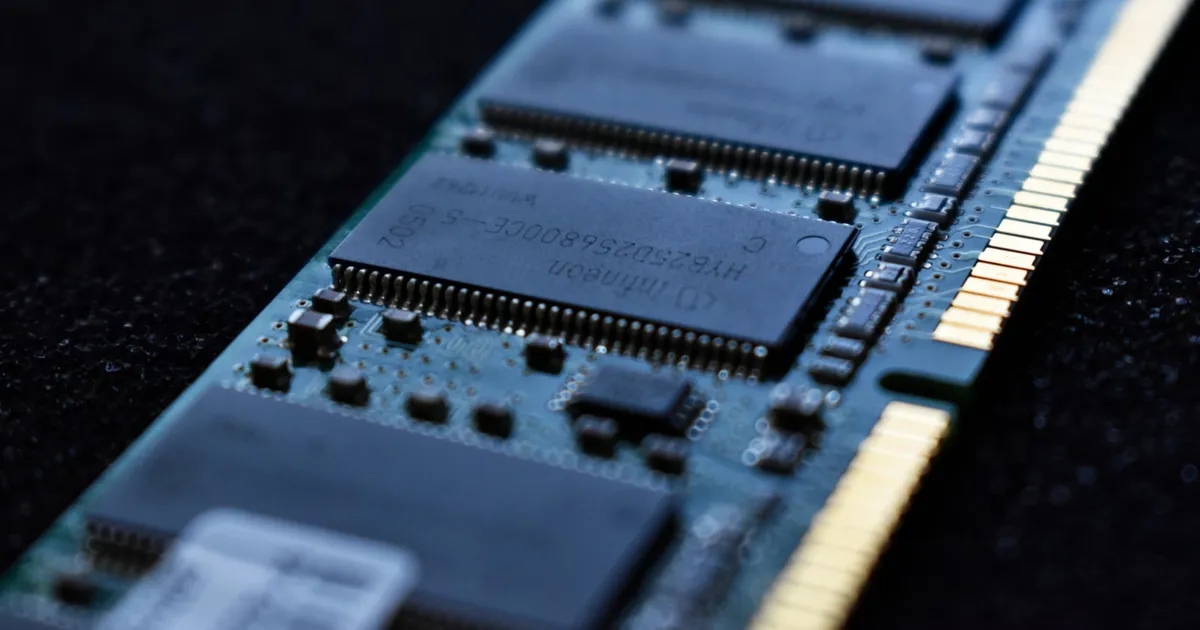
The most important read on the artificial-intelligence trade this week may not come from Silicon Valley. On Wednesday, July 29, SK Hynix — the South Korean company that supplies the majority of the world’s high-bandwidth memory for AI accelerators — reports second-quarter results, kicking off an earnings deluge from the three companies that dominate the memory market. Samsung Electronics follows with full quarterly figures on Thursday, July 30, and Micron Technology reports later in its own calendar. For a market that has spent July lurching between euphoria and fear over the durability of AI spending, the memory makers’ numbers are the closest thing to a live diagnostic.
The stakes are unusually high because memory has become the scarcest, most strategically important component in computing. Every AI accelerator ships with a stack of high-bandwidth memory (HBM) bolted to its side, and demand has outrun supply for the better part of two years. That dynamic — the AI memory supercycle — has handed the few remaining memory makers the best pricing in a generation. SK Hynix’s job on Wednesday is to show the boom is still accelerating rather than peaking.
What analysts expect
Analyst estimates compiled by local brokerages point to record quarterly revenue and operating profit for SK Hynix, extending the run that produced a record first quarter reported in April. The company is expected to post its strongest results in its history, with some estimates suggesting the quarter alone could approach a meaningful share of last year’s full-year profit. Brokerages have flagged operating margins that could exceed 75% at the memory division level — extraordinary figures for a business that was, until recently, one of the most brutally cyclical corners of the chip industry.
A large piece of the headline number is one-time in nature. Meritz Securities and other local analysts have projected substantial non-operating income tied to SK Hynix’s sale of its stake in Kioxia, the Japanese flash-memory maker, a transaction that could push pre-tax profit far above the level implied by operations alone. Investors will want to separate the recurring memory earnings from the Kioxia windfall, because it is the underlying HBM and DRAM trajectory — not the balance-sheet gain — that determines whether the supercycle thesis holds.
Analysts will focus on three lines in particular:
- HBM pricing and mix. SK Hynix held roughly 58% of the HBM market by revenue in the first quarter, according to Counterpoint Research, well ahead of Samsung and Micron at around 21% each. The question is whether that lead — and the premium pricing that comes with it — is widening or narrowing as rivals qualify their own parts.
- Server DRAM. Conventional server memory has tightened alongside HBM as data-center buildouts consume both. Pricing commentary here signals whether the shortage is broadening beyond the highest-end product.
- Capacity and capex. Every dollar SK Hynix commits to new fabs is a bet that AI demand is structural. Guidance on wafer capacity and HBM4 ramp timing will shape 2027 expectations.
The long-term contracts underpinning the boom
What separates this cycle from past memory booms is the length of the demand commitments. SK Hynix has signed long-term supply agreements with U.S. customers reported to total roughly $750 billion in combined value, including a multi-year HBM4 deal with Nvidia and a partnership with Microsoft to equip AI servers. Those contracts are part of the same wave of cross-border commitments that produced the $950 billion South Korea–U.S. chip supply pact and the half-trillion-dollar HBM and AI-factory buildout announced with the SK Group.
The strategic logic is that AI labs and their suppliers are increasingly tying their balance sheets together — locking in years of memory supply the way hyperscalers lock in power and land. For SK Hynix, multi-year HBM4 commitments convert a historically volatile order book into something closer to a subscription. For investors, they are the strongest available evidence that the demand is not a single-year spike.
Why the setup is tense
The run-up into earnings has been violent, which is precisely the problem. SK Hynix shares rallied roughly 14% in the week before the report as chip stocks rebounded, buoyed by the Korean supply-chain deals and renewed memory optimism. The Roundhill Memory ETF jumped double digits as traders positioned ahead of the prints. But the sector has also shown how quickly sentiment can reverse: earlier in July, Samsung’s stock fell more than 7% after a preliminary earnings release fell short of an increasingly demanding AI bar, and a subsequent Korea chip selloff dragged SK Hynix and Micron down around 6% and SanDisk roughly 9% in a single session.
That whipsaw reflects a market grading capital spending as harshly as growth. Alphabet’s July 22 report beat on revenue and showed Google Cloud growing 82%, yet the stock fell because management raised capital-expenditure guidance. The memory makers face the mirror image of that dynamic: their revenue is the hyperscalers’ capex. Strong SK Hynix results validate the spending that has spooked equity investors elsewhere — but they also raise the bar for every quarter that follows.
Samsung’s Thursday report adds a second variable. Its operating profit is expected to surge sharply on a recovering memory business and its own HBM qualification progress, but the preliminary-release stumble left the market wary of reading too much into a single strong headline. Between the two Korean giants, investors get a near-complete picture of AI memory demand within 48 hours — arriving in the same week that Microsoft, Meta, Apple and Amazon report and the Fed decides on rates.
The numbers that will move the stock
Because expectations are already elevated, the reaction is likely to hinge on guidance and commentary rather than the backward-looking quarter. The bullish case rests on management signaling that HBM remains sold out well into 2027, that HBM4 is ramping on schedule at strong pricing, and that server DRAM tightness is broadening. The bearish case is any hint that pricing gains are moderating, that competitors are closing the HBM gap faster than expected, or that customers are pre-building inventory in a way that borrows from future demand.
The Kioxia gain complicates the read. A record headline profit inflated by a one-time transaction could disappoint if the underlying operating figure lands soft — the sort of “beat that isn’t a beat” that has punished other AI-adjacent names this season. Conversely, strong operating numbers plus the windfall could reignite the rally.
What it means
SK Hynix’s Wednesday report is the earnings season’s first clean referendum on whether the AI memory supercycle is still accelerating or beginning to plateau. The company sits at the narrowest point of the entire AI supply chain: it makes the memory that every accelerator needs, holds a commanding HBM share, and has locked in multi-year contracts with the industry’s biggest spenders. That makes its results a leading indicator for the hyperscaler capex debate that will dominate the megacap earnings and Fed decision landing the same week.
Who wins if the print is strong: SK Hynix and Samsung most directly, but also Nvidia and the broader accelerator ecosystem, since durable memory pricing confirms that AI hardware demand remains supply-constrained rather than saturated. A clean beat with confident HBM4 guidance would be the strongest counter yet to the “AI bubble” narrative that has whipsawed chip stocks all month.
Who is exposed if it disappoints: the leveraged chip trade that has made Korea’s market a global AI bellwether, and the memory ETFs that ran up double digits into the prints. Any sign that pricing is topping — or that the record profit is mostly the Kioxia gain dressed up as operating strength — could trigger another sharp rotation out of the semiconductor complex.
What to watch next: HBM4 ramp timing and pricing, server-DRAM commentary, and whether Samsung’s Thursday report corroborates or contradicts SK Hynix’s demand signal. Two matching strong prints would tell the market the supercycle has room to run; a split verdict would keep the sector’s summer of violent swings going straight into August.
Keep reading
 Kurumi · · 5 min read
 SanDisk Q4 FY2026 Earnings: Revenue, Guidance, HBF
SanDisk's fiscal Q4 2026 revenue jumped 372% to $8.97B with 84.6% gross margin as datacenter NAND booms. Here are the numbers, guidance, and what to watch.
 Kurumi · · 6 min read
 Stock Market Week Ahead: CPI, Oracle, Apple Event
A holiday-shortened week brings August CPI on Friday, Oracle and Adobe earnings Thursday, and Apple's iPhone event Wednesday. What to watch.
 Kurumi · · 4 min read
 August Jobs Report: 162K Beat Revives Fed Hike Bets
US payrolls rose 162,000 in August, nearly triple forecasts. The hot print pushed the 2-year yield to a 2025 high and lifted odds of a September Fed rate hike.