Why Micron Stock Keeps Swinging in 2026
Micron has whipsawed in 2026 — record highs on AI memory demand, sharp drops on rate fears, AI-capex doubts, and a Google compression breakthrough. What's moving it.
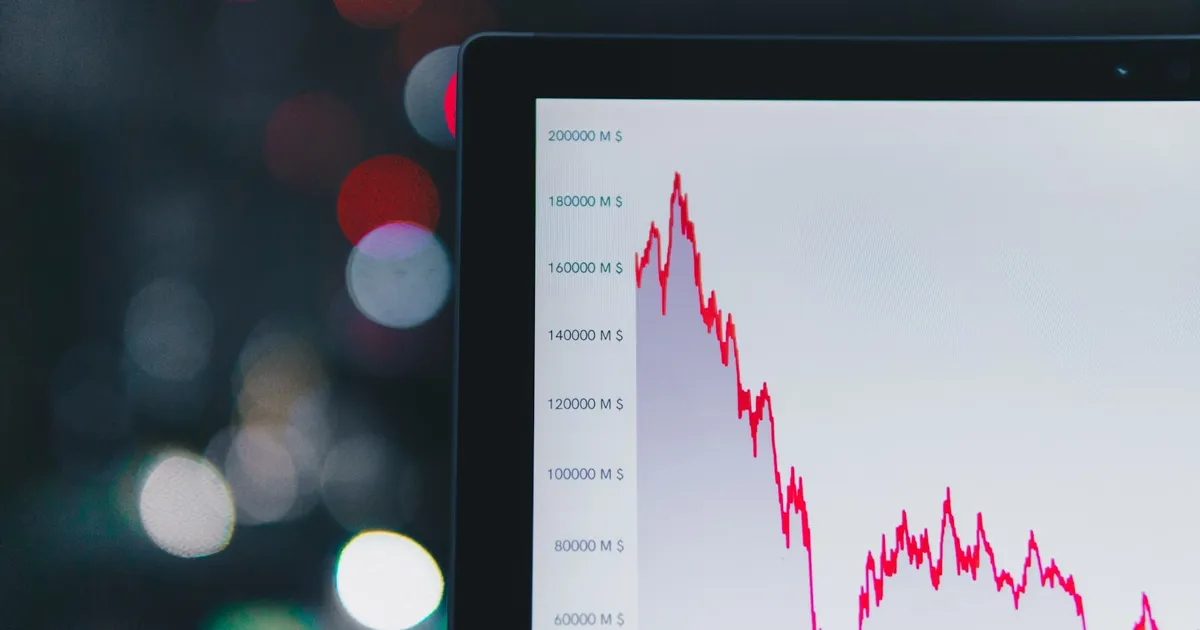
Few large-cap stocks have been as jumpy in 2026 as Micron (MU). It has printed record highs on AI memory demand and then dropped 5% in a session on news that has nothing to do with Micron’s own business. If you’re trying to make sense of the swings, it helps to separate what’s specific to the company from what’s just the AI trade breathing in and out.
What pushes it up
The bull case is simple: AI runs on memory, and Micron is one of three companies that make the good stuff. Demand for high-bandwidth memory has outstripped supply, pricing power is the best it’s been in years, and every new data-center buildout needs more of what Micron sells. NVIDIA certifying Micron’s HBM for its AI accelerators was a credibility stamp from the most important customer in the industry. And the four-pillar partnership with Anthropic — supply, co-design, and an equity tie-up — sent the stock to a record. This is the memory supercycle in action.

What drags it down
The sell-offs have been about the macro picture and the durability of AI spending, not Micron’s fundamentals:
- Rate fears. When May payrolls came in at 172,000 against an 80,000 forecast, investors read it as a reason the Federal Reserve might stay hawkish. Micron fell 5.3% that day in a broad tech sell-off that also knocked NVIDIA down about 4%. High-multiple semiconductor names are sensitive to rates.
- AI-capex doubts. When Broadcom reported earnings and declined to raise its full-year AI semiconductor target, the whole sector reassessed whether AI infrastructure spending is starting to plateau. Micron trades as a proxy for that spending, so the doubt hits it hard.
- Crowded, leveraged positioning. Memory names became a crowded trade. Regulators in Korea approved a wave of single-stock leveraged ETFs that ballooned in size within weeks — the kind of fast money that amplifies moves in both directions.
- A software shock. On June 23, Google Research’s TurboQuant compression algorithm spooked memory investors, who worried that software which shrinks AI memory footprints could dent demand for the hardware.
The pattern underneath
Micron is a cyclical memory business wearing an AI-growth costume. That combination makes it a high-beta proxy for two debates at once: is the AI buildout durable? and where are we in the memory cycle? When sentiment on either question wobbles, MU moves more than the index — up and down.
It’s worth keeping the TurboQuant scare in perspective. Efficiency breakthroughs have a long history of expanding total usage rather than shrinking it — cheaper compute tends to get used more, not less. A genuinely cheaper way to run models could pull more workloads onto AI infrastructure, not fewer. Markets price the fear first and the nuance later.
The takeaway
Micron’s swings are mostly the market arguing with itself about AI demand and interest rates, not bad news from Micron. The company-specific signal — record HBM demand, NVIDIA certification, the Anthropic deal — has been consistently strong. The volatility comes from everything around the stock: macro data, sector sentiment, and crowded positioning. For a name this leveraged to the AI narrative, expect the ride to stay bumpy.
Keep reading

 Kurumi · · 4 min read
 The Economics of a Humanoid Robot
Humanoid robots are arriving with $20,000 price tags and rental plans. What a robot worker really costs to build and run — and when it beats a human wage.
 Kurumi · · 4 min read
 The Economics of an AI Data Center: What a Gigawatt Costs
AI ambition is measured in gigawatts. What one actually costs to build and power for a year — a back-of-the-envelope teardown of tech's priciest machine.
 Kurumi · · 3 min read
 The AI Capex Boom: Why Hyperscalers Keep Spending
Hyperscalers are pouring record sums into AI data centers, chips, and power. What's driving the capex boom, who profits, and the risk if demand stalls.