August Jobs Report: 162K Beat Revives Fed Hike Bets
US payrolls rose 162,000 in August, nearly triple forecasts. The hot print pushed the 2-year yield to a 2025 high and lifted odds of a September Fed rate hike.
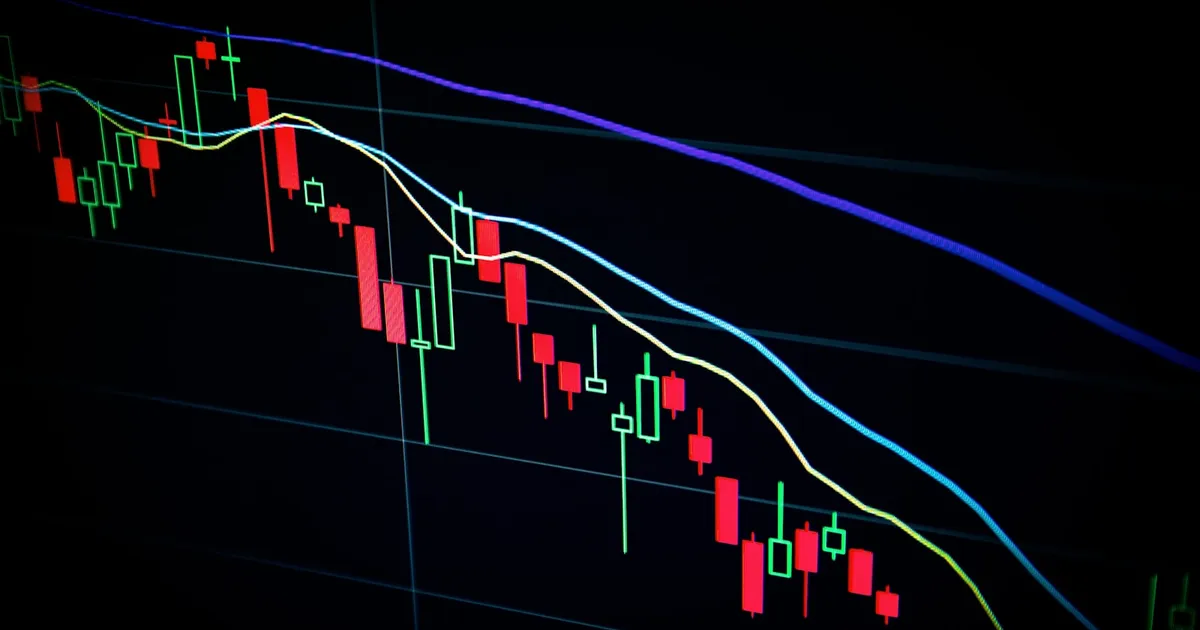
The August jobs report landed as an upside shock, and Wall Street did not take it as good news. The U.S. economy added 162,000 nonfarm payrolls last month, the Labor Department reported Friday, nearly three times the 55,000 economists had penciled in. The unemployment rate held at 4.1%. Rather than cheer a resilient labor market, traders sold stocks and bought into the idea that the Federal Reserve’s next move could be a rate hike, not a cut.
By the close on September 4, the S&P 500 had slipped 0.38% to 7,718.60, the Nasdaq Composite fell 0.29% to 26,506.99, and the Dow Jones Industrial Average dropped 0.67% to 53,325.23. The reaction was a textbook case of “good news is bad news”: a stronger economy raises the odds that the Fed keeps policy tight, or tightens further, to keep inflation in check.
What the report actually said
The headline beat was large, but the revisions were the more consequential detail. July’s previously reported decline of 55,000 jobs — a number that had rattled markets a month ago and fueled talk of a stalling labor market — was revised up by 44,000 to a net gain of 21,000. June’s figure was nudged higher as well. Taken together, the revisions reframed a summer that had looked like a sharp cooling into something closer to a steady, if unspectacular, expansion.
The unemployment rate holding at 4.1% reinforced that read. It is a level Fed officials have repeatedly described as consistent with a stable, near-full-employment labor market — not one flashing the kind of weakness that would force the central bank to ease. For a market that spent much of the summer pricing in rate relief, the report removed a key pillar of the bullish case.
The bond market moved first
The clearest signal came from Treasurys. The rate-sensitive 2-year yield, which tracks expectations for Fed policy, rose more than four basis points to 4.377%, its highest level since January 2025. The benchmark 10-year yield climbed above 4.78%. Rising yields pressure equity valuations, particularly the high-multiple technology names that have led the market, because they raise the discount rate applied to future earnings and make risk-free bonds relatively more attractive.
Following the print, futures traders were pricing roughly 60% odds of a quarter-point rate increase at the Fed’s September 15–16 meeting — a striking shift for a market that entered the summer debating how quickly the central bank would cut. The framing has flipped from “how soon will the Fed cut” to “will the Fed hike,” a debate this newsletter’s week-ahead preview flagged going into the release.
Under the surface: an uneven tape
The index-level moves were modest, but the composition told a more divided story. Technology was among the day’s stronger S&P sectors, alongside industrials and utilities, even as the broad market fell — a sign investors were reluctant to abandon the AI trade wholesale despite the yield backup. The weakness clustered in healthcare, consumer discretionary, communications, and energy.
Individual names supplied the drama. Lululemon plunged after a disappointing update, a reminder that consumer-facing companies remain exposed to a shopper who is still spending but increasingly selective. The split — resilient tech, punished consumer and defensive names — captured a market trying to reconcile a strong economy with the higher-for-longer rate path that strength implies.
The AI trade meets the rate question
The report arrives at a delicate moment for the market’s dominant theme. The AI hardware complex just cleared its biggest tests of the calendar: Broadcom posted record fiscal Q3 results with AI semiconductor revenue of $16.7 billion, and Nvidia delivered another blowout quarter weeks earlier. Those results validated the demand story underpinning the hyperscaler capex boom — the hundreds of billions being poured into data centers and GPUs.
But the AI trade has been financed, in part, by an assumption of easier money ahead. A Fed that stays restrictive — or tightens — raises the cost of the debt increasingly used to build out compute, and compresses the valuations of the companies riding the theme. Friday’s action showed the market beginning to price that tension: strong enough fundamentals to keep buying chips, strong enough an economy to keep the Fed on guard.
What it means
The August report changes the near-term risk calculus for equities. The immediate takeaway is that the September FOMC meeting is now genuinely two-sided. A cut, which markets treated as a near-certainty a few months ago, is off the table; a hold is the base case; and a hike is a live, roughly coin-flip-adjacent possibility. That uncertainty alone argues for choppier trading into mid-September.
The winners and losers split along the rate axis. Cash-rich mega-cap technology companies, with fortress balance sheets and self-funding capex, are relatively insulated from higher rates and retain the AI growth story — which is why the sector held up on a down day. The losers are rate-sensitive corners of the market: unprofitable growth names, highly leveraged businesses, rate-exposed real estate, and consumer discretionary companies facing a more cautious shopper. Long-duration bonds also took a hit as yields jumped.
What to watch next is inflation. With the labor market reaffirmed as stable, the Fed’s decision now hinges on next week’s consumer and producer price readings. A hot CPI print would harden the case for a hike and likely extend the equity pullback; a soft one would let the Fed hold and could spark a relief rally. Also watch the 2-year yield: if it keeps climbing toward and through prior highs, it will signal the market is bracing for tighter policy, and the pressure on high-multiple tech will build. For now, a strong economy has become the market’s most immediate risk — because it hands the Fed a reason not to blink.
Keep reading

 Kurumi · · 6 min read
 Stock Market Week Ahead: CPI, Oracle, Apple Event
A holiday-shortened week brings August CPI on Friday, Oracle and Adobe earnings Thursday, and Apple's iPhone event Wednesday. What to watch.
Kurumi · · 5 min read Stock Market Week Ahead: Jobs, Broadcom, Rate Hike Bets
August jobs data lands Friday as markets price rising odds of a September rate hike, with Broadcom and Palo Alto Networks earnings testing the AI trade.
Kurumi · · 6 min read Stock Market Aug 7 2026: Jobs Shock Sparks Rally
A surprise drop in July payrolls sent Wall Street to record highs on Aug 7, 2026, as rate-cut bets firmed and Atlassian surged 36% on earnings.