Samsung Q2 2026 Earnings: Record Profit on AI Memory
Samsung posted a record 89.4 trillion won Q2 operating profit, up 19-fold, as AI memory and HBM demand made it tech's most profitable quarter.
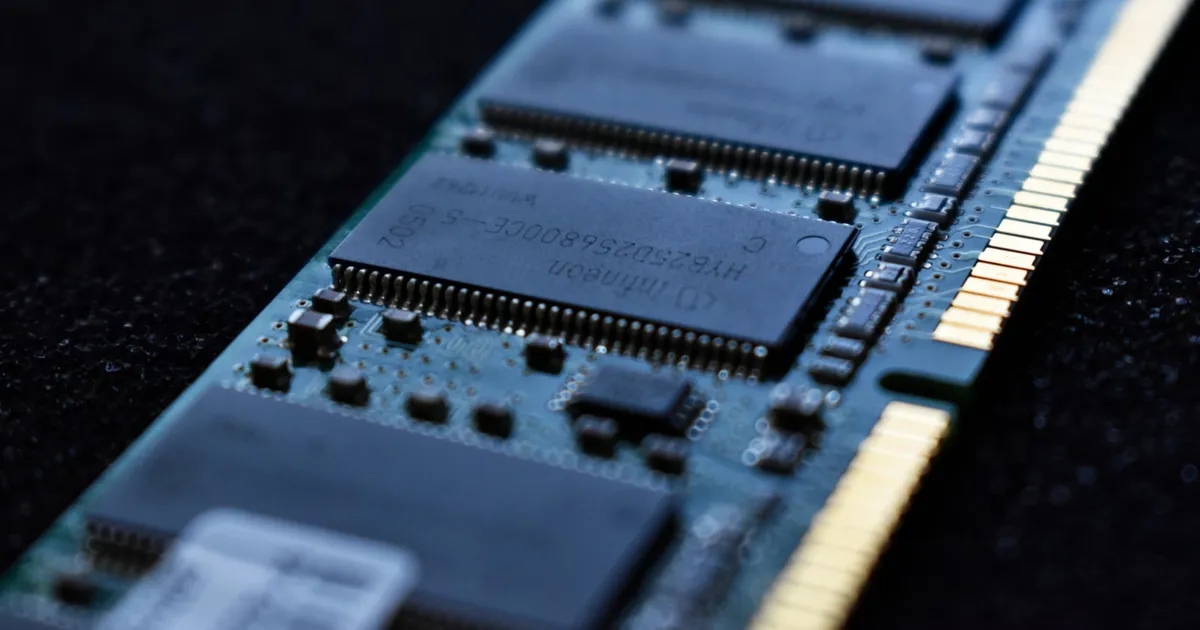
Samsung Electronics delivered the largest quarterly profit in its history — and, by its own account, the largest ever recorded by any technology company. In preliminary guidance released on July 7, 2026, the company estimated second-quarter revenue of about 171 trillion won and operating profit of roughly 89.4 trillion won, or about $58 billion. The number is a milestone for Samsung and a stark measure of how completely the AI buildout has reshaped the memory business.
The scale of the year-over-year move is hard to overstate. Samsung earned just 4.7 trillion won in operating profit in the same quarter a year earlier. This quarter’s figure is roughly 19 times larger — an increase of about 1,810% — and up 56% from the prior quarter. Revenue rose about 129% from a year ago. Samsung said the results surpassed the quarterly operating profit of both NVIDIA and Apple, making it the most profitable three-month stretch any tech company has ever reported.
Quarterly operating profit (₩T)
Q1 2024 – Q2 2026 · Q2 2026 is the July 7 preliminary figure
The hairline marks the year-ago (Q2 2025) level of ₩4.7T — the quarter the memory cycle bottomed. Every figure is in the table below. Source: Samsung Electronics quarterly results.
The full run of quarters shows both the scale of the record and the whiplash of the cycle that produced it:
| Quarter | Revenue (₩T) | YoY | Op. profit (₩T) | YoY | Op. margin |
|---|---|---|---|---|---|
| Q1 2024 | 71.9 | +12.8% | 6.6 | +933% | 9.2% |
| Q2 2024 | 74.1 | +23.4% | 10.4 | +1458% | 14.1% |
| Q3 2024 | 79.1 | +17.4% | 9.2 | +278% | 11.6% |
| Q4 2024 | 75.8 | +11.8% | 6.5 | +130.1% | 8.6% |
| Q1 2025 | 79.1 | +10.0% | 6.7 | +1.4% | 8.5% |
| Q2 2025 | 74.6 | +0.7% | 4.7 | −55.2% | 6.3% |
| Q3 2025 | 86.1 | +8.8% | 12.2 | +32.9% | 14.2% |
| Q4 2025 | 93.8 | +23.8% | 20.1 | +210% | 21.4% |
| Q1 2026 | 133.9 | +69.2% | 57.2 | +754% | 42.7% |
| Q2 2026 (prelim.) | ≈171 | +129.3% | ≈89.4 | +1810% | 52.3% |
Source: Samsung Electronics quarterly results; Q2 2026 is preliminary guidance. The huge 2024 growth rates compare against the 2023 memory downturn, when quarterly operating profit fell below ₩1T — a reminder of how violently this business swings.
What drove the number
The engine was memory. AI infrastructure spending has kept demand for server DRAM and high-bandwidth memory (HBM) running well ahead of supply, and this quarter that tightness spilled into every corner of the memory market. Conventional DRAM and NAND flash — the commodity products that have historically dragged Samsung’s earnings through brutal down-cycles — saw sharp price increases as buyers competed for constrained capacity. Samsung benefited across nearly the entire product line at once, a rare alignment of pricing power and volume.
Quarterly revenue (₩T)
Q1 2024 – Q2 2026 · Q2 2026 is the July 7 preliminary figure
The hairline marks the year-ago (Q2 2025) level. Every figure is in the table below. Source: Samsung Electronics quarterly results.
That dynamic is the culmination of a trend this blog has tracked for months. The AI memory supercycle has turned a boom-and-bust commodity into the tightest link in the AI supply chain, and the companies that make high-bandwidth memory have captured an outsized share of the value. HBM stacks fast DRAM directly beside AI accelerators to feed them data, and every new generation of GPU has deepened the dependency. The industry’s scramble to add capacity — the HBM4 supply race — has not yet caught up to demand, which is precisely why pricing has stayed firm.
Operating margin (%)
Q1 2024 – Q2 2026 · operating profit as a share of revenue
Margin computed from reported figures (operating profit ÷ revenue). A commodity-memory business ran at single-digit margins a year ago; it now converts more than half of revenue to operating profit. Figures in the ten-quarter table above. Source: Samsung Electronics quarterly results.
Samsung’s memory rivals have posted their own strong results on the same tailwind, and the read-through from Korea’s chipmakers has become a leading indicator for the entire sector. When memory earnings surprise to the upside, it validates the capital-spending thesis underpinning the whole AI trade.
The one-time-cost wrinkle
One detail complicates the headline. Several reports noted that Samsung’s operating profit was held down by one-time employee bonus and incentive costs tied to the strong results. Excluding those charges, some estimates put underlying operating profit above 100 trillion won — an even larger figure than the reported number. In other words, the record understates the underlying earning power of the business this quarter. Bonuses scale with performance, so a blowout quarter mechanically pulls some profit forward into compensation; the operational story is arguably stronger than the reported 89.4 trillion won suggests.
Why the stock didn’t celebrate
Despite the record, Samsung shares slipped after the guidance landed, trading down around 2% in early Seoul action. Two things explain the muted reaction. First, expectations were already high: analysts had spent weeks marking up their estimates into the 85-to-90 trillion won range, so the beat on profit was largely anticipated. Second, revenue of 171 trillion won came in slightly below the market’s consensus of roughly 172 trillion won — a small miss, but enough to give profit-takers an excuse after a strong run.
This is a familiar “sell the news” pattern in a sector that has already climbed a long way. Just days earlier, a broad chip-stock sell-off saw the PHLX Semiconductor Index drop 6.7% and Korea’s Kospi plunge 7.9% in a single session, as investors locked in gains on the most crowded corner of the market. A record earnings print from Samsung doesn’t erase the question hanging over the group: how much of the future is already priced in?
The strategic backdrop
Samsung’s blowout arrives as memory has become a strategic asset, not just a component. The company has been working to close a gap with rivals in qualifying its latest HBM for the most demanding AI accelerators, and success there is worth more than any single quarter’s pricing. Frontier AI labs, meanwhile, are increasingly reaching upstream into the supply chain to lock in the memory and silicon they need. Samsung itself sits at the center of one such conversation: Anthropic is reportedly in early talks with the company to build a custom AI chip on an advanced process, a deal that would tie a leading model developer directly to Samsung’s foundry and packaging.
That pattern — AI labs and their suppliers stitching their balance sheets together — has been building for a while. Micron took a strategic stake alongside a memory partnership with Anthropic, and hyperscalers have signed multi-year commitments to guarantee supply. For Samsung, the payoff of being indispensable to the AI stack is showing up in the numbers this quarter with unusual clarity.
The context: full results still to come
Thursday’s release was preliminary guidance, not audited results. Samsung will publish detailed segment figures on July 30, 2026, and that’s when investors will learn how the record broke down — how much came from HBM versus commodity DRAM and NAND, how the foundry and mobile divisions fared, and what management signals about pricing into the second half. Guidance on the durability of memory demand will matter more to the stock than the backward-looking beat.
What it means
Samsung’s quarter is the clearest evidence yet that the AI capital-spending boom has fundamentally rerated the memory industry. A business that used to swing from feast to famine on commodity pricing just posted the most profitable quarter in the history of technology — and did it primarily on memory, not phones or displays.
Who wins. The memory makers are capturing an enormous share of AI economics. As long as HBM and server DRAM stay supply-constrained, that pricing power holds, and Samsung, with its scale across DRAM, NAND, and foundry, is positioned to benefit across the board. The company’s push to qualify its newest HBM for top-tier accelerators is the single most important swing factor for its next leg of growth.
Who should be nervous. The buy-side. A 19-fold profit jump is spectacular, but it also raises the bar. Memory is still a cyclical business, and records like this are usually made near the top of a pricing cycle, not the bottom. The muted stock reaction — down despite the beat — is the tell: the good news was expected, and any hint that supply is catching up to demand would hit these stocks hardest, exactly as memory has led both the recent sell-off and the rally before it.
What to watch next. Three things. First, the July 30 detailed results, especially the HBM contribution and any commentary on second-half pricing. Second, whether Samsung’s memory peers confirm the same demand picture in their own reports later in July — one company’s record could be the sector’s, or an outlier. Third, the strategic deals: partnerships like the reported Anthropic custom-chip talks would lock in demand years out and matter far more to the long-term story than a single quarter’s profit. For now, the memory supercycle has produced a number no technology company has ever matched — and the market’s job is to decide whether it’s a peak or a new baseline.
Tagged
Keep reading
 Kurumi · · 5 min read
 Marvell Q2 Earnings: Record $2.74B, Raised Guidance
Marvell posted record Q2 FY2027 revenue of $2.74B on a 46% data center surge, raised its outlook again, and guided Q3 to $3.15B. The numbers and what they mean.
 Kurumi · · 6 min read
 Samsung Foundry Price Hike: Up to 15% on AI Demand
Samsung raised advanced contract chip prices by up to 15% as AI demand fills its 4nm and 5nm lines. Chinese customers face the steepest hikes. What it means.
Kurumi · · 5 min read SMIC Q2 2026 Earnings: Profit Jumps 262%, Stock Rises
SMIC's Q2 profit surged 262% to $479M as revenue rose 36% and margins expanded, sending the Chinese foundry's Hong Kong shares up as much as 6.4%.