Stock Market Week Ahead: CPI, Oracle, Apple Event
A holiday-shortened week brings August CPI on Friday, Oracle and Adobe earnings Thursday, and Apple's iPhone event Wednesday. What to watch.
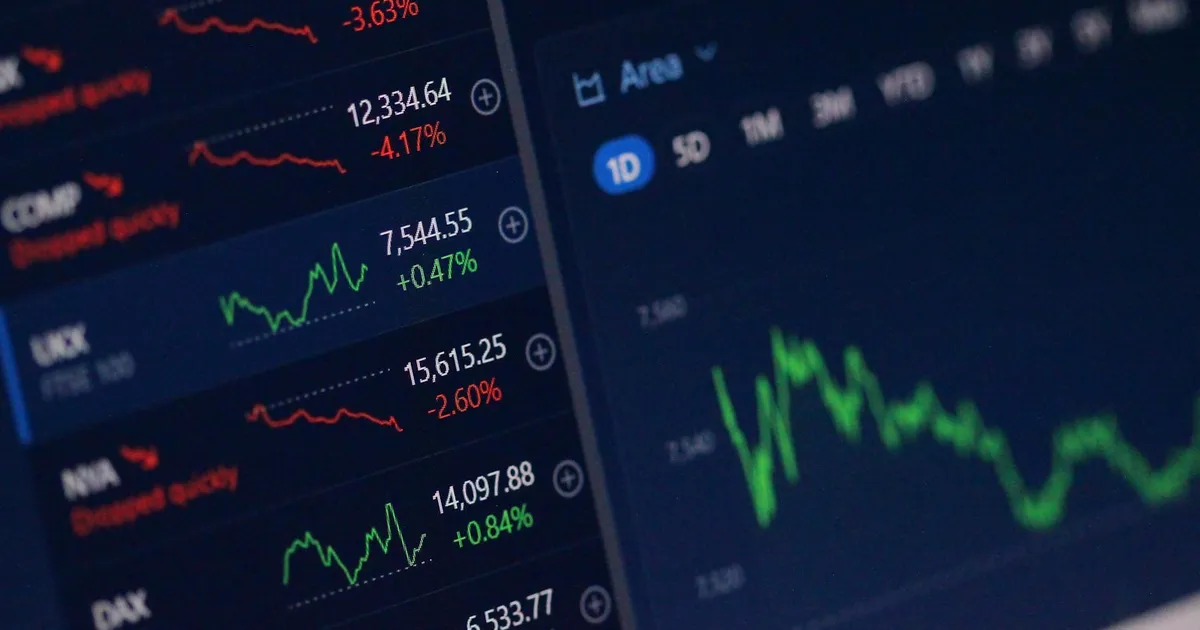
Wall Street enters the week of September 8 a day short and data-heavy. Monday, September 7 is Labor Day, so U.S. equity and bond markets are closed, compressing a full slate of catalysts into four sessions. The marquee macro event is Friday’s Consumer Price Index for August, the last major inflation read before the Federal Reserve’s next decision. Layered on top are two closely watched tech earnings reports — Oracle and Adobe, both Thursday afternoon — and Apple’s annual iPhone event Wednesday. It is a week that tests the same two questions the market has argued over all year: how much room the Fed has, and whether the enormous sums flowing into AI infrastructure are producing returns.
A shortened week, front-loaded with data
With Monday out, the economic calendar stacks into the back half. The Producer Price Index for August lands Thursday at 8:30 a.m. Eastern, and the Consumer Price Index follows Friday at the same hour. Economists expect core CPI — the reading that strips out food and energy — to come in near 2.4%, a level that would keep the disinflation story broadly intact. The market’s sensitivity here remains asymmetric: a soft print reinforces the case that policy can keep drifting toward easier conditions, while a hot number collides directly with equity valuations that already assume cooling inflation.
The rate debate itself has been unusually fluid in 2026, swinging from confident bets on cuts to a real scare about a hike and back again. Coming out of a summer in which the labor market showed cracks, the consensus has tilted toward the Fed leaning dovish — but that view rests on inflation continuing to behave. Friday’s CPI is the single data point most capable of confirming or breaking it, which is why a market sitting near records will trade the details, not just the headline. As has been the pattern this year, the data sets the discount rate against which every AI-capex dollar is judged.
Oracle is the week’s real AI-infrastructure test
If CPI sets the macro tone, Oracle’s fiscal first-quarter report — due Thursday after the close — is the week’s cleanest read on the AI buildout’s economics. Analysts model revenue near $19.1 billion and adjusted earnings around $1.30 a share, with total cloud revenue expected to grow roughly 60% in constant currency. The number that has come to define the Oracle story, though, is its remaining performance obligation — the backlog of contracted-but-unbilled revenue — which stood at about $638 billion last quarter after a run of gigawatt-scale cloud deals tied to AI training.
The tension is on the other side of the ledger. To win that backlog, Oracle has taken on debt at a pace that has unsettled investors: the company raised roughly $43 billion in debt financing in fiscal 2026 and has guided to about $40 billion more in combined debt and equity financing in fiscal 2027, including a $20 billion at-the-market equity program. Oracle shares have fallen roughly 20% year to date and about 30% over the trailing twelve months, a selloff that reflects less doubt about demand than anxiety about the leverage funding it. That anxiety is not confined to Oracle — investor Michael Burry has publicly bet against Oracle and neocloud names on exactly this thesis. Thursday’s guidance on capital spending, margins, and the pace of RPO conversion will move the stock more than the top-line beat or miss.
Adobe reports the same afternoon. The options market is pricing an implied move of roughly 5.4%, and the swing factor is not the raw quarter but the AI narrative around Firefly, Adobe’s generative-imaging suite — specifically whether it is monetizing fast enough to offset the risk that AI-native tools pull creative work away from Creative Cloud. Together, Oracle and Adobe frame the same debate from two sides: one a builder of AI infrastructure whose spending is under scrutiny, the other an incumbent software franchise defending its moat against AI-native challengers.
Apple’s event: a product launch with a leadership subplot
Wednesday brings Apple’s annual fall event, titled “Surprise and shine,” where the company is expected to unveil the iPhone 18 Pro, iPhone 18 Pro Max, and its first foldable iPhone, widely reported to launch as the iPhone Ultra at a starting price around $2,000 to $2,300. It is also the first launch event of the John Ternus era — Ternus succeeded Tim Cook as chief executive on September 1 — which gives the keynote a significance beyond the hardware. For the tape, the read is on pricing power and mix: whether a pricier lineup, headlined by a foldable near the top of the smartphone market, can lift average selling prices without denting volume. (We cover the products and the leadership transition in detail in our Apple event preview.)
Rounding out the corporate calendar are a handful of smaller reports — GameStop on Tuesday and Chewy on Wednesday among them — but the index-level action will come from the macro data and the three tech marquees.
The backdrop: records, but a nervous kind
Stocks enter the week near all-time highs, buoyed by a run of blockbuster AI earnings. Broadcom capped the prior stretch with fiscal third-quarter results that showed AI semiconductor revenue up 221% to $16.7 billion, and the group has spent 2026 rewarding companies that can show AI turning into revenue while punishing those whose spending has yet to demonstrate a payback. That scoring system carries straight into this week. Oracle sits squarely on the side of the ledger the market has been hardest on — heavy capital spending with a return that is contracted but not yet fully billed — which is why its report, more than any macro number, may set the tone for the AI-infrastructure complex.
What it means
This is a referendum week compressed into four sessions, and two forces will collide inside it: a macro data set that tells the market how much room the Fed has, and a run of earnings that tells it whether AI spending is compounding into revenue or simply into bigger balance sheets.
The bull case is clean. A core CPI near 2.4% keeps the disinflation narrative alive and supports valuations; Oracle reaffirms that its $638 billion backlog is converting on schedule and that its financing plan is manageable; Apple’s lineup signals pricing power heading into the holiday quarter. String those together and the market’s central AI trade looks re-established, with the debt worries that have dogged the data-center builders starting to look overdone.
The bear case is equally clean. A hot inflation print undercuts the rate assumptions holding up richly valued growth stocks. And an Oracle report that leans harder into debt-funded expansion without a clearer line to profitability would validate the very concerns that have already knocked 20% off the stock this year — a signal that could travel fast through every name financing AI capacity with borrowed money.
Watch three things, in order. First, Friday’s core CPI against the 2.4% expectation — it sets the rate backdrop for everything else. Second, Oracle’s capital-spending and financing guidance, the cleanest tell on whether the AI buildout’s economics are holding up. Third, Apple’s pricing on the Pro line and the foldable, an early read on consumer demand into the holidays. Bullish outcomes on all three and a market near records looks justified. Miss on any one — especially Oracle — and the AI-infrastructure trade could give back ground in a hurry.
Keep reading
 Kurumi · · 4 min read
 August Jobs Report: 162K Beat Revives Fed Hike Bets
US payrolls rose 162,000 in August, nearly triple forecasts. The hot print pushed the 2-year yield to a 2025 high and lifted odds of a September Fed rate hike.
 Kurumi · · 5 min read
 Stock Market Week Ahead: Jobs, Broadcom, Rate Hike Bets
August jobs data lands Friday as markets price rising odds of a September rate hike, with Broadcom and Palo Alto Networks earnings testing the AI trade.
Kurumi · · 6 min read Stock Market Aug 7 2026: Jobs Shock Sparks Rally
A surprise drop in July payrolls sent Wall Street to record highs on Aug 7, 2026, as rate-cut bets firmed and Atlassian surged 36% on earnings.