The AI Memory Supercycle, Explained
The AI memory supercycle, explained: why HBM demand outran supply, how DRAM pricing turned, what could end the boom, and what it means for chip stocks.
For years, memory was the unglamorous, deeply cyclical corner of the chip industry — a commodity that boomed and busted on PC and phone demand. AI changed that. In 2026, memory is the scarcest, most strategically important component in computing, and the companies that make it are enjoying the best pricing in a generation. Welcome to the memory supercycle.
What is the AI memory supercycle?
The AI memory supercycle is the extended boom in memory-chip demand and pricing driven by the AI infrastructure buildout — a cycle in which high-bandwidth memory (HBM) and server DRAM stay supply-constrained for years rather than quarters, handing the few remaining memory makers sustained pricing power. The word “supercycle” is a deliberate contrast with the industry’s ordinary rhythm, where booms historically collapsed within a couple of years once new supply arrived. The bet embedded in the term is that AI demand is structural rather than seasonal — and that fabs can’t expand fast enough to break it.
What’s driving it
The cause is the memory wall. AI accelerators can do math far faster than memory can feed them data, so the bottleneck in training and serving large models is increasingly bandwidth, not raw compute. The answer is high-bandwidth memory — DRAM stacked vertically and placed right next to the GPU — and demand for it has blown past supply. Every accelerator inside the hundreds of billions of dollars hyperscalers are pouring into AI data centers ships with a set of HBM stacks bolted to its side, so memory demand scales directly with the AI buildout itself.
The numbers tell the story. Data centers now consume an estimated 70% of all memory chips produced worldwide. DRAM prices surged roughly 90% in the first quarter of 2026 alone. And HBM has grown to take a large share of the industry’s total DRAM wafer capacity, because it’s far harder to make than ordinary memory.
Why HBM is so expensive
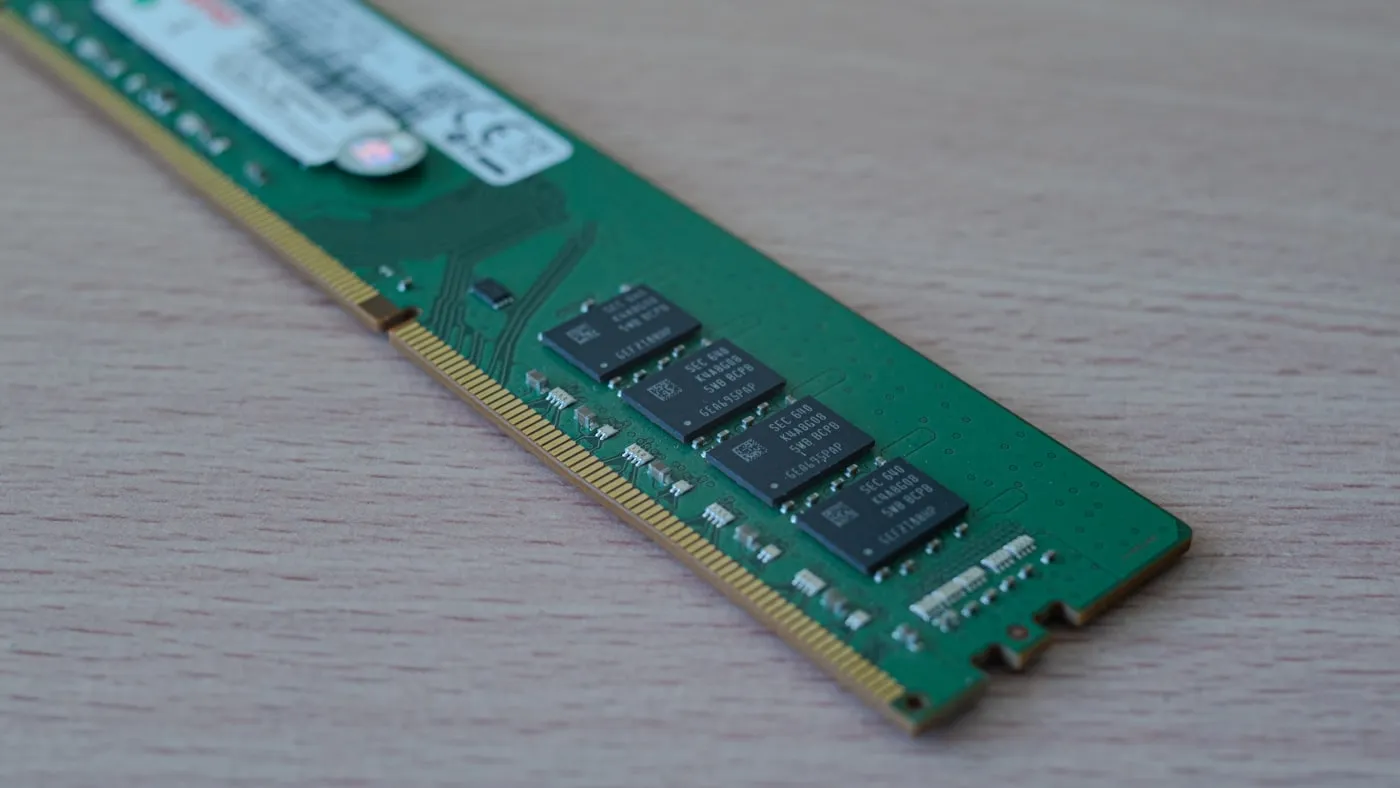
HBM isn’t just faster DRAM — it’s a different manufacturing problem. It requires stacking multiple memory dies in 3D, connecting them with through-silicon vias, and packaging the result on an interposer next to the processor. Each step adds cost, complexity, and yield risk. The price gap is stark:
| Component | Approx. price | Role |
|---|---|---|
| One HBM3E module | ~$60–100 | Feeds AI accelerators at huge bandwidth |
| Comparable DDR5 | ~$5–10 | Standard system memory |
The yield math is what really separates HBM from commodity DRAM. Stack eight or twelve dies and connect them with thousands of microscopic through-silicon vias, and a defect anywhere in the stack can scrap the whole thing — yields multiply down through every layer. The finished stack then has to be married to the processor on a silicon interposer, and that advanced-packaging step is a bottleneck of its own, with capacity booked out across the industry. Because of all this, HBM consumes roughly three times the wafer capacity per bit of standard memory — every wafer shifted to HBM is a wafer not making the DRAM in your laptop.
And the bar keeps rising. Each generational step — the current one being the race to HBM4 — adds more layers, more bandwidth, and new packaging demands, which resets yields downward right as demand accelerates.
A brutally cyclical business, historically
Some perspective on why veterans of this industry flinch at the word “supercycle.” DRAM has been through repeated boom-bust cycles that bankrupted or drove out most of its players. In the 1990s, more than a dozen companies made DRAM; brutal price wars pushed Texas Instruments and most of the Japanese makers out of the business entirely. The 2007–09 crash sent prices below cash cost and bankrupted Qimonda, Infineon’s spun-off memory arm. Elpida — Japan’s last DRAM maker — went bankrupt in 2012 and was absorbed by Micron. As recently as 2018–19, DRAM prices roughly halved in a year when supply overshot.
Each bust consolidated the survivors, and that consolidation is why this cycle behaves differently: an oligopoly of three adds capacity slowly and deliberately, where twenty competitors once raced to flood the market. Supply discipline is the quiet foundation under today’s pricing.
Three companies hold the keys
Just three firms — Samsung, SK Hynix, and Micron — control more than 95% of global DRAM production. All three have been reallocating capacity toward HBM to chase AI demand and its fatter margins. That’s great for their income statements and the reason Micron’s stock has been on such a ride. It’s less great for everyone else: consumer DRAM and NAND flash have gone into short supply, pushing up the price of RAM in PCs and phones.
When does it end?
Supercycles don’t last forever. The relief valve is new capacity, but the capex math is slow: a leading-edge DRAM fab costs well north of $10 billion and takes years from groundbreaking to full output, and HBM needs dedicated stacking and packaging lines on top of the wafers themselves. Capacity decisions being made today were sized to demand forecasts written years ago. That’s why most analysts don’t expect meaningful loosening until 2027 or 2028.
The first real crack in the narrative arrived on July 13, 2026, when SK hynix dropped a record 15% in a single session — hard enough to halt trading across the entire Korean market — after signaling it would slow its HBM4 ramp to chase the extraordinary margins in conventional DDR5. Read carefully, that was a valuation event, not a demand event: the leader diverting capacity to the more profitable product is supply discipline in action, not a customer walking away. But it ended the assumption that every quarter brings more HBM at ever-higher prices, and it showed how violently stocks priced for perfection react to even a margin-driven mix shift.
The fundamentals, meanwhile, keep printing records. A week before the SK hynix rout, Samsung’s preliminary Q2 guidance showed roughly ₩89.4 trillion — about $58 billion — in operating profit, up roughly 19-fold from a year earlier and, by Samsung’s own account, the most profitable quarter any technology company has ever reported, overwhelmingly on memory. Record earnings and a record sell-off within the same week is what the top half of a supercycle looks like: the business is booming, and the market is arguing about how long it can last.
There’s a longer-term bear case worth naming, too. Memory remains fundamentally cyclical, and software can change the demand picture faster than fabs can. Google’s TurboQuant compression breakthrough rattled the group precisely because it shrinks AI memory footprints. But efficiency gains historically expand usage rather than shrink it — cheaper AI tends to mean more AI. The supercycle’s real risk is the oldest one in the memory business: capacity catching up with demand right as the cycle turns.
The takeaway
AI has rewired the economics of memory, turning a commodity into a strategic asset with real pricing power. The makers are reaping it, AI labs are locking in supply through deals like Micron’s pact with Anthropic, and consumers are paying more for RAM as a side effect. Just remember what kind of business this is underneath the AI sheen: cyclical. The three survivors of the last busts have unusual discipline, and the fab lead times are real — but supercycles are wonderful until the cycle reasserts itself.
Keep reading
 Kurumi · · 4 min read
 The Economics of a Humanoid Robot
Humanoid robots are arriving with $20,000 price tags and rental plans. What a robot worker really costs to build and run — and when it beats a human wage.
 Kurumi · · 4 min read
 The Economics of an AI Data Center: What a Gigawatt Costs
AI ambition is measured in gigawatts. What one actually costs to build and power for a year — a back-of-the-envelope teardown of tech's priciest machine.
 Kurumi · · 3 min read
 The AI Capex Boom: Why Hyperscalers Keep Spending
Hyperscalers are pouring record sums into AI data centers, chips, and power. What's driving the capex boom, who profits, and the risk if demand stalls.