TSMC Q2 2026 Earnings: Record Profit, Capex Raised
TSMC posted $40.2B in Q2 revenue and a 77% jump in net profit on AI chip demand, then raised its 2026 capex to $60–64B. The numbers and what to watch.
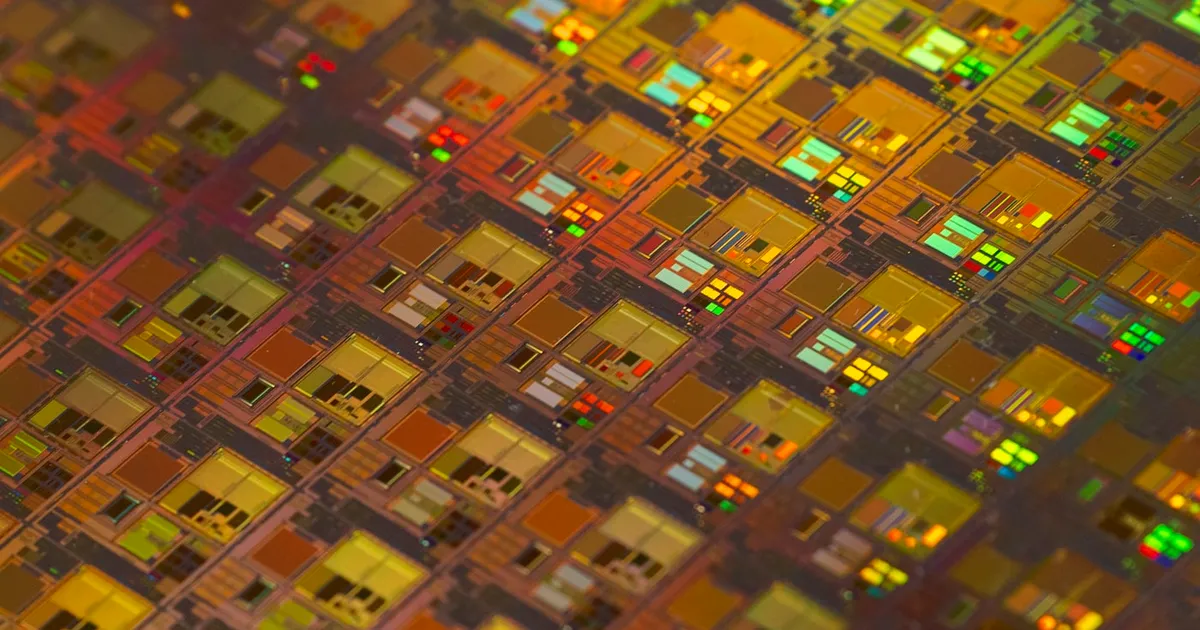
The world’s largest contract chipmaker just delivered the earnings report the entire AI trade was waiting for. On Thursday, July 16, 2026, Taiwan Semiconductor Manufacturing Company reported record second-quarter revenue and profit, raised its full-year spending plans, and used the platform to swat down the idea that AI demand is a bubble about to pop. For a semiconductor sector that spent June in a deep selloff, TSMC’s numbers were the second consecutive piece of hard data — after ASML a day earlier — arguing that the buildout is still accelerating.
The quarter, by the numbers
TSMC’s Q2 came in at the top of its own guidance and beat consensus across the board. The headline figures:
- Revenue: US$40.2 billion, up 33.7% year over year and at the upper end of the company’s guided range of $39.0 billion to $40.2 billion.
- Net profit: NT$706.56 billion, a jump of roughly 77% from a year earlier and an all-time quarterly record.
- Gross margin: 67.7%, a strikingly high figure that held up even as the company absorbed the cost drag of building fabs overseas.
- High-performance computing — the segment that houses AI accelerators, data-center CPUs, and networking silicon — now accounts for 66% of total revenue, cementing its place as the company’s center of gravity ahead of smartphones.
Quarterly revenue (US$B)
Q1 2024 – Q2 2026 actuals · Q3 2026 shown at guidance midpoint
The hairline marks the year-ago (Q2 2025) level; the dashed column is the midpoint of TSMC’s Q3 guidance. Every figure is in the table below. Source: TSMC quarterly reports.
The profit surge is the number that will dominate headlines. A 77% year-over-year increase in net income at a company this size is extraordinary, and it reflects two forces compounding at once: relentless demand for the leading-edge chips that power AI, and pricing power at the very top of the process roadmap that TSMC alone can supply at scale.
Quarterly net income (NT$B)
Q1 2024 – Q2 2026 · Q2 2026 is an all-time record
The hairline marks the year-ago (Q2 2025) level. Every figure is in the table below. Source: TSMC quarterly reports.
Laid out quarter by quarter, the compounding is easy to see — ten straight quarters of growth, with the year-over-year comparisons accelerating through the back half of the run:
| Quarter | Revenue (US$B) | YoY | Net income (NT$B) | YoY | Gross margin |
|---|---|---|---|---|---|
| Q1 2024 | 18.87 | +12.9% | 225.5 | +8.9% | 53.1% |
| Q2 2024 | 20.82 | +32.8% | 247.9 | +36.3% | 53.2% |
| Q3 2024 | 23.50 | +36.0% | 325.3 | +54.2% | 57.8% |
| Q4 2024 | 26.88 | +37.0% | 374.7 | +57.0% | 59.0% |
| Q1 2025 | 25.53 | +35.3% | 361.6 | +60.3% | 58.8% |
| Q2 2025 | 30.07 | +44.4% | 398.3 | +60.7% | 58.6% |
| Q3 2025 | 33.10 | +40.9% | 452.3 | +39.1% | 59.5% |
| Q4 2025 | 33.73 | +25.5% | 505.7 | +35.0% | 62.3% |
| Q1 2026 | 35.90 | +40.6% | 572.5 | +58.3% | 66.2% |
| Q2 2026 | 40.20 | +33.7% | 706.6 | +77.4% | 67.7% |
| Q3 2026 (guided) | 44.6–45.8 | ~+37% | — | — | 65–67% |
Source: TSMC quarterly results. Revenue growth is in US-dollar terms; net income growth is in NT-dollar terms, as TSMC reports each.
First 2nm revenue arrives
Buried in the mix was a milestone. TSMC recognized its first meaningful revenue from 2-nanometer production, the most advanced node in commercial manufacturing and the successor to the 3nm process that has powered the current generation of flagship processors. Getting a new node into volume production — and into the revenue line — on schedule is exactly the kind of execution that separates TSMC from every would-be competitor, and it front-runs a wave of 2nm parts expected from its largest customers over the next 18 months.
Leading-edge nodes are where the margins live. As designers from Nvidia, AMD, Apple, and a growing roster of hyperscalers building their own custom AI silicon migrate to the newest processes, they pay a premium for density and power efficiency that only TSMC can deliver — and they book capacity years in advance. The arrival of 2nm revenue signals that the next leg of that cycle is now underway.
The capex raise is the real signal
If the profit number was the headline, the spending guidance was the tell. TSMC raised its 2026 capital expenditure budget to a range of $60 billion to $64 billion, up sharply from the $52 billion to $56 billion it had previously guided — an increase of more than 10%. The company rarely lifts capex in its second-quarter report, and analysts flagged the move as a genuine surprise.
2026 capital-expenditure guidance (US$B)
Full-year range, before and after the July 16 raise
An increase of roughly $8B at the midpoint — about 15% — announced mid-year, which TSMC rarely does in a second-quarter report. Source: TSMC guidance.
Capex from the world’s dominant foundry is the closest thing the industry has to a supply-side confidence vote. Every additional dollar TSMC commits to new fabs and tools is a multi-year bet that the orders will be there to fill the capacity. Raising that number by roughly $8 billion mid-year is management telling the market it sees more demand coming, not less — a message that lands directly on the hyperscaler capex boom driving the whole cycle, and on equipment suppliers like ASML that convert those plans into shipped machines.
For the third quarter, TSMC guided revenue of $44.6 billion to $45.8 billion, implying roughly 37% year-over-year growth and a 12% sequential step up at the midpoint. It set Q3 gross margin at 65% to 67% and operating margin at 56% to 58%, and reiterated that it expects full-year dollar revenue to grow slightly more than 40%. Those are acceleration numbers, not deceleration numbers.
Wei dismisses the bubble talk
Chief executive C.C. Wei used the earnings call to address the question hanging over the sector all summer: whether AI spending has run ahead of the economics that justify it. His answer was blunt. Wei dismissed “bubble” concerns while cautioning that TSMC still has to invest carefully — a characteristic two-sided message from a company that has been burned before by building capacity into a downturn. The through-line was confidence tempered by discipline: demand is real and durable, but TSMC intends to expand into it deliberately rather than chase every spike.
That posture matters because TSMC sits at a chokepoint the rest of the industry cannot route around. It manufactures the overwhelming majority of the world’s leading-edge logic, which means its read on order books is effectively the industry’s read. When Wei says demand justifies a bigger capex budget, he is speaking with more visibility into actual chip orders than almost anyone else in technology.
Geographic expansion, and its costs
TSMC’s aggressive spending is increasingly global. The company has been pouring capital into its US expansion, anchored by a multi-fab complex in Arizona that has grown into one of the largest single foreign investments in American manufacturing history, alongside build-outs in Japan and Germany. That geographic diversification is strategically valuable — it hedges concentration risk and courts customers and governments wary of a Taiwan-only supply chain — but it carries a margin cost, since overseas fabs run more expensively than TSMC’s mature Taiwan operations.
The remarkable part of the quarter is that the company posted a 67.7% gross margin anyway. Disciplined cost management, high capacity utilization, and the pricing power of leading-edge nodes more than offset the overseas drag — a sign of just how much headroom the current demand environment is giving the foundry.
Gross margin (%)
Q1 2024 – Q2 2026 · Q3 2026 guided to 65–67%
Margin expanded roughly nine points year over year even as overseas fabs ramped. Every figure is in the ten-quarter table above. Source: TSMC quarterly reports.
The read alongside ASML
The timing turns TSMC’s report into a confirmation signal. It landed one day after ASML raised its full-year guidance for the second time this year, and the two companies are widely viewed as the clearest paired read on global chip demand — ASML at the equipment layer, TSMC at the manufacturing layer. When both the sole maker of EUV lithography machines and the sole volume producer of leading-edge chips raise their numbers in the same week, the supply chain is speaking with one voice.
That matters most against the backdrop of the chip-stock selloff that erased trillions in value from late June into July. The correction was built on a fear that AI demand would prove softer than the multiples implied. Back-to-back guidance raises from the two most upstream companies in the AI hardware stack are the strongest counterargument the bulls have had all month.
What it means
TSMC’s report reframes the debate that has gripped chip investors all summer. The June selloff priced in the risk that capex commitments would be trimmed and the order pipeline would thin. Instead, the company that manufactures the chips at the heart of the AI boom raised its own spending, guided to accelerating growth, and told investors demand justifies both.
Who wins. The most direct beneficiaries are TSMC’s leading-edge customers, whose roadmaps depend on the capacity this capex builds — Nvidia’s next-generation platform, AMD’s data-center accelerators, and the hyperscalers designing custom silicon. Equipment suppliers benefit too: a bigger TSMC budget converts into orders for ASML and the broader tool ecosystem, and it supports the memory makers riding the AI memory supercycle as leading-edge logic pulls high-bandwidth memory along with it.
What to watch. Three things will test the durability of this read. First, whether the hyperscalers’ own capex guidance holds through their upcoming earnings — TSMC’s backlog is only as solid as their spending. Second, the pace of the 2nm ramp: yields and utilization on the newest node will determine how much of that premium demand converts to margin. Third, execution on the overseas fabs, where cost and timeline risk is highest and where a stumble would pressure the very margins that made this quarter so strong.
For now, the two companies with the clearest view of what chipmakers are actually buying looked at their order books and raised their numbers — again. In a sector where sentiment turned fearful in June, that back-to-back signal is the most concrete evidence yet that the AI buildout still has room to run. Whether it marks the bottom of the summer chip correction or a pause within it is the question the rest of earnings season will settle.
Tagged
Keep reading
 Kurumi · · 10 min read
 TSMC Q2 2026 Earnings Preview: 68% June Revenue Jump
TSMC's June revenue jumped about 68% year over year on AI chip demand, setting up its July 16 Q2 report. Here are the numbers and what to watch.
 Kurumi · · 5 min read
 Marvell Q2 Earnings: Record $2.74B, Raised Guidance
Marvell posted record Q2 FY2027 revenue of $2.74B on a 46% data center surge, raised its outlook again, and guided Q3 to $3.15B. The numbers and what they mean.
Kurumi · · 5 min read SMIC Q2 2026 Earnings: Profit Jumps 262%, Stock Rises
SMIC's Q2 profit surged 262% to $479M as revenue rose 36% and margins expanded, sending the Chinese foundry's Hong Kong shares up as much as 6.4%.