Meta Iris AI Chip Enters Production in September
Meta will start manufacturing its in-house Iris AI accelerator in September, part of a plan to double compute to 14 gigawatts by 2027. The plan and why it matters.
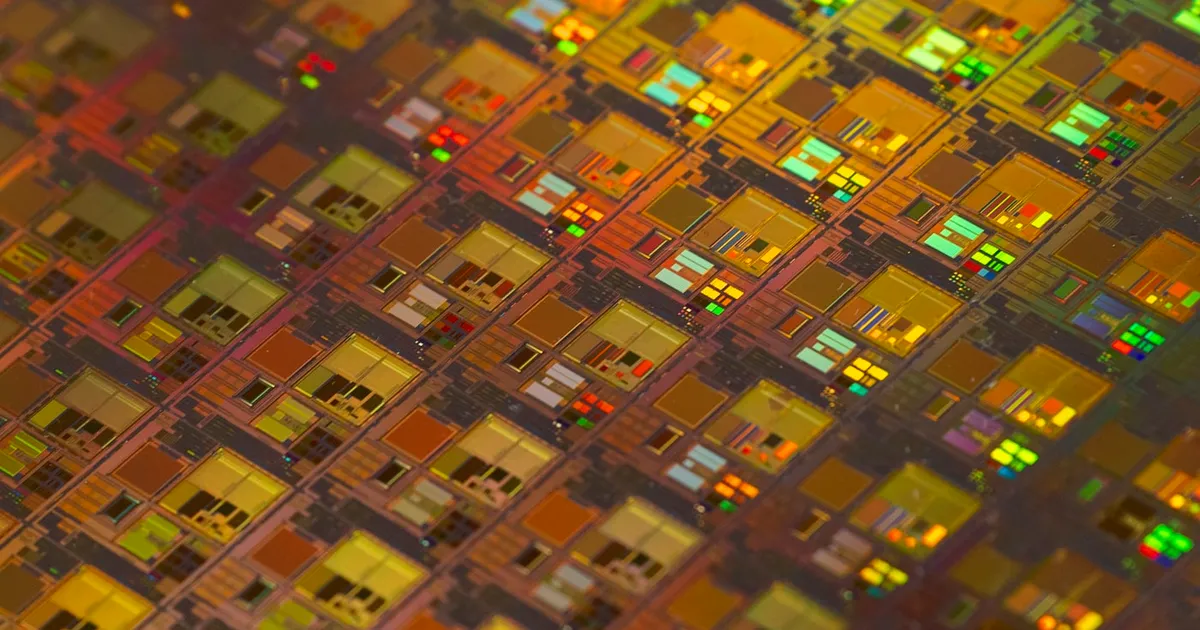
Meta Platforms is moving from buying AI chips to building them at scale. According to an internal memo reported by Reuters on July 9, 2026, Meta plans to begin manufacturing its first in-house AI accelerator — code-named Iris — in September 2026, while locking in long-term supplies of memory, storage, and optical networking gear for a compute expansion that aims to reach 14 gigawatts of capacity by 2027. The memo frames the move as central to a plan to roughly double the company’s data-center computing power.
What Iris is
Iris is Meta’s custom AI accelerator, designed in partnership with Broadcom and manufactured by TSMC, the Taiwanese foundry that fabricates chips for nearly every major technology company. Per the reporting, the chip cleared testing in about six weeks — a fast validation cycle — and is now slated to enter production in September.
Crucially, Meta positions Iris as a supplement, not a replacement, for the GPUs it buys from Nvidia and AMD. The company will keep purchasing merchant silicon for its most demanding training work while steering suitable workloads — particularly high-volume inference and ranking — onto its own chip. That is the same playbook other hyperscalers run: use custom silicon where the workload is well understood and the volume is enormous, and reserve general-purpose GPUs for the frontier.
Iris is the latest step in a custom-silicon effort Meta has pursued for years under its MTIA (Meta Training and Inference Accelerator) program, which has quietly powered recommendation and ranking systems across Facebook and Instagram. What is new is the ambition: a chip meant to shoulder a material share of Meta’s fast-growing AI compute, not just niche internal jobs.
The 14-gigawatt plan
The memo lays out a two-step expansion measured, tellingly, in power rather than chip count — the unit that now defines AI infrastructure:
- ~7 gigawatts of computing capacity coming online across 2026
- 14 gigawatts by 2027, roughly doubling the footprint
Measuring compute in gigawatts underscores how completely the constraint on AI has shifted from silicon alone to the electricity, cooling, and physical build-out required to run it. Meta’s projected AI infrastructure spending for the year runs as high as $145 billion, among the largest capital programs of any company on earth and a defining line item in the broader hyperscaler capex boom.
To hit those targets, the memo emphasizes securing the supply chain around the chip as much as the chip itself. Meta is reported to be locking in long-term deals for memory, storage, and optical equipment — the components that turn a pile of accelerators into a functioning data center. High-bandwidth memory in particular has been the industry’s tightest bottleneck, the subject of an intense HBM supply race among Samsung, SK hynix, and Micron. Guaranteeing allocation years in advance is now table stakes for anyone building at gigawatt scale.
Why Meta is building its own chip
The logic behind Iris is the same one driving every hyperscaler toward custom silicon:
Cost and margin. At Meta’s volume, even a modest per-chip saving on inference compounds into billions. Owning the design lets Meta tune the accelerator to its exact workloads — recommendation, ranking, ad targeting, and increasingly generative features — rather than paying a premium for general-purpose flexibility it does not always need.
Supply security. Nvidia’s most capable parts have been supply-constrained for years, with allocation dictating who can build fastest. A credible in-house chip gives Meta leverage and a fallback, reducing its exposure to a single vendor’s roadmap and pricing.
Efficiency per watt. When capacity is measured in gigawatts, performance-per-watt is destiny. A chip co-designed with the workload — much like a specialized NPU — can extract more useful work from each watt of a power budget that is itself becoming the scarcest resource.
The move also complements Meta’s other recent infrastructure push. Just days earlier, the company detailed plans for a cloud business that would sell AI compute to outside customers, positioning it against AWS, Azure, and Google Cloud. A cost-efficient in-house accelerator makes that ambition far more credible: the cheaper Meta’s compute, the more competitively it can rent it out.
Where it fits in the silicon landscape
Iris does not arrive in a vacuum. Google has run its TPUs for a decade, Amazon has Trainium and Inferentia, Microsoft has Maia, and OpenAI has been developing its own accelerator. Meta joining that club with a chip built for production — not just experimentation — narrows Nvidia’s structural advantage among its largest customers, even as those same customers keep buying Nvidia’s newest parts, such as the Rubin platform, for frontier training.
For Nvidia and AMD, the near-term impact is limited — Meta is explicit that Iris supplements rather than displaces their GPUs, and Meta’s overall compute appetite is growing so fast that in-house chips expand the pie more than they shrink Nvidia’s slice. The longer-term question is what share of inference migrates to custom silicon over time, and whether AMD’s MI400-class push can win the workloads that don’t. For Broadcom, the picture is unambiguously positive: as Meta’s design partner, it captures value on every Iris produced, cementing its role as the go-to enabler of hyperscaler custom silicon.
What it means
Meta putting Iris into production is a milestone in the slow, structural shift of AI compute from merchant GPUs toward hyperscaler-owned silicon. The headline is the September start date; the more important detail is the six-week validation and the supply-chain lock-ins around memory, storage, and optics — signs that Meta is treating Iris as a load-bearing part of its infrastructure, not a science project.
The winners are clear. Meta gains cost leverage, supply security, and a more credible path to selling compute externally. TSMC and Broadcom capture the manufacturing and design value of another gigawatt-scale program. And Meta’s ad and recommendation systems — the actual engines of its revenue — get cheaper, faster inference to run on.
The open questions are about pace and proof. Custom chips are hard to yield, harder to soften into mature software stacks, and easy to over-promise; Meta must show Iris performs in production, not just in a six-week test. And the $145 billion spend that surrounds it only pays off if AI features keep translating into engagement and ad revenue. For now, the signal is that the largest AI buyers no longer see building their own silicon as optional — it is how you control cost and destiny when your infrastructure is measured in gigawatts. Watch the September production start, the first workloads Meta migrates onto Iris, and whether the 14-gigawatt target for 2027 holds as power, not chips, becomes the real ceiling.
Tagged
Keep reading
 Chisato · · 7 min read
 Microsoft Maia 300: TSMC Order and Nvidia Challenge
Microsoft is in talks with TSMC to build 300,000+ Maia 300 AI chips, aiming for over 1 million units to cut its reliance on Nvidia. The plan and what it means.
 Chisato · · 5 min read
 Meta-Anthropic $10B Compute Deal: Why It Matters
Meta is in early talks to lease up to $10B of AI compute to Anthropic over two years — making Meta a cloud provider to its biggest model rival. Here's the story.
 Chisato · · 5 min read
 Meta's $10B Alberta Data Center: Canada AI Buildout
Meta is building its first Canadian data center, a 1-gigawatt AI campus in Alberta, backed by a new 932 MW gas plant. The scope, the power problem, and why it matters.