Marvell Q2 Earnings: Record $2.74B, Raised Guidance
Marvell posted record Q2 FY2027 revenue of $2.74B on a 46% data center surge, raised its outlook again, and guided Q3 to $3.15B. The numbers and what they mean.
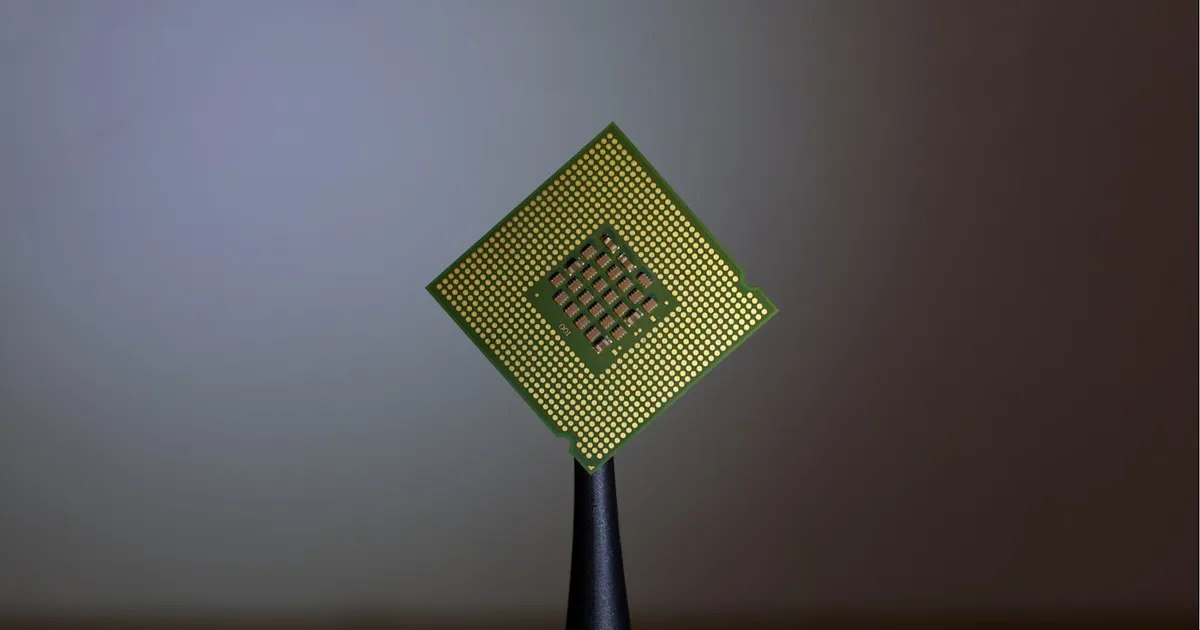
Marvell Technology capped the AI-chip earnings season with a record quarter and another raised outlook, reporting fiscal second-quarter results after the close on Wednesday, August 27, 2026 that leaned almost entirely on demand for its data center silicon. The company posted revenue of $2.74 billion, a company record and up 37% from a year ago, with adjusted earnings of $0.94 per diluted share. Just as important for a stock that has ridden the AI trade hard this year, management raised its annual outlook for the second consecutive quarter.
The print arrived one day after Nvidia’s blockbuster quarter reset expectations for the entire sector, leaving Marvell to answer a narrower but pointed question: can the custom-silicon and connectivity supplier keep pace with the accelerator leader, or is it a second-order beneficiary whose growth lags the headline names? The numbers argued for the former.
The quarter by the numbers
Marvell’s results were concentrated almost entirely in one place. Data center revenue jumped 46% year over year and now accounts for 79% of the business — a mix shift that has turned what was once a diversified networking-and-storage chipmaker into, functionally, an AI infrastructure company with legacy segments attached. The remaining fifth of revenue spans enterprise networking, carrier infrastructure, consumer, and automotive, none of which is growing anywhere near the pace of the data center line.
The forward guidance is where management pressed its advantage. Marvell forecast third-quarter revenue of $3.15 billion, plus or minus 5%, and adjusted earnings of $1.10 per diluted share, give or take five cents — a guide that topped the roughly $3.03 billion and $1.07 that analysts had been modeling. Guiding above consensus while raising the full-year outlook is the combination the market rewards, because it signals that demand is not just holding but accelerating faster than the company’s own prior forecasts assumed.
That matters for a stock that entered the report having roughly tripled year to date, up on the order of 180% in 2026. A run of that size sets a high bar: anything short of a beat-and-raise risks a sharp unwind, because the valuation already embeds aggressive assumptions about AI infrastructure spending. Marvell cleared the bar, but the setup underscores how little cushion these names carry into every print.
The mix shift also shows up beneath the top line. Data center is not only Marvell’s fastest-growing segment but its highest-value one, weighted toward complex custom parts and high-speed connectivity that command richer pricing than the company’s legacy catalog. That leaves the profitability story tied to a single question — whether custom-silicon ramps carry the margins management has guided toward as volumes scale — rather than to the slower-moving enterprise, carrier, and automotive lines that once anchored the business. Those legacy segments are stabilizing rather than growing, which is fine as long as the data center engine keeps compounding, but it removes the diversification cushion the company used to lean on when any one end market softened.
Custom silicon is the whole story
The strategic core of the quarter was custom silicon — chips Marvell co-designs and manufactures for a single hyperscale customer rather than selling off the shelf. On the call, management leaned on its expanded partnership with Alphabet’s Google, the centerpiece of which is the multi-billion-dollar warrant Marvell handed Google earlier in August, granting the search giant the right to buy up to roughly 7% of Marvell’s shares as it spends on custom chips. Management reaffirmed its target of $10 billion in custom revenue by fiscal 2029, the number the entire bull case is built around.
The logic behind custom silicon is straightforward and increasingly central to how the largest AI operators think about cost. As serving and training workloads scale, hyperscalers have concluded that buying merchant accelerators for everything leaves too much margin on the table and too little control over the roadmap. Designing bespoke inference chips — plus the networking, storage, and memory-interface controllers that surround them — lets an operator squeeze more of the total system cost onto its own terms. Marvell positions itself as the partner that turns those ambitions into shipping silicon, and the data center growth this quarter is the early proof.
That same thesis is lifting the broader connectivity ecosystem. Suppliers of the interconnect and signal-integrity components that bind AI racks together — a group that includes names like Astera Labs, which posted its own AI-driven surge — are riding the reality that an AI data center is only as fast as its slowest link. Marvell’s electro-optics and custom networking businesses sit squarely in that current.
The competitive read-across
Marvell’s results also sharpen the rivalry that hangs over the custom-chip market: its long-running contest with Broadcom, the incumbent partner on Google’s in-house tensor processors and the largest player in merchant custom silicon. Broadcom — which has stitched itself deeper into the AI buildout through arrangements like its $60 billion debt-backed compute deal tied to Anthropic — remains the company to beat on scale. But Google’s decision to hand Marvell a warrant worth billions signals a deliberate two-supplier posture, in which no single vendor controls the price and roadmap of a hyperscaler’s entire silicon stack.
For Marvell, the earnings print puts hard numbers behind that strategic argument. An eight-year customer relationship framed as a warrant deal is a promise; 46% data center growth and a raised full-year outlook are evidence that the pipeline is already converting. The gap between the two is what the stock’s roughly 180% run this year is meant to close, and this quarter narrowed it.
What it means
The winners here are the custom-silicon believers. Marvell delivered exactly the shape of quarter the AI-infrastructure thesis requires — record revenue, a data center segment compounding in the mid-40s, guidance above consensus, and a second consecutive raise to the annual outlook — with the Google warrant sitting behind it as a multi-year demand signal. For a company that spent stretches of this cycle trailing the accelerator leaders, the print is a step toward being valued as a front-line AI name rather than a peripheral one.
The risks are the same ones that shadow every custom-silicon story: concentration and cyclicality. When 79% of revenue comes from data centers and a large share of the growth is tied to a handful of hyperscale customers, the model is exposed if any one of them reprioritizes spend or pulls a program in-house. The warrant structure with Google aligns incentives over an eight-year horizon, but alignment is not the same as a guarantee, and the $10 billion fiscal-2029 custom target assumes an AI capital-spending environment that stays roughly as generous as it is today.
Three things are worth watching from here. First, whether Marvell’s custom revenue ramps on the trajectory the $10 billion target implies, or whether milestone-based deals slip as hyperscalers refine their roadmaps. Second, how the Broadcom rivalry evolves now that Google has formalized a second custom-silicon partner — a genuine two-supplier market would reshape pricing across the segment. And third, whether the broader AI capital-spending cycle that lifted this quarter holds through fiscal 2027, because a stock priced for a tripling year has almost no room for the buildout to slow.
Tagged
Keep reading
 Kurumi · · 5 min read
 Applied Materials Q3 2026 Earnings: Record Revenue Beat
Applied Materials posted a record $9.12B in Q3 revenue, up 25%, and guided Q4 to $10.25B as AI chip demand lifts its 2026 equipment outlook above 30%.
Kurumi · · 6 min read Broadcom Q3 2026 Earnings: AI Chips Triple, Stock Dips
Broadcom's fiscal Q3 2026 revenue hit a record $29.6B as AI chip sales more than tripled to $16.7B, but light Q4 guidance sent the stock lower.
 Kurumi · · 5 min read
 Nvidia AI Server Prices to Rise 15%+ on Memory Costs
Nvidia's server builders have told Microsoft, Google and Oracle that Vera Rubin and Grace Blackwell system prices will climb more than 15% from early 2027 as memory costs soar.