Chip Stocks Sell Off: What Sparked the July 2026 Rout
AI chip stocks tumbled in early July 2026 as the SOX fell 6.7% and Korea's Kospi plunged 7.9%. Here's what triggered the sell-off and what to watch next.
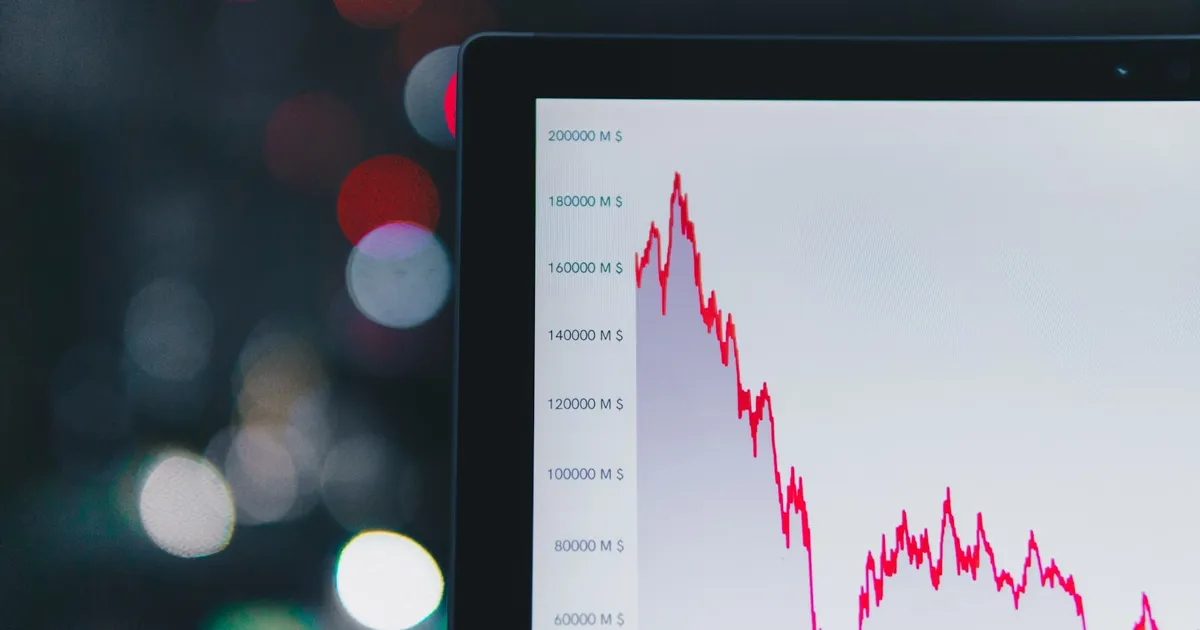
After a quarter that nearly doubled their value, semiconductor stocks ran into a wall this week. The PHLX Semiconductor Index (SOX) lost 6.7% in a two-session slide, and the damage rippled across the Pacific: South Korea’s Kospi benchmark plunged 7.9% in a single session, dragged down by the country’s memory-chip giants. With U.S. markets closed Friday, July 3 for the Independence Day holiday, traders are heading into the long weekend nursing the first real pullback in a rally that had looked unstoppable.
What sold off
The selling was concentrated in the names that had led the run. On Wednesday, Micron Technology, SanDisk, Applied Materials, and Lam Research each fell roughly 10%, while Intel and Marvell dropped about 9%. The bleeding continued Thursday, when the tech-heavy Nasdaq Composite slipped 0.8% even as the Dow Jones Industrial Average rose more than 1.1% — nearly 600 points — toward a new record.
That divergence is the story in miniature. Money didn’t leave the market; it rotated. Investors took profits in the most crowded, most expensive corner of the tape — AI semiconductors — and moved toward the steadier, more defensive names that populate the Dow.
The trigger for the acceleration came from Asia. A sharp sell-off in South Korean chipmakers helped drive the Kospi’s 7.9% plunge, and that weakness fed straight back into U.S.-listed memory and equipment stocks overnight. Memory has been the tightest, most cyclical link in the AI supply chain, and it tends to move first and hardest in both directions.
The backdrop: a rally priced for perfection
Context matters here. Coming into July, AI chip stocks had added a combined $2 trillion in market value, and the SOX had surged more than 47% year to date after roughly doubling during the second quarter. NVIDIA still commands an estimated 70–80% share of the AI GPU market, and the enthusiasm around its dominance had lifted the entire sector — suppliers, equipment makers, and memory vendors alike.
When a group runs that far that fast, it doesn’t take much to spark a reversal. Positioning gets crowded, valuations stretch, and any excuse to lock in gains becomes a reason to sell. This week supplied the excuse: a wobble in Asian memory names, a strong run begging for consolidation, and a macro calendar that suddenly turned tricky.
The jobs report added a twist
The macro piece arrived in the form of the June employment report. The economy added just 57,000 jobs — about half what forecasters expected — while the unemployment rate ticked down to 4.2% from 4.3%. A weak headline with a falling jobless rate is a genuinely mixed signal, and the market read it through the lens of Federal Reserve policy.
Notably, traders have been pricing the risk of Fed rate hikes, not cuts — a sign of how much the inflation debate has shifted. After the soft payrolls print, the odds of a September hike fell to 50.7% from 62.8%, and the probability of a hike by year-end dropped to 75.6% from 83.1%. In theory, lower odds of tighter policy should support richer-valued growth stocks. In practice, a cooling labor market also raises questions about the demand that underpins the whole AI capital-spending thesis — and this week, that worry won.
Why memory moved first
It’s no accident that memory names led the decline. High-bandwidth memory sits at the center of the AI buildout, and its pricing has been on a tear driven by the same forces powering the AI memory supercycle. That makes memory stocks a high-beta proxy for AI sentiment: when confidence is rising, they outrun the market; when it cracks, they fall furthest.
Micron in particular has become a barometer for the trade, and — as we’ve written before — Micron’s stock keeps swinging precisely because it captures the cyclicality of memory pricing in a single ticker. The supply picture remains tight, with the industry racing to bring on capacity in the HBM4 supply race, but tight supply cuts both ways: it lifts prices on the way up and amplifies fear about a glut on the way down.
What it means
A 6.7% pullback after a near-doubling is not a crash — it’s the kind of digestion that healthy uptrends produce. But it’s a useful reminder that the AI chip trade has become a single, correlated bet, and that correlation works against you when sentiment turns.
Who feels it most. The memory and equipment names — Micron, SanDisk, Applied Materials, Lam Research — carry the highest beta to AI enthusiasm and will keep leading in both directions. The Dow’s simultaneous march to a record shows there’s an obvious release valve: rotation into defensives whenever the AI trade gets too crowded.
What to watch next. Three things. First, the read-through from Asian memory prices, which moved first this week and tend to lead the U.S. names. Second, the flood of chip earnings starting later in July — guidance on data-center demand will either validate the run or expose it. Third, the Fed. With hike odds still elevated, any hot inflation print could pressure the highest-multiple stocks precisely where this sector lives.
The bigger question sits underneath the tape: is AI demand durable enough to justify valuations that assume years of uninterrupted growth? Every capacity commitment — from hyperscaler capital budgets to the wave of AI-lab IPO filings — is a bet that it is. This week the market flinched. Whether that flinch becomes a trend depends on whether the demand behind the GPUs shows up in the numbers. When trading resumes Monday, that’s the debate that will set the tone.
Tagged
Keep reading
 Kurumi · · 5 min read
 Marvell Q2 Earnings: Record $2.74B, Raised Guidance
Marvell posted record Q2 FY2027 revenue of $2.74B on a 46% data center surge, raised its outlook again, and guided Q3 to $3.15B. The numbers and what they mean.
 Kurumi · · 5 min read
 Nvidia AI Server Prices to Rise 15%+ on Memory Costs
Nvidia's server builders have told Microsoft, Google and Oracle that Vera Rubin and Grace Blackwell system prices will climb more than 15% from early 2027 as memory costs soar.
Kurumi · · 5 min read Etched Raises $700M at $21B Valuation From Jane Street
Etched raised $700M led by Jane Street at a $21B valuation, doubling in a month, and shipped its first Sohu inference rack. The deal and the risks.