TSMC Q2 2026 Earnings Preview: 68% June Revenue Jump
TSMC's June revenue jumped about 68% year over year on AI chip demand, setting up its July 16 Q2 report. Here are the numbers and what to watch.
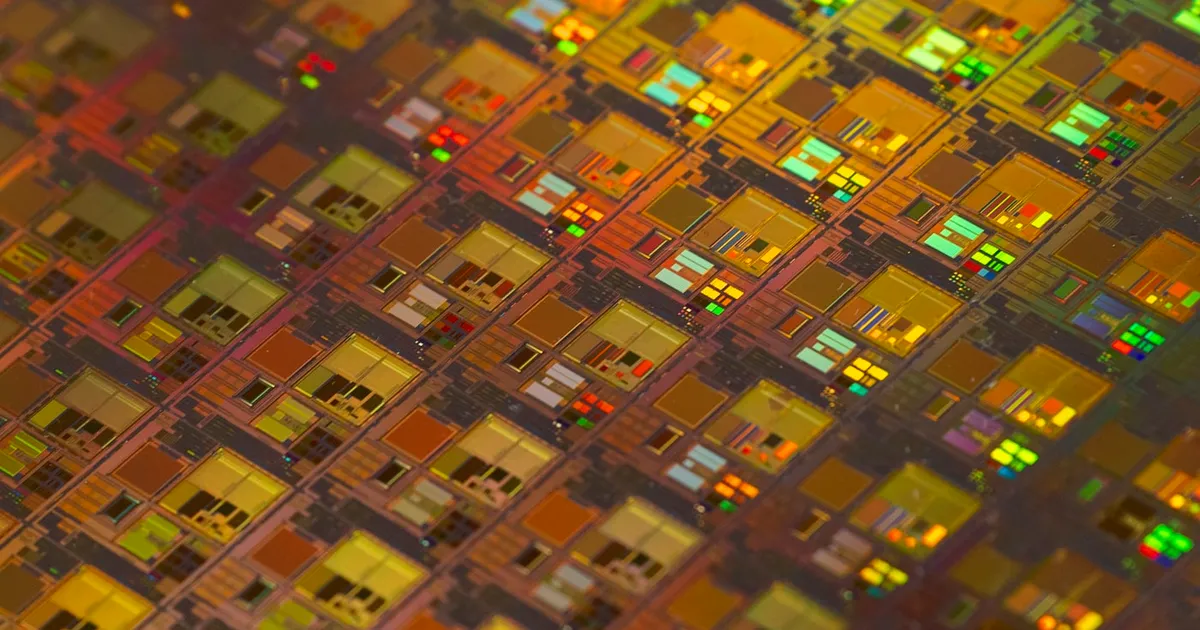
The company that manufactures the world’s most advanced AI chips just posted another set of numbers that underline how far the boom still has to run. On Monday, July 13, 2026, Taiwan Semiconductor Manufacturing Co. (TSMC) reported June revenue of about NT$442.68 billion, up roughly 6.2% from May and about 68% from a year earlier. The monthly print lands three days before the foundry reports full second-quarter results, and it sets an unusually high bar for one of the most closely watched earnings releases of the season.
The June number
The headline figure is the year-over-year jump. TSMC’s June sales rose about 68% against the same month in 2025 — a striking acceleration for a company of its scale. The month-on-month move matters too: June revenue climbed 6.2% from May, and that direction is itself notable. Over the past four years, TSMC’s June revenue has typically declined from May on seasonal patterns. Growing sequentially into a month that usually softens is a sign that AI-driven orders are overwhelming the normal rhythm of the business.
Monthly revenue (NT$B)
January 2025 – June 2026 · June 2026 is an all-time monthly record
June 2026 came in 67.9% above June 2025 (marked). The dips each February reflect the Lunar New Year holiday. 2026 figures are in the table below. Source: TSMC monthly revenue reports.
May → June revenue change (%)
The June seasonal decline, 2022–2025 — broken in 2026
June revenue had fallen from May in each of the past four years; growing 6.2% into a seasonally soft month is the anomaly the AI order flow explains. Source: TSMC monthly revenue reports.
Stacked up, the first half tells the same story. TSMC’s cumulative revenue for the first six months of 2026 reached roughly NT$2.4 trillion, or about $75 billion, up about 35.6% from the same period a year earlier. The second quarter alone came in around NT$1.27 trillion, or about $39.6 billion — landing within the company’s guided range of $39 billion to $40.2 billion and matching the average of analyst estimates.
Month by month, 2026 has been a stair-step higher — with June setting an all-time record:
| Month | Revenue (NT$B) | MoM | YoY |
|---|---|---|---|
| January 2026 | 401.26 | +19.8% | +36.8% |
| February 2026 | 317.66 | −20.8% | +22.2% |
| March 2026 | 415.19 | +30.7% | +45.2% |
| April 2026 | 410.73 | −1.1% | +17.5% |
| May 2026 | 416.98 | +1.5% | +30.1% |
| June 2026 | 442.68 | +6.2% | +67.9% |
Source: TSMC monthly revenue reports (unaudited). The February dip is the Lunar New Year holiday.
Why the demand is so tight
TSMC does not design chips; it builds them, and it has become the single most important bottleneck in the AI supply chain. Nearly every leading AI accelerator and high-end CPU shipping this year is fabricated on TSMC’s most advanced process nodes, and the company has repeatedly described its cutting-edge capacity as effectively sold out. Its N3 node — the 3-nanometer generation targeted by this year’s flagship GPUs and CPUs — has no spare room, and demand for CoWoS advanced packaging, the technique that stitches logic dies together with high-bandwidth memory, continues to outstrip what the company can build.
That scarcity flows straight to the bottom line. TSMC is on track to generate more than $40 billion in AI-related chip revenue in 2026, a figure that would represent close to 25% of its total sales — a share that barely registered a few years ago. The demand is a direct read-through from the hyperscaler capital-spending boom: as Amazon, Microsoft, Google, and Meta pour hundreds of billions into AI infrastructure, the orders eventually route through a single foundry in Taiwan.
What Wall Street expects on July 16
TSMC reports full second-quarter results on Thursday, July 16, and the monthly revenue figures have already answered the top line. The remaining questions are about profitability and forward guidance.
- Revenue. With Q2 sales confirmed at roughly $39.6 billion, TSMC has delivered about 33% year-over-year growth against the $30.07 billion it booked in the second quarter of 2025.
- Earnings. Analysts model earnings of roughly $3.80 to $3.83 per ADR unit, up sharply from $2.47 a year earlier — an increase of more than 50% at the bottom line. Several analysts see room to beat that consensus.
- Margins. The company guided second-quarter gross margin to a range of 65.5% to 67.5%, reflecting high fab utilization and continued cost discipline even as it absorbs the expense of ramping new nodes.
- Capital spending. TSMC has already pointed its 2026 capital-expenditure outlook toward the high end of its $52 billion to $56 billion range, a signal that management expects the demand to persist well beyond this year.
The other number to watch is progress on N2, TSMC’s 2-nanometer process. Management has flagged a successful ramp and described the node as another major long-term growth platform. Because leading-edge nodes command premium pricing and lock in customers for years, commentary on N2 yields and volume will shape how investors think about 2027 and beyond.
The backdrop: a jittery chip market
TSMC’s strength arrives in a semiconductor market that has grown visibly nervous even as the fundamentals keep improving. The PHLX Semiconductor Index has gained roughly 60% year to date, but the rally has been punctuated by sharp reversals. Just last week, chip stocks sold off after Samsung’s record quarter failed to clear Wall Street’s lofty AI expectations — a reminder that in this group, beating a year-ago comparison is not enough when the bar has been raised so high. That episode followed a broader chip-stock sell-off earlier in July in which investors trimmed the market’s most crowded trade.
The concern is not that demand is weak. It is that expectations have climbed so far that even blowout results can disappoint, and that the eye-watering prices of AI memory and advanced packaging could eventually squeeze the very customers driving the orders. There is a supply-side worry too: reports that DeepSeek is developing its own AI inference chip have added to fears that today’s buyers could, over time, design around the incumbents. None of that changes TSMC’s near-term picture — it makes the chips regardless of whose logo is on them — but it explains why a 68% revenue jump does not automatically translate into a rising share price.
TSMC’s structural advantage
What separates TSMC from the more cyclical names in the sector is its position. It is not betting on a single customer or a single chip architecture. Whether the winning accelerator this cycle comes from Nvidia, a hyperscaler’s in-house silicon, or a challenger, the overwhelming majority of leading-edge designs are fabricated on TSMC’s process and packaged with its technology. That neutrality makes the company a rare way to own the AI buildout without picking the specific winner — a toll booth on the entire industry’s most advanced silicon.
That position also gives TSMC pricing power. As long as its leading-edge capacity stays sold out, it can raise prices on the nodes that matter most and pass through the cost of building new fabs. The company has been methodical about adding capacity, but deliberately so; it has no interest in overbuilding into a glut, which is part of why the supply-demand tightness has held.
What it means
TSMC’s June revenue is the cleanest available signal that the AI capital-spending cycle is still accelerating, not cresting. A 68% year-over-year jump in a single month — in a month that usually declines sequentially — is hard to square with the idea that the boom is running out of steam. The read-through extends well beyond Taiwan: TSMC sits upstream of nearly every AI chip shipping today, so its order book is a leading indicator for the whole trade.
Who wins. TSMC itself, most obviously, along with the equipment and materials suppliers that feed its fabs. Because the company is architecture-agnostic, it captures value no matter which accelerator design pulls ahead — a durable advantage over customers fighting for share in a fast-moving market. Its push into N2 extends that moat into the next generation.
Who should be cautious. Investors betting that strong results alone will lift the stock. The lesson of the past two weeks — a record Samsung quarter that still triggered a sell-off — is that the market has already priced a great deal of good news. A clean beat on July 16 may be necessary just to hold current levels, and any hint of softening demand, margin pressure from expensive inputs, or a more cautious 2027 outlook could hit the shares harder than the numbers warrant.
What to watch next. Three things at Thursday’s report. First, the gross-margin print and whether TSMC is holding the line despite the cost of ramping N2. Second, any update to full-year revenue guidance — an upward revision would validate the second-half demand picture the whole sector is counting on. Third, management’s tone on AI demand durability into 2027, especially around advanced packaging capacity, which remains the tightest link in the chain. The monthly numbers have already told us the AI order flow is intact. Thursday will tell us how much of it TSMC is keeping as profit — and how confident it is that the flow continues.
Tagged
Keep reading
 Kurumi · · 15 min read
 TSMC Q2 2026 Earnings: Record Profit, Capex Raised
TSMC posted $40.2B in Q2 revenue and a 77% jump in net profit on AI chip demand, then raised its 2026 capex to $60–64B. The numbers and what to watch.
 Kurumi · · 5 min read
 Marvell Q2 Earnings: Record $2.74B, Raised Guidance
Marvell posted record Q2 FY2027 revenue of $2.74B on a 46% data center surge, raised its outlook again, and guided Q3 to $3.15B. The numbers and what they mean.
Kurumi · · 5 min read SMIC Q2 2026 Earnings: Profit Jumps 262%, Stock Rises
SMIC's Q2 profit surged 262% to $479M as revenue rose 36% and margins expanded, sending the Chinese foundry's Hong Kong shares up as much as 6.4%.