TSMC Arizona Expansion: $100B More, $265B Total
TSMC will invest another $100 billion in Arizona, adding four fabs and pushing its total US commitment to $265 billion. The plan, the numbers, and what to watch.
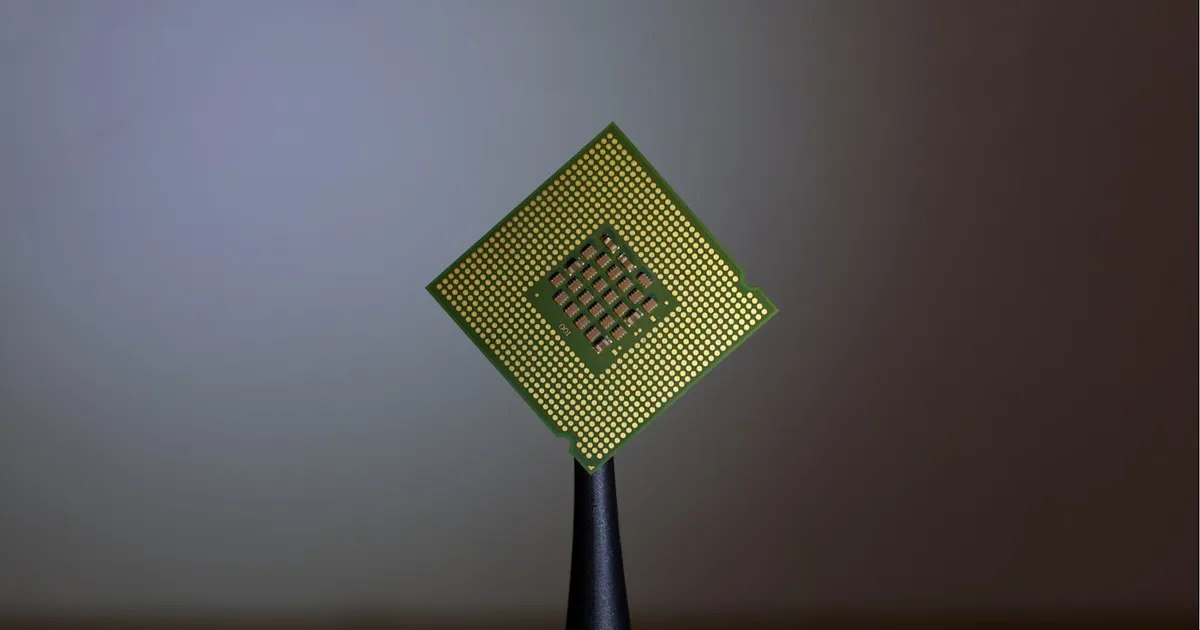
The world’s most important chipmaker just made its largest bet on American soil even larger. On Thursday, July 16, 2026, alongside a record second quarter, Taiwan Semiconductor Manufacturing Company said it would invest an additional $100 billion to build four more advanced fabrication plants in Arizona. The commitment lifts TSMC’s total planned investment in the state to roughly $265 billion — one of the largest single foreign investments in the history of US manufacturing — and turns what began as a two-fab project into a full-scale advanced-chip cluster.
The announcement, made from Phoenix and echoed by state and local officials, lands at a delicate moment for the semiconductor trade. The sector spent much of June in a deep selloff, and even TSMC’s blowout earnings could not stop chip stocks from sliding later the same week. Against that backdrop, a nine-figure capital pledge reads less like a routine expansion and more like a statement of conviction: TSMC is telling the market that the AI buildout is a multi-year structural shift, not a bubble waiting to deflate.
The plan, by the numbers
The new money funds four additional fabs, which TSMC says will produce chips at the 2-nanometer node and more advanced processes — the leading edge of what the company can manufacture. Those join facilities already under construction or in operation, bringing the Arizona footprint to a planned 10 fabs, two advanced-packaging facilities, and a research-and-development center.
The scale of the R&D component matters as much as the fabs. For years, critics argued that TSMC’s overseas sites would remain second-tier assembly outposts while the company’s real innovation stayed in Taiwan. A dedicated R&D center in Arizona is a direct answer to that concern, signaling that advanced-process development — not just volume production — will take root in the United States.
The $265 billion total reflects the additional $100 billion stacked on top of a prior commitment that stood near $165 billion. TSMC framed the increase as a response to what its leadership called a multi-year structural demand surge for AI chips, with the company’s chairman and chief executive C.C. Wei crediting strong support from US customers as well as federal, state, and local governments.
The earnings that paid for it
The expansion did not arrive in a vacuum. It came the same day TSMC reported the kind of quarter that makes a $100 billion pledge look affordable. As detailed in our Q2 2026 earnings breakdown, the company posted record revenue near $40.2 billion and a 77.4% jump in net profit year over year, driven by insatiable demand for the high-performance logic chips at the heart of AI accelerators.
TSMC also raised its full-year 2026 capital-expenditure budget to $60–64 billion, up from an earlier range of $52–56 billion. That upward revision is the connective tissue between the earnings and the Arizona news: a company only lifts its capex guidance and commits to a fresh $100 billion abroad when it believes the order book justifies both. TSMC manufactures the most advanced processors for the largest names in computing, and its customers’ own spending plans — the hyperscalers guiding toward roughly $700 billion in combined capital outlays this year, as covered in our Big Tech capex preview — flow directly into TSMC’s forecasts.
Why Arizona, and why now
The strategic logic behind the Arizona buildout has two layers. The first is geographic risk. TSMC’s most advanced production has historically been concentrated on a single island that sits at the center of a geopolitical fault line. Every major customer — and every government those customers answer to — has an interest in seeing leading-edge capacity exist somewhere other than Taiwan. Arizona is the most visible hedge against that concentration, complemented by build-outs in Japan and Germany.
The second layer is policy pull. US industrial policy has spent several years trying to reshore advanced chipmaking through incentives, procurement preferences, and pressure on the largest buyers to source domestically. TSMC’s willingness to keep raising its Arizona number is partly a bet that this policy environment is durable — that the demand for “made in America” silicon, from both commercial customers and the government, will persist long enough to earn a return on fabs that cost more to run than their Taiwanese counterparts.
That cost gap is the catch. Overseas fabs are structurally more expensive than TSMC’s mature Taiwan operations — labor, construction, supply chain, and ramp-up all run higher — which is why the company has been candid that its US expansion carries a margin cost. The Arizona bet only pays off if AI-driven demand stays strong enough, and pricing firm enough, to absorb that premium. TSMC’s leadership is effectively wagering that it will.
The manufacturing challenge underneath
Building four more leading-edge fabs is not simply a matter of writing checks. 2-nanometer production sits at the frontier of what is physically possible in semiconductor manufacturing, requiring the most advanced EUV lithography tools on the planet and a workforce trained to operate them at yields high enough to be profitable. Staffing has been the recurring friction point for TSMC in Arizona: transplanting the operational culture and deep technical bench that makes its Taiwan fabs so productive has proven harder than pouring concrete.
The advanced-packaging facilities are just as consequential. As raw transistor scaling slows, more of the performance gains in modern chips come from how separate silicon dies are stitched together — the chiplet approach that lets designers combine specialized pieces into a single package. Bringing that packaging capacity onshore, rather than shipping US-made wafers back to Asia to be assembled, is what turns Arizona from a wafer plant into a self-contained advanced-chip ecosystem.
What it means
TSMC’s decision to add another $100 billion in Arizona is the clearest signal yet that the AI infrastructure cycle is being underwritten by its most credible participant. TSMC does not speculate on demand; it builds capacity against booked and forecast orders from the companies actually deploying AI at scale. A commitment of this size, made in the same breath as raised capex guidance, is a vote that the buildout has years left to run.
The immediate winners are Arizona and the broader US reshoring effort, which now anchors a genuine leading-edge cluster rather than a symbolic outpost. Equipment suppliers stand to benefit as four new 2nm fabs order the EUV lithography systems and packaging tools they require, and the customers who most want geographic diversification — chip designers wary of a Taiwan-only supply chain — gain a second source for their most advanced parts. It also raises the competitive bar for rivals racing to close the process gap, from Intel’s high-NA EUV push to other reshoring plays like Micron’s US chip investment.
The risks are real and worth watching. The margin drag from higher-cost US operations is a permanent headwind that only strong pricing can offset, and the entire thesis rests on AI demand holding up — the same demand the June and July chip selloffs suggest investors are nervously re-pricing. Execution risk is nontrivial too: four more leading-edge fabs mean four more chances for the staffing and yield problems that have dogged the Arizona ramp.
What to watch next. Track TSMC’s construction and ramp timelines for the new fabs, and whether 2nm yields in Arizona converge toward Taiwan’s. Watch the hyperscaler earnings later this month for confirmation that the capex feeding these fabs is still climbing. And keep an eye on gross margins in TSMC’s coming quarters — the number that will reveal whether a $265 billion American bet is a triumph of foresight or an expensive hedge the market was not yet ready to reward.
Tagged
Keep reading
 Kurumi · · 6 min read
 TSMC July 2026 Revenue: Record NT$467.58B, Up 44.7%
TSMC reported record July revenue of NT$467.58 billion, up 44.7% year over year on AI chip demand. The numbers, the raised guidance, and what to watch.
Kurumi · · 5 min read TSMC EMIB-Like Packaging: A CoWoS Alternative
TSMC is developing silicon-bridge packaging similar to Intel's EMIB with Kinsus, an alternative to sold-out CoWoS. Intel and AMD stocks jumped on the report.
 Kurumi · · 15 min read
 TSMC Q2 2026 Earnings: Record Profit, Capex Raised
TSMC posted $40.2B in Q2 revenue and a 77% jump in net profit on AI chip demand, then raised its 2026 capex to $60–64B. The numbers and what to watch.