Micron's $3B US Chip Investment: What to Know
Micron will invest up to $3 billion to strengthen the US chip supply chain, anchored by a GlobalWafers deal. Shares jumped 7%. Here's the plan and why it matters.
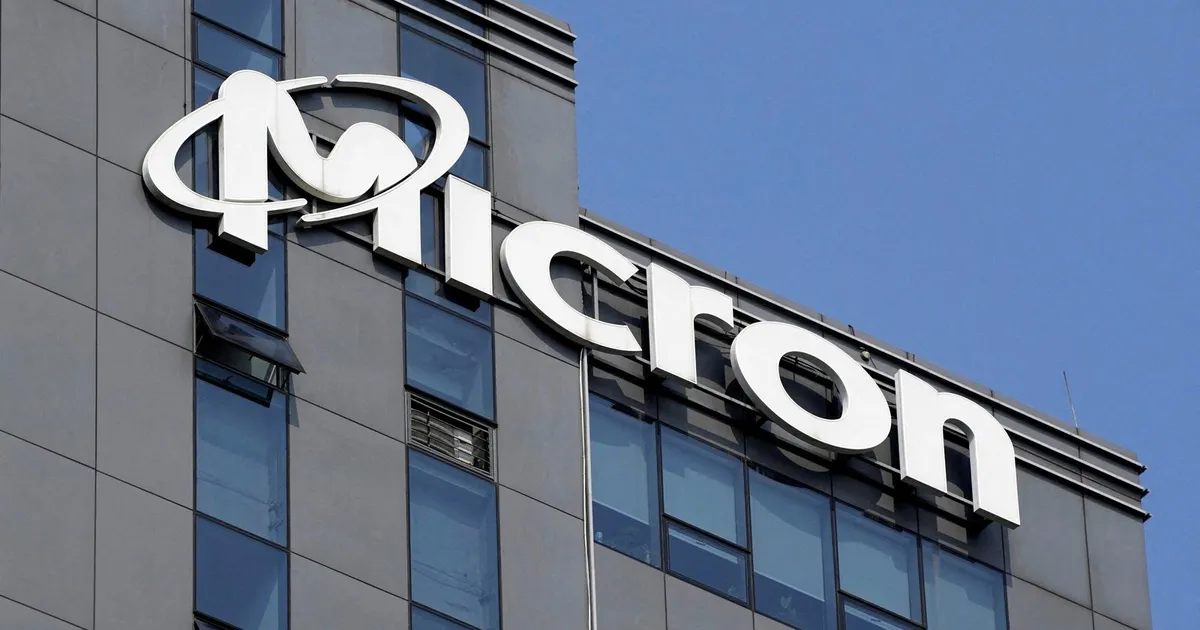
A week after semiconductor stocks led a sharp market pullback, one of the sector’s most volatile names gave investors a reason to buy again. On July 9, 2026, Micron Technology announced it will invest up to $3 billion to strengthen the U.S. semiconductor supply chain, anchored by a strategic deal with silicon-wafer maker GlobalWafers. Micron shares rose about 7% on the day, helping the memory group lead a broader chip rebound.
What Micron announced
The centerpiece is a partnership with GlobalWafers, one of the world’s largest suppliers of the blank silicon wafers that every chip starts from. Micron will provide $500 million in strategic financing to advance GlobalWafers America’s 300mm raw silicon wafer manufacturing facility in Sherman, Texas, and the two companies signed a 10-year supply agreement giving Micron access to additional domestic wafer capacity.
Micron framed the roughly $3 billion in commitments as a way to improve supply assurance, increase long-term planning flexibility, and secure the raw-material foundation for advanced memory and storage — the products at the center of the AI buildout. The company also reiterated a far larger ambition: plans to invest more than $250 billion in the U.S. through 2035, a figure it ties to surging AI-era memory demand and the Trump administration’s push to reshore chip production.
The logic is straightforward vertical security. Micron is spending enormous sums to build leading-edge memory fabs; those fabs are worthless without a reliable stream of high-quality 300mm wafers. By financing a domestic wafer supplier and locking in a decade of capacity, Micron insulates the most expensive part of its business from the supply shocks and geopolitical risk that have repeatedly whipsawed the industry.
Why the timing matters
The announcement landed at a delicate moment for chip stocks. Just days earlier, the sector suffered its first real pullback of the year — the July 2026 chip selloff that dragged the SOX index and memory names sharply lower on fears that AI infrastructure spending had run ahead of itself. The bearish case sharpened this week when reports put Intel down roughly 21% amid a deepening semiconductor slide, with investors questioning whether the AI capex boom could sustain the sector’s valuations.
Against that backdrop, a $3 billion commitment reads as a confidence signal. A company does not lock in a decade of wafer supply and reaffirm a quarter-trillion-dollar domestic investment plan if it expects memory demand to roll over. Micron effectively told the market it is planning for structurally higher volumes, not a cyclical peak — and the 7% pop suggests investors, at least for a day, were willing to believe it.
Micron’s whipsaw, in context
Few large-caps swing as violently as Micron, and the reason is structural: memory is the most cyclical link in the chip chain. As we’ve covered in why Micron stock keeps swinging, the company’s fortunes track the memory price cycle almost one-for-one, and in 2026 that cycle has been dominated by a single force — the AI memory supercycle. AI accelerators are voracious consumers of high-bandwidth memory, and the race to supply HBM has tightened the entire memory market, lifting prices for conventional DRAM and NAND alongside it.
That dynamic has turned Micron into one of the AI trade’s purest expressions on the balance sheet. When enthusiasm runs hot, Micron soars; when the market frets that hyperscaler spending will slow, Micron falls hardest. The wafer deal doesn’t change that beta — Micron will remain a high-volatility name — but it does address the supply side of the equation, ensuring the company can actually produce the memory the AI cycle demands.
Micron’s strategic posture has been consistent all year. It has tied its balance sheet directly to AI demand through arrangements like its strategic stake taken by Anthropic, and it continues to argue that memory is no longer a commodity afterthought but a strategic, capacity-constrained input to the entire AI stack. The GlobalWafers deal extends that thesis one layer further upstream, to the raw silicon itself.
The policy backdrop
The $250 billion domestic figure and the Sherman, Texas siting are not incidental. Reshoring chip manufacturing has become a bipartisan priority, and the current administration has leaned on chipmakers to expand U.S. capacity, using a mix of incentives and pressure. Micron’s announcement — framed explicitly around strengthening the U.S. semiconductor ecosystem — slots neatly into that agenda, and it follows a pattern of headline domestic-investment commitments from the largest chip firms.
For Micron, the alignment is convenient rather than charitable. Domestic wafer supply reduces exposure to trade friction and export-control uncertainty, and a visible reshoring commitment buys goodwill with the policymakers who shape the incentives and restrictions that govern the industry.
What it means
Micron’s $3 billion is best understood as supply-chain insurance dressed as a growth announcement — but the market reaction shows why the framing worked. On a day when the sector was still nursing selloff wounds, Micron chose to project long-term confidence, and investors rewarded it.
Who wins: GlobalWafers, which secures a marquee customer and financing for its Texas expansion; Micron, which locks in a decade of domestic wafer capacity to feed its fabs; and the reshoring push, which gains another concrete data point.
What it doesn’t fix: Micron’s core volatility. The stock remains a leveraged bet on the memory cycle, and this deal secures inputs rather than demand. If hyperscaler AI spending genuinely slows, no amount of wafer supply will insulate Micron’s earnings — the same fear that drove this month’s selloff is still the swing factor.
What to watch: the third earnings season of 2026 begins next week, and memory guidance will be the tell. Micron’s own results and its read on HBM pricing will show whether the confidence behind this $3 billion is matched by the order book — or whether, once again, the most cyclical name in chips is buying capacity into the top of a cycle. For now, the message from Boise is that the AI memory boom has room to run.
Tagged
Keep reading
 Kurumi · · 6 min read
 Korea Chip Exports Hit Record in August, Up 209%
South Korea's chip exports jumped 209% in August 2026 to a record $46.65B — nearly half of all exports — as hyperscaler AI spending drove demand.
 Kurumi · · 5 min read
 Marvell Q2 Earnings: Record $2.74B, Raised Guidance
Marvell posted record Q2 FY2027 revenue of $2.74B on a 46% data center surge, raised its outlook again, and guided Q3 to $3.15B. The numbers and what they mean.
 Kurumi · · 5 min read
 Nvidia AI Server Prices to Rise 15%+ on Memory Costs
Nvidia's server builders have told Microsoft, Google and Oracle that Vera Rubin and Grace Blackwell system prices will climb more than 15% from early 2027 as memory costs soar.