TSMC July 2026 Revenue: Record NT$467.58B, Up 44.7%
TSMC reported record July revenue of NT$467.58 billion, up 44.7% year over year on AI chip demand. The numbers, the raised guidance, and what to watch.
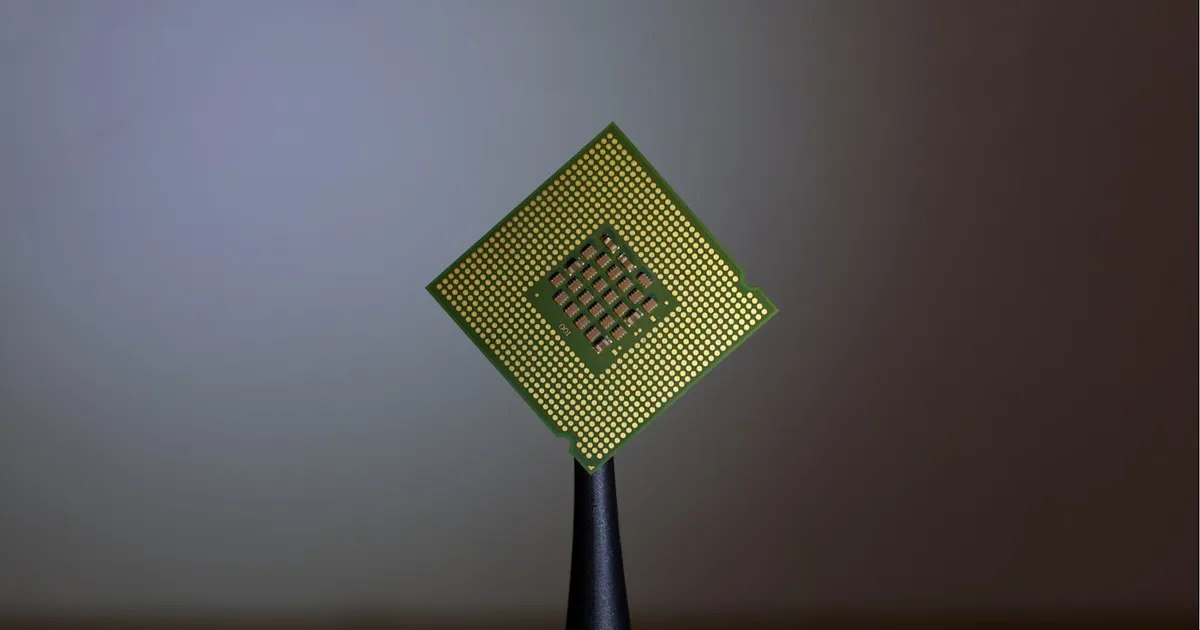
The single most watched monthly data point in the AI trade came in hot again. On August 10, 2026, Taiwan Semiconductor Manufacturing Company disclosed July revenue of NT$467.58 billion — roughly $14.5 billion — up 44.7% year over year and a record for any single month in the company’s history. For a market that treats TSMC’s sales prints as the closest thing to a real-time read on AI hardware demand, the number was another piece of hard evidence that the buildout is still accelerating rather than cooling.
TSMC releases revenue on a monthly cadence, weeks ahead of the detailed quarterly earnings that most companies report, which makes each print a leading indicator the entire semiconductor complex trades on. July’s figure extends a run of results that has repeatedly outpaced the company’s own guidance, and it arrives with TSMC’s management already on record — after last month’s record-setting second quarter — arguing that AI demand is structural, not a bubble waiting to deflate.
The number, in context
At NT$467.58 billion, July revenue was not only up sharply from a year ago but continued the sequential strength that has defined 2026 for TSMC. The year-over-year growth rate of 44.7% is the metric that matters most: it shows demand still compounding off an already-elevated base, the harder trick to pull off as comparisons get tougher.
The composition of that growth is as important as the headline. High-performance computing (HPC) — the segment where TSMC books revenue from AI accelerators, data-center GPUs, and the custom silicon designed by hyperscalers — accounted for 66% of second-quarter revenue, up from the smartphone-led mix that defined the foundry’s business for a decade. July’s strength is, in substance, AI strength: the leading-edge nodes and advanced packaging that go into training and inference hardware are the lines running hottest.
Ahead of its own guidance
The July print puts TSMC ahead of its full-year guidance, which the company already raised last month. After second-quarter earnings, TSMC lifted its 2026 revenue outlook to grow “slightly above 40%” in U.S. dollar terms — an unusually specific and aggressive target for a company of its size — and running above that pace through July gives management room it did not have at the start of the year.
The spending side moved with it. TSMC raised its 2026 capital expenditure plan to between $60 billion and $64 billion, an increase of roughly 15% over its earlier budget. Capex at that scale is the tell that TSMC believes the demand is durable: the leading-edge fabs and packaging capacity those dollars fund take years to come online, so committing them is a multi-year vote of confidence in AI silicon volumes. It also feeds directly into the broader capital-spending surge running through the whole AI supply chain, from foundries to the hyperscalers filling data centers with the chips TSMC makes.
The packaging bottleneck behind the demand
Part of what makes the demand so concentrated is where the constraint sits. The most advanced AI accelerators depend not just on leading-edge logic but on advanced packaging — the technology that stitches logic dies together with stacks of high-bandwidth memory into a single module. That packaging capacity has been the industry’s tightest chokepoint, and TSMC’s willingness to raise capex is, in large part, a plan to relieve it.
For customers, the monthly revenue strength is the visible surface of a scramble for allocation happening underneath. When a foundry is running ahead of raised guidance, it means the order book is full and the queue for capacity is long — which is exactly the environment in which chip designers pay up, and pay early, to secure supply.
What the market has already priced
TSMC’s data has not been trading in a vacuum. The stock and the wider chip complex spent parts of the summer whipsawing — a June selloff gave way to a rally as one strong data point after another undercut the bubble thesis. The pattern reveals how tightly positioned the market is around TSMC specifically: because its monthly numbers are among the few unfiltered reads on real AI hardware consumption, they move sentiment for the entire sector, not just for Taiwan’s largest company.
That sensitivity cuts both ways. A print that merely met expectations could now be read as deceleration; a beat like July’s reinforces the momentum trade. The 44.7% growth rate does not settle the longer-running argument over whether AI infrastructure spending is sustainable — but it removes, for another month, the near-term evidence a skeptic would need.
The caution flags
Not everything in the outlook points straight up. TSMC has guided for a gross-margin dip in the third quarter, the drag coming from the ramp costs of new nodes and the dilution from its overseas fabs, which run at lower margins than its Taiwan operations as they scale. Revenue growth and margin trajectory are two different lines, and the market has at times punished the second even while celebrating the first.
There is also the structural question that raised capex always raises: capacity committed today is demand assumed for the years it takes to build. If AI accelerator demand were to soften before that capacity comes online, the same $60–64 billion that reads today as confidence would read as overhang. TSMC’s management has been consistent that it sees the demand as durable — but the size of the bet is exactly why the monthly prints are watched so closely for the first sign it is not.
What it means
TSMC remains the cleanest proxy for AI demand, and it is still flashing green. Because its revenue is disclosed monthly and its business is now two-thirds HPC, the company’s prints have become the market’s real-time gauge of whether the AI hardware cycle is still expanding. July’s 44.7% growth says it is — and running ahead of already-raised guidance says the strength is not just holding but building. For anyone trying to read the cycle, this is the data point that carries the least noise.
The capex hike is the more durable signal than the revenue beat. A single strong month can be demand pulled forward; a raised multi-year spending plan is a claim about the future that TSMC has to fund whether or not it proves right. Lifting capex to $60–64 billion tells you what the company with the best view of the order book actually believes about AI silicon volumes through the back half of the decade. That belief, more than any one month’s sales, is what the AI trade is leaning on.
The margin dip is where the bull case gets tested next. Revenue growth this strong tends to overshadow the quieter story of profitability, but the third-quarter gross-margin guidance is the line to watch. If TSMC can absorb node-ramp and overseas-fab costs without margins slipping further than guided, the “demand is durable and profitable” thesis holds. If margins compress faster than revenue grows, the market will start asking whether the buildout is being bought at a price that erodes the returns underneath it.
The risk is concentration, not demand. The clearest vulnerability in TSMC’s numbers is not that AI demand is weak — it plainly is not — but that so much of it now flows through a single foundry, a single region, and a handful of packaging lines. That concentration is what makes each monthly print move the whole sector, and it is what would turn a demand wobble into a supply-chain shock. For now, July says the machine is running flat out. The question the market keeps circling back to is what happens the first month it doesn’t.
Tagged
Keep reading
 Kurumi · · 5 min read
 TSMC EMIB-Like Packaging: A CoWoS Alternative
TSMC is developing silicon-bridge packaging similar to Intel's EMIB with Kinsus, an alternative to sold-out CoWoS. Intel and AMD stocks jumped on the report.
Kurumi · · 6 min read TSMC Arizona Expansion: $100B More, $265B Total
TSMC will invest another $100 billion in Arizona, adding four fabs and pushing its total US commitment to $265 billion. The plan, the numbers, and what to watch.
 Kurumi · · 15 min read
 TSMC Q2 2026 Earnings: Record Profit, Capex Raised
TSMC posted $40.2B in Q2 revenue and a 77% jump in net profit on AI chip demand, then raised its 2026 capex to $60–64B. The numbers and what to watch.