TSMC EMIB-Like Packaging: A CoWoS Alternative
TSMC is developing silicon-bridge packaging similar to Intel's EMIB with Kinsus, an alternative to sold-out CoWoS. Intel and AMD stocks jumped on the report.
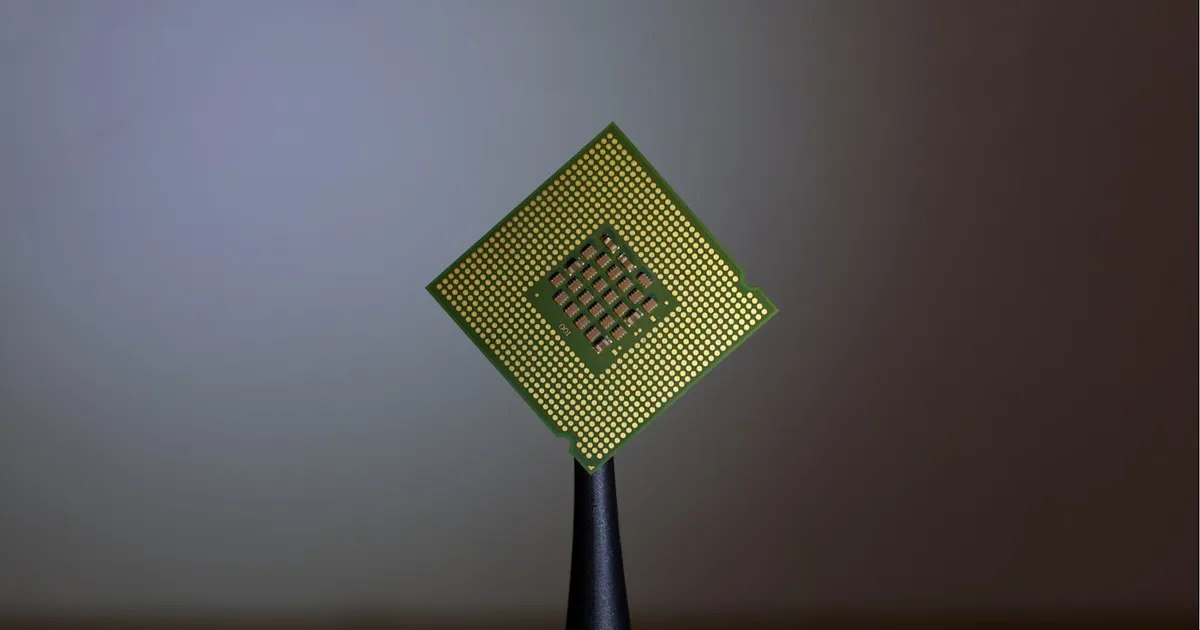
The most important bottleneck in the AI hardware supply chain is not the transistor — it is the packaging that stitches chips together. On Thursday, July 30, 2026, reports that Taiwan Semiconductor Manufacturing Company is developing a new “EMIB-like” packaging technology to sit alongside its capacity-choked flagship process sent chip stocks sharply higher. Intel shares surged nearly 13%, AMD rose about 13%, and TSMC’s own stock climbed roughly 7% as investors read the news as validation of an approach Intel has championed for years — and as a sign the industry’s tightest constraint may finally get some relief.
According to the reports, TSMC is working with Taiwanese substrate maker Kinsus Interconnect Technology on a silicon-bridge packaging method designed to support larger multi-die AI chips. The project is said to be in its early stages, with no commercial launch timeline. But the strategic message was loud: the world’s dominant foundry is hedging its bets on how advanced chips get assembled.
The packaging problem, in plain terms
Modern AI accelerators are no longer single slabs of silicon. They are collections of chiplets — separate dies for compute, memory, and I/O — bonded together into one package and wired with tens of thousands of connections. How those dies are joined determines how much data can move between them, how much power they draw, and how large the whole assembly can be. As transistor scaling has slowed, this advanced packaging has become the real frontier of performance, a shift we unpacked in what is a chiplet.
TSMC’s dominant answer has been CoWoS (Chip-on-Wafer-on-Substrate), the process that packages Nvidia’s and AMD’s flagship GPUs together with their stacks of high-bandwidth memory. CoWoS works, but it has become the single hardest-to-get resource in the AI supply chain. TSMC’s most advanced CoWoS-L capacity is reported to be sold out through 2026 and well into 2027, with lead times stretching as long as 78 weeks in some cases. When a foundry that has raised its capex to $60–64 billion still cannot build packaging fast enough, the constraint radiates through everything downstream — from Nvidia and AMD accelerators to the memory and storage that ride alongside them.
What EMIB is, and why TSMC wants its own
The technology TSMC is said to be emulating is Intel’s Embedded Multi-die Interconnect Bridge, or EMIB. Rather than placing an expensive silicon interposer under the entire package the way CoWoS does, EMIB embeds a small silicon bridge only in the spots where two dies need to talk. That makes it cheaper for large packages, avoids the size limits of a giant interposer, and — critically — draws on a different, less-congested manufacturing flow. For chips that keep growing as designers bolt on more compute and more memory, a bridge-based approach scales more gracefully than a monolithic interposer.
Intel has spent years turning EMIB from a differentiator into a business. Its next-generation EMIB-T variant, which adds through-silicon vias for vertical power and signal delivery, is reported to have reached a 98% yield rate and secured packaging orders from Nvidia, Google, and OpenAI — customers looking to diversify away from a single, saturated supplier. That is the competitive pressure behind TSMC’s move: as chipmakers hunt for additional packaging capacity, Intel’s foundry business has found an opening, and TSMC is responding by building a comparable option of its own with Kinsus.
Nvidia, for its part, is reported to be evaluating bridge packaging for a future processor that would combine four GPUs in a single package — exactly the kind of oversized, multi-die design that strains a conventional interposer and plays to a bridge’s strengths. Whoever can package those monsters reliably and at volume will hold real leverage over the next generation of AI hardware.
Why the stocks moved the way they did
The market’s reaction was a study in second-order thinking. Intel jumped nearly 13% not because TSMC’s project helps Intel directly, but because TSMC building a “quasi-EMIB” is a public concession that Intel’s packaging bet was right — and that Intel’s own EMIB-T, already in volume with marquee customers, has a durable, defensible lead in a technology the whole industry now wants. In a year when Intel has struggled to convince investors it has a seat at the AI table, validation from its largest rival is worth a great deal.
AMD’s 13% gain and TSMC’s 7% rise reflect the supply-relief read: another packaging path means the AI accelerators everyone is waiting on are less likely to be gated by a single choked process. It also fits a broader push to build more packaging capacity and supplier diversity, the same logic behind Nvidia’s $1.5 billion prepayment to Amkor to expand advanced packaging in Arizona. The industry has decided that one CoWoS line at one foundry is a dangerous chokepoint, and it is spending — and now designing — its way toward redundancy.
The move also lands against a jittery backdrop for chips, where the HBM4 supply race and swings in memory pricing have made packaging and interconnect the market’s obsession. Anything that eases a hard constraint tends to move the whole complex, and a bounce of this size in a single session shows how tightly wound sentiment around AI supply has become.
What it means
The caveat is essential: TSMC’s bridge project is early-stage, has no announced launch date, and does not add a single package of capacity in 2026. The 78-week lead times on CoWoS-L are a today problem; a Kinsus-partnered silicon bridge is, at best, a 2027-and-beyond answer. Traders bid the stocks up on the strategic signal, not on near-term relief.
But the signal matters. The dominant foundry publicly hedging toward a rival’s architecture tells you that advanced packaging, not lithography, is where the AI-hardware fight is now being won and lost. The winners in that framing are the companies with a differentiated, high-yield packaging option: Intel, suddenly, has one that customers are already buying, and TSMC is moving to ensure it is not left with only a single, saturated process. The losers would be anyone whose product roadmap assumes CoWoS capacity that does not exist.
What to watch next is threefold: whether Nvidia’s rumored four-GPU package formally adopts a bridge approach and from whom; whether Intel can convert its EMIB-T yield lead and its Nvidia, Google, and OpenAI orders into sustained foundry revenue; and whether TSMC’s Kinsus effort produces a shippable process before the CoWoS crunch eases on its own. The AI buildout has spent two years constrained by how fast the industry can package silicon. The race to fix that just added a new and unexpected entrant — the incumbent, copying the challenger.
Tagged
Keep reading
 Kurumi · · 6 min read
 TSMC July 2026 Revenue: Record NT$467.58B, Up 44.7%
TSMC reported record July revenue of NT$467.58 billion, up 44.7% year over year on AI chip demand. The numbers, the raised guidance, and what to watch.
 Kurumi · · 4 min read
 Intel's $15 Billion Stock Offering: What to Know
Intel plans to raise $15B in a common-stock sale to fund AI silicon, advanced packaging and foundry expansion. The details, dilution math, and what to watch.
Kurumi · · 6 min read Intel Q2 2026 Earnings: Revenue Up 25%, Stock Pops
Intel Q2 2026 revenue rose 25% to $16.1B and shares jumped ~13%. Data Center grew 59%, foundry 31%, but a CHIPS-tied charge drove an $11B GAAP loss.