Chip Stocks Fall Despite TSMC's Blowout Quarter
Semiconductor stocks sank on July 16, 2026 even after TSMC crushed estimates. SK Hynix fell 11%, Arm slid 5%. Why good news triggered a selloff, and what to watch.
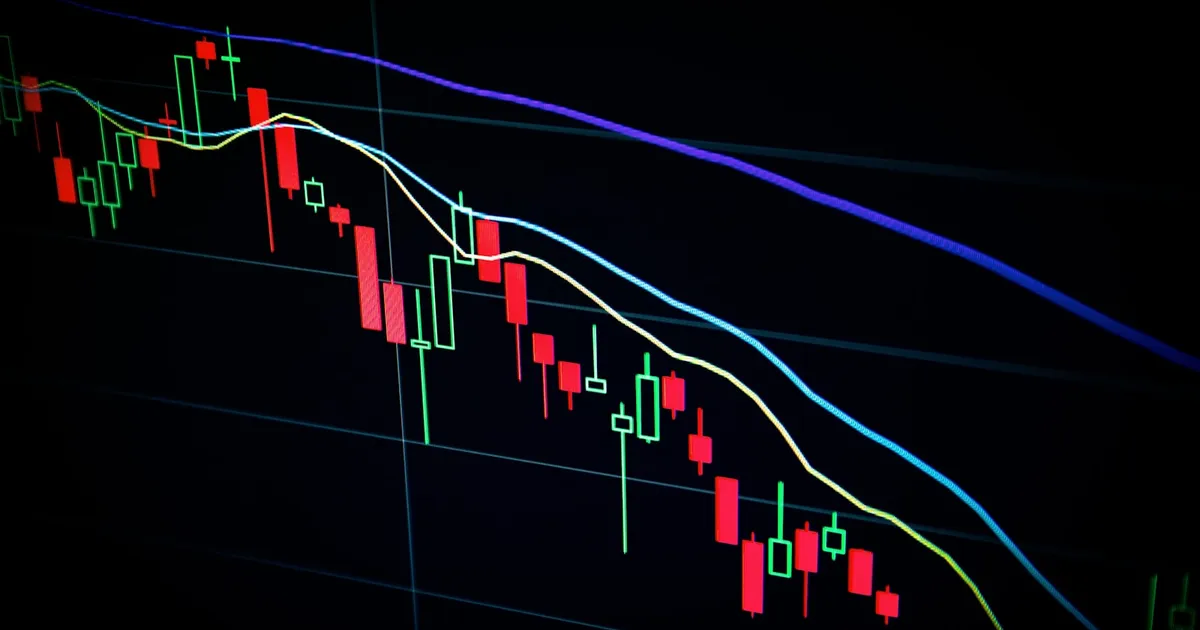
The report was supposed to settle the argument. Instead it reopened it. On Thursday, July 16, 2026, Taiwan Semiconductor Manufacturing Company delivered a blowout second quarter — record revenue, a 77% jump in net profit, and raised guidance for both revenue and spending — and semiconductor stocks fell anyway. The VanEck Semiconductor ETF (SMH) slid roughly 4%, chipmakers from Seoul to Silicon Valley dropped in sympathy, and the tech-heavy indexes closed lower on a day the fundamental news could hardly have been better.
That paradox — a sector selling off on the strongest possible earnings — is the story worth understanding. It says less about TSMC and more about how crowded, expensive, and nervous the AI-chip trade has become.
What happened on the tape
The selling was broad and it was global. In Seoul, memory giant SK Hynix tumbled about 11%, the sharpest single-session drop among the majors. In Europe, STMicroelectronics fell roughly 4.6%. In the U.S., Arm Holdings led the decliners with a slide of more than 5%, while Intel dropped around 2.8% and equipment and memory names gave back ground across the board.
At the index level, the damage was contained but unmistakable. The S&P 500 fell about 0.5% to close near 7,534, and the Nasdaq Composite finished lower, dragged down by its semiconductor components. The Dow Jones Industrial Average barely moved, slipping around 0.2% — the same defensive divergence that has marked every recent wobble in the AI trade, with money rotating out of high-multiple chip names and into steadier corners of the market.
The mechanics rhymed with the early-July rout that knocked the sector back at the start of the month, but the trigger this time was different. That selloff was sparked by a macro scare and a plunge in Asian memory names. This one arrived on a day when the marquee earnings report beat on every line.
The report that “should” have rallied the sector
To appreciate how unusual the reaction was, look at what TSMC actually said. As we covered in the full earnings breakdown, the world’s largest contract chipmaker posted US$40.2 billion in second-quarter revenue, up about 34% year over year, with net profit surging 77% to a record. Gross margin held at a striking 67.7%. High-performance computing — the segment that houses AI accelerators — now accounts for roughly two-thirds of sales.
Then came the guidance. TSMC lifted its full-year revenue growth outlook to above 40%, up from a prior forecast of over 30%. It raised 2026 capital spending to a range of $60 billion to $64 billion, up sharply from the previous $52 billion–$56 billion. And chief executive C.C. Wei announced an additional $100 billion investment in Arizona — bringing TSMC’s total U.S. commitment to roughly $265 billion and paving the way for as many as four more advanced fabs producing 2-nanometer chips and below.
Coming a day after ASML also beat and raised its outlook, the two most upstream companies in the entire AI hardware stack had now delivered back-to-back guidance increases. On paper, that is exactly the confirmation the bulls had been waiting for. The stocks sold off regardless.
Why good news became a reason to sell
Three forces turned a strong print into a red day.
The capex raise cut both ways. A $60–64 billion spending plan is a vote of confidence in AI demand — you do not commit that kind of capital to build fabs you expect to sit idle. But a bigger capital budget also means heavier depreciation, tighter near-term free cash flow, and, for the broader sector, a reminder of just how much money is being poured into capacity that must eventually be filled with paying orders. Investors who came into the report looking for a reason to trim found one in the same number the bulls celebrated. When expectations are stretched, even a guidance raise can read as “priced in.”
Positioning was crowded to an extreme. Semiconductors had soared nearly 70% as a group in the first half of 2026, and the trade had narrowed into a handful of correlated names. When a sector runs that far that fast, the marginal buyer thins out. A blowout report becomes a liquidity event — a chance for early longs to sell into strength rather than a catalyst for new money to chase the move. The classic pattern is “buy the rumor, sell the news,” and July 16 was a textbook example.
The AI-bubble debate never really closed. The June correction was built on a fear that data-center demand might prove softer than the multiples implied. TSMC’s numbers are a powerful counterargument, but a single quarter does not end a debate that has been running all year. Skeptics can point to the same capex figures and ask a harder question: if everyone in the supply chain is spending record sums simultaneously, who absorbs the output, and at what price, once the buildout matures? That uncertainty is precisely what keeps the sector volatile in both directions.
Memory led the fall — again
It is no accident that SK Hynix posted the steepest drop. Memory sits at the center of the AI buildout, and high-bandwidth memory pricing has been on a tear driven by the AI memory supercycle. That makes memory stocks a high-beta proxy for AI sentiment: when confidence rises they outrun the market, and when it cracks they fall furthest.
The supply picture remains genuinely tight, with the industry racing to bring on capacity in the HBM4 supply race. But tight supply is a double-edged sword — it lifts prices on the way up and amplifies glut fears on the way down. Micron, which trades as the U.S.-listed barometer for the memory cycle, keeps swinging on exactly this dynamic, and Korea’s memory names carry the same beta. When the AI trade flinches, they move first and they move hardest, a pattern that also drove Korea’s market lower during Samsung’s earnings-driven selloff earlier in the cycle.
The signal underneath the noise
Strip away the one-day move and the fundamental message from TSMC and ASML is consistent: demand for AI silicon is not slowing, and the companies closest to the metal are spending more, not less, to meet it. The hyperscaler capex boom that funds this order book shows no sign of reversing, and TSMC’s raised revenue guidance is a direct read-through to how full its leading-edge lines are running.
The selloff, then, was about price, not demand. The sector repriced on a day the news was good because the news was already in the price — and because a group that has doubled needs only an excuse to consolidate. That is the uncomfortable feature of a crowded momentum trade: fundamentals can improve while the stocks still fall, if the improvement is smaller than what the multiple already assumed.
What it means
A down day on great earnings is a sentiment event, not a fundamental one — but sentiment is exactly what sets prices when a sector is this stretched.
Who feels it most. The highest-beta names — memory makers like SK Hynix and Micron, and richly valued IP and design franchises like Arm — will keep leading in both directions. Arm’s outsized drop is a reminder that the stocks with the biggest multiples have the least room for a “sell the news” reaction to hurt. The Dow’s flat close shows the release valve remains open: rotation into defensives whenever the AI trade gets too crowded.
What to watch next. Three things. First, the rest of the chip-earnings calendar — TSMC and ASML validated demand at the foundry and equipment layer, but the market wants to hear the same from the fabless designers and, above all, from NVIDIA, whose stock has lagged the broader rally even as its chips anchor the boom. Second, hyperscaler capital-spending commentary, which is the demand side of TSMC’s supply story. Third, any sign that the record capex now being committed is running ahead of the orders needed to fill it — the single data point that would turn a positioning wobble into something more serious.
The deeper question is unchanged from the start of the summer: is AI demand durable enough to justify valuations that assume years of uninterrupted growth? TSMC just answered with the most bullish guidance it has ever given. That the sector sold off anyway is the clearest sign yet that, for now, the burden of proof sits not with the bears but with a market that has already priced in a great deal of good news.
Tagged
Keep reading
 Kurumi · · 5 min read
 Marvell Q2 Earnings: Record $2.74B, Raised Guidance
Marvell posted record Q2 FY2027 revenue of $2.74B on a 46% data center surge, raised its outlook again, and guided Q3 to $3.15B. The numbers and what they mean.
 Kurumi · · 5 min read
 Nvidia AI Server Prices to Rise 15%+ on Memory Costs
Nvidia's server builders have told Microsoft, Google and Oracle that Vera Rubin and Grace Blackwell system prices will climb more than 15% from early 2027 as memory costs soar.
Kurumi · · 5 min read Etched Raises $700M at $21B Valuation From Jane Street
Etched raised $700M led by Jane Street at a $21B valuation, doubling in a month, and shipped its first Sohu inference rack. The deal and the risks.