Terafab: Tesla and SpaceX's $16.8B Texas Chip Fab
Tesla and SpaceX confirmed Terafab, a $16.8B first-phase chip fab in Grimes County, Texas, with plans to reach 1 terawatt of compute a year. The details.

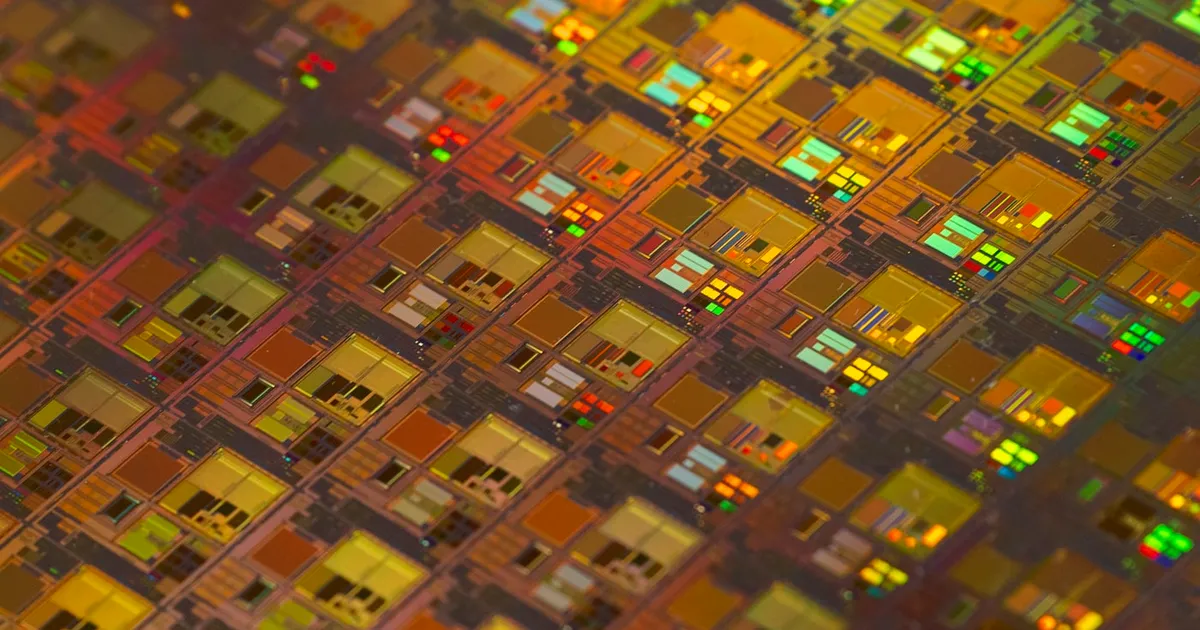
Two of Elon Musk’s companies are trying to build their way out of the chip shortage that could throttle their most ambitious products. On Wednesday, August 6, 2026, Tesla and SpaceX confirmed that Terafab — a jointly owned semiconductor complex they describe as the largest chip manufacturing facility on the planet — will rise in Grimes County, Texas, with an initial commitment of $16.8 billion for the first phase of construction.
The confirmation puts a location and a dollar figure on a project Musk first floated publicly in late March 2026. Tesla broke ground on a research chip fabrication facility at Giga Texas in April, and by late July four building permits had been issued for what filings call an Advanced Technology Chip Fabrication facility. Terafab’s tax-abatement agreements with Grimes County are now signed, with SpaceX sending the county a first $10 million payment. Construction of the main site is expected to begin within months.
The plan, by the numbers
The $16.8 billion headline covers only the opening phase. Terafab is structured as a multi-phase build, and SpaceX has filed plans for a far larger campus that would carry total investment as high as $119 billion, with one intermediate filing citing roughly $55 billion. Completed, the site is designed to span more than 100 million square feet — a footprint the companies say would make it the biggest chip plant ever built.
Terafab’s defining feature is vertical integration. Rather than fabricating wafers in one place and shipping them elsewhere for assembly, the complex is meant to combine logic, memory, advanced packaging, and testing under one roof. That end-to-end design is unusual: even the largest contract manufacturers typically split those steps across specialized sites and suppliers. Concentrating them removes handoffs and, in theory, lets Musk’s companies iterate on chip designs and packaging in a single location.
Employment is pegged at at least 3,000 workers, most of them expected to be local hires from Grimes County and neighboring Brazos County, home to Texas A&M University.
Why the companies are building their own fab
The name is the thesis. “Terafab” points to a stated goal of producing over 1 terawatt of compute per year — a scale the companies argue exceeds what current and even projected global chip production can supply. The demand comes from products that don’t exist at volume yet but that Tesla and SpaceX are betting their futures on.
For Tesla, that means silicon for Optimus humanoid robots and the Cybercab robotaxi, both of which depend on large amounts of on-board inference compute to run in the physical world. As the economics of humanoid robots come into focus, the cost and availability of the chips inside each unit become a gating factor for any company hoping to ship them by the million. Owning the fab is Tesla’s answer to that constraint.
For SpaceX, the driver is even more speculative: the company has described plans for space-based data centers, orbital compute clusters that would need radiation-tolerant, power-efficient silicon built to its own specifications. Neither Optimus nor an orbital data center is a standard customer for a merchant foundry, which is part of the argument for building bespoke capacity rather than queuing behind other buyers.
Behind both cases sits a supply reality. The most advanced accelerators are booked years in advance, and the economics of AI data centers have made compute the scarcest input in technology. Musk’s wager is that a company consuming compute at terawatt scale is better off owning the means of production than renting it.
An enormous execution bet
The ambition is matched by the difficulty. Leading-edge chipmaking is among the hardest manufacturing challenges in the world, and the incumbents have decades of accumulated process knowledge. Taiwan Semiconductor Manufacturing Company, the industry’s benchmark, has spent years and hundreds of billions of dollars building overseas capacity — and has been candid that its newest sites run at a margin cost because transplanting yield and operational culture is so hard. As detailed in our coverage of TSMC’s $100 billion Arizona expansion, even the best in the business treats staffing and ramp as the recurring friction points, not the concrete.
Terafab compresses several of the industry’s hardest problems into one project. Building competitive logic requires mastering leading-edge patterning at a small process node; building competitive memory is an entirely different discipline with its own supply dynamics, including the high-bandwidth memory that AI accelerators depend on. Doing both, plus advanced packaging that stitches separate chiplets into a single part, under one corporate roof is something no established player attempts alone. Tesla and SpaceX are proposing to stand up all of it, in parallel, on a green-field site.
The two companies do bring assets to the problem. Tesla has designed its own inference silicon for years and runs high-volume manufacturing at automotive scale. SpaceX has a track record of vertically integrating supply chains that outside vendors could not deliver on its timeline or price. Whether that operational muscle transfers to sub-nanometer semiconductor yields — the specific, unforgiving discipline that has humbled better-funded entrants — is the open question the project will answer over years, not quarters.
The financing question
A first phase of $16.8 billion, scaling toward a potential $119 billion, is a staggering commitment for two companies that are also spending heavily elsewhere. Tesla is absorbing pressure on its core business, as our Q2 2026 earnings breakdown laid out, while SpaceX is only beginning to show its financials publicly, per its first public earnings disclosure. Neither has detailed how Terafab’s later phases will be funded, and the gap between a signed first-phase number and a filing-stage total is where the real uncertainty lives.
The structure — a joint venture between two Musk-controlled companies, backed by Texas tax abatements — keeps the project inside his orbit and away from the contract-manufacturing market it might otherwise depend on. That independence is the point, but it also means the entire cost of learning to make advanced chips falls on Tesla and SpaceX balance sheets rather than being amortized across a foundry’s many customers.
What it means
Terafab is the most literal expression yet of a belief spreading across the industry: that whoever controls compute controls the next decade of technology, and that renting it is a strategic weakness. Musk is answering that belief by trying to build the single largest chip plant in the world and pointing its output almost entirely at his own products.
If it works, Tesla and SpaceX secure a captive supply of custom silicon for robots, robotaxis, and orbital data centers — insulating their most ambitious roadmaps from the shortages and pricing power that constrain everyone buying merchant chips. A vertically integrated fab on US soil would also be a notable data point for domestic advanced manufacturing, adding to reshoring momentum from players like TSMC in Arizona and Micron’s US investment.
The risk is that semiconductor manufacturing punishes newcomers, and Terafab attempts logic, memory, and packaging at once — three hard problems where established firms specialize precisely because doing all three is so difficult. The history of well-capitalized companies trying to break into leading-edge fabrication is mostly a history of delays, yield struggles, and quietly narrowed ambitions. A $119 billion total price tag leaves little room for the learning curve to run long.
What to watch next. Track the construction timeline against the “within months” promise, and watch for the first disclosed process node and any tape-out targets — the concrete signals of whether Terafab is a working fab or a very large building. Watch how later phases are financed, since the $16.8 billion first phase is a fraction of the filed total. And watch whether Tesla and SpaceX hire the operational bench — the yield engineers and fab veterans — that every serious chipmaking effort ultimately lives or dies on.
Tagged
Keep reading
 Chisato · · 4 min read
 Wafer-Scale Integration Explained
Wafer-scale integration builds one giant chip from an entire silicon wafer instead of cutting it into dies. How it works and its tradeoffs.
Chisato · · 4 min read What Is Semiconductor Yield?
Yield is the share of chips on a wafer that work. It's the single biggest driver of chip cost, and why new process nodes start out expensive.
 Chisato · · 5 min read
 2.5D vs 3D Chip Packaging Explained
2.5D packaging places dies side by side on an interposer; 3D packaging stacks dies vertically through silicon vias. How advanced packaging works.