Nvidia AI Server Prices to Rise 15%+ on Memory Costs
Nvidia's server builders have told Microsoft, Google and Oracle that Vera Rubin and Grace Blackwell system prices will climb more than 15% from early 2027 as memory costs soar.
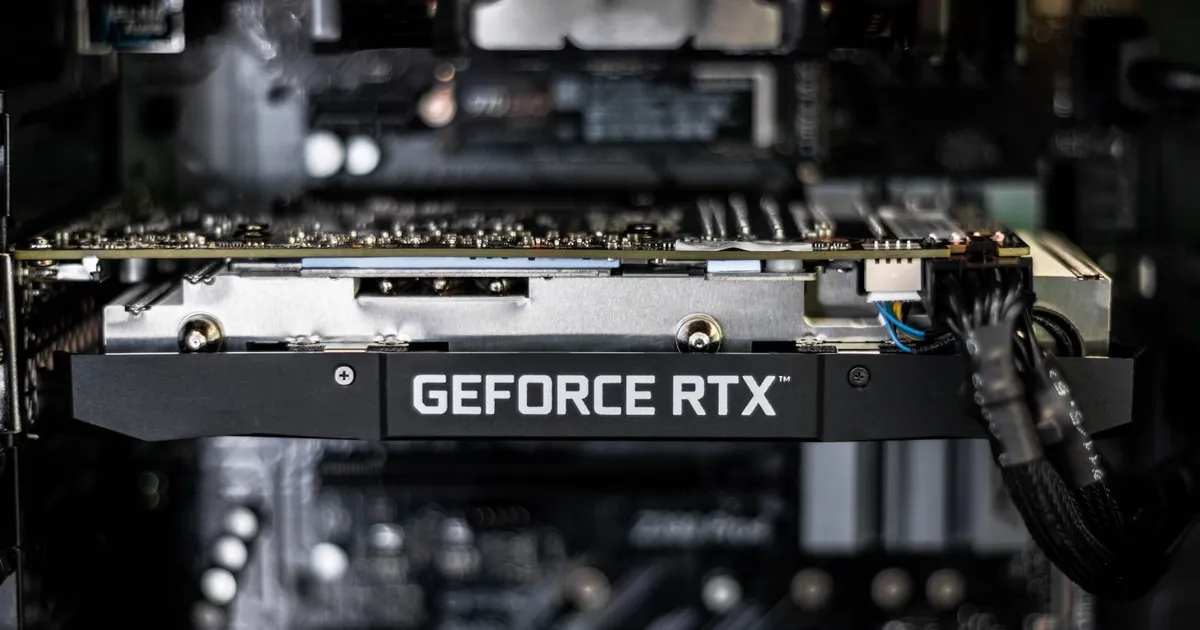
The cost of building an AI data center is about to go up again, and this time the increase is being passed straight to the largest buyers on the planet. According to a Bloomberg report, the contract manufacturers that assemble Nvidia’s rack-scale AI systems have told major customers that prices on servers built around Nvidia’s newest accelerators will rise more than 15% in many configurations, beginning with shipments in early 2027. The culprit is not Nvidia’s silicon margins but the soaring price of memory.
The warning landed in the same week Nvidia delivered another record quarter, a juxtaposition that captures the strange economics of the current buildout: demand has never been stronger, and yet the bill of materials underneath every rack keeps climbing faster than anyone budgeted for.
Who was told, and what changes
The server builders — the original design manufacturers, or ODMs, that turn Nvidia’s chips and reference designs into finished racks — have relayed the increases to the hyperscalers doing the buying, including Microsoft, Alphabet’s Google, and Oracle. These are the companies filling their data centers with Nvidia’s Vera Rubin and Grace Blackwell platforms, and they are the ones who will absorb the higher prices first.
The size of the increase depends on the chip generation and, crucially, on the memory configuration. Systems loaded with the most high-bandwidth memory see the steepest jumps. The reported figure of “more than 15%” is an average across affected configurations rather than a flat surcharge, and Nvidia has room to vary it by product line as supply conditions shift.
For a sense of scale, pre-shipment inquiries on Nvidia’s flagship Vera Rubin VR200 NVL72 racks are reportedly landing between $5 million and $7 million apiece. A 15% increase on a rack at the top of that range is roughly a million dollars of additional cost per unit — multiplied across the thousands of racks that a single hyperscaler installs in a year, the numbers run into the billions.
Memory is now the most expensive part of the rack
The mechanism behind the hike is straightforward, even if its consequences are not. Prices for DRAM, LPDDR, and high-bandwidth memory (HBM) have all been climbing through 2026 amid shortages, and AI accelerators consume these components in enormous quantities. Nvidia’s Rubin GPU ships with up to 288GB of HBM4 per package, and a full rack aggregates that into a staggering memory footprint.
The problem compounds because HBM is uniquely expensive to produce. Manufacturing it consumes roughly four times the wafer area of an equivalent amount of conventional DRAM, so every gigabyte of HBM ties up scarce fab capacity that could otherwise make cheaper commodity memory. As demand for AI systems has surged, memory has swelled to become one of the single largest line items in an AI server’s bill of materials — by some estimates around a quarter of the total rack cost, a share that would have been unthinkable a few product generations ago, when the accelerator die itself dominated the bill.
The squeeze is even reshaping the specifications of the systems themselves. Reported memory cuts could reduce the pooled Vera CPU capacity in a rack from about 55TB to 28TB, a signal that vendors are rationing memory content to keep prices from climbing even higher than they already are. When a component becomes scarce enough that suppliers start designing around it, the shortage has moved from a pricing story to a capacity story.
Why the timing matters
The increases are slated for shipments in early 2027, which places them squarely in the middle of the ramp for Nvidia’s next-generation platforms. That is deliberate: the Vera Rubin generation is where Nvidia expects the bulk of hyperscaler spending to concentrate, and it is also where the heaviest memory loadouts live. Locking in higher prices at the start of that cycle protects the entire supply chain — Nvidia and its ODM partners alike — from having to eat memory inflation on their thinnest-margin products.
It also arrives against a backdrop of memory pricing that has become one of the defining macro stories of the AI trade. The same dynamics driving Nvidia’s server costs have rippled across the industry: memory makers have enjoyed a historic run, described by some analysts as a memory supercycle, while device makers downstream have begun passing costs to consumers, a pattern already visible in Amazon’s device price increases earlier this year. Foundry pricing has moved in the same direction, with Samsung’s roughly 15% foundry price hike reflecting the same AI-driven demand pressure from a different point in the chain.
What it means
The most important thing about this price hike is who is paying it. When the cost lands on Microsoft, Google, and Oracle, it lands on the companies with the deepest balance sheets in technology — and, so far, the strongest appetite to keep spending. That is precisely why Nvidia can pass memory inflation through with confidence: demand for its systems has been price-inelastic through every previous increase, and there is little evidence that a 15% bump changes the calculus for buyers racing to secure capacity.
For the hyperscalers, though, the increase quietly raises the bar on return. Every additional dollar spent on a rack is a dollar that the eventual AI workloads running on it have to justify. The economics of AI data centers already depend on aggressive assumptions about utilization and pricing power; higher hardware costs tighten those assumptions further. The buildout does not stop, but the margin for error on each new facility narrows.
The winners are the memory makers, who are converting the shortage into record profits, and Nvidia, which preserves its own margins by pushing the cost downstream rather than absorbing it. The pressure point to watch is whether memory inflation eventually climbs high enough — or lasts long enough — to make even the hyperscalers flinch. So far it has not. But the reduced memory configurations now appearing in Nvidia’s own rack specifications are the first sign that the industry is beginning to engineer around a constraint it cannot simply spend its way past. If HBM supply stays tight into the Rubin ramp, the story of 2027 may be less about how fast AI capacity can grow and more about how expensive each increment of it has become.
Tagged
Keep reading
 Chisato · · 6 min read
 US Moves to Block China's Remote AI Chip Access
The Commerce Department is drafting a rule to stop Chinese firms from renting banned Nvidia AI compute through data centers in third countries.
 Kurumi · · 5 min read
 Nvidia Pauses AI Compute Partnership: What Happened
Nvidia has paused its revenue-sharing cloud financing program less than two months after launch, as staff flagged antitrust risk over its control demands.
 Kurumi · · 5 min read
 Marvell Q2 Earnings: Record $2.74B, Raised Guidance
Marvell posted record Q2 FY2027 revenue of $2.74B on a 46% data center surge, raised its outlook again, and guided Q3 to $3.15B. The numbers and what they mean.