Bain Capital Exits Kioxia With a Record Chip Profit
Bain Capital sold its final Kioxia stake, ending an $18B bet that returned roughly $15B as AI storage demand sent the shares up more than 4,500%.
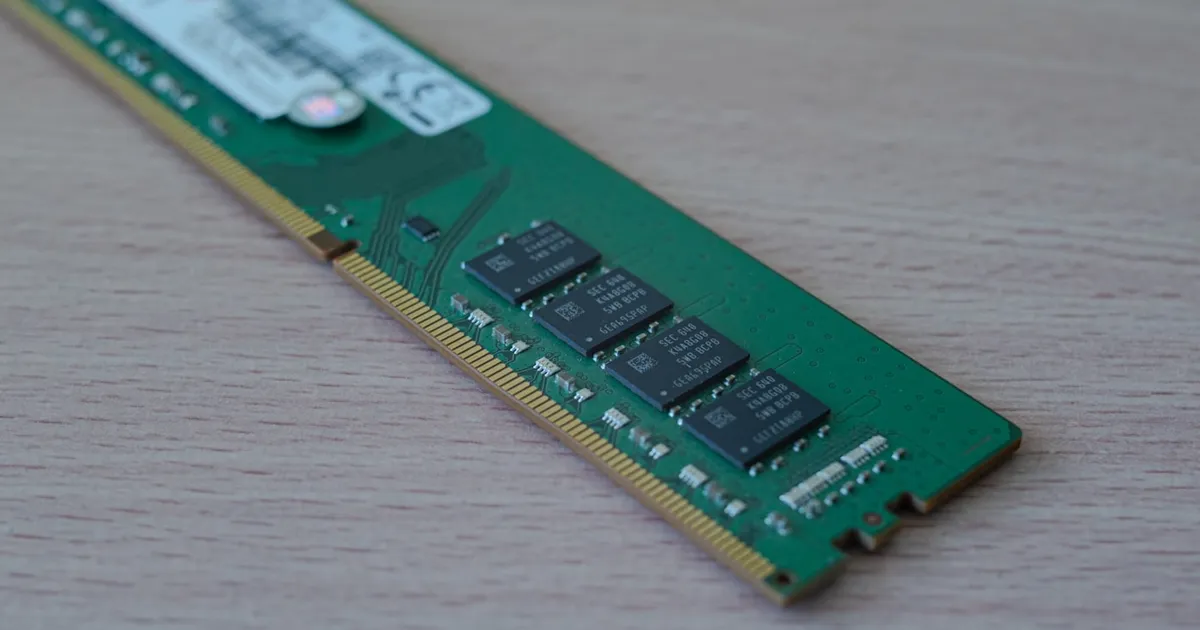
One of the most profitable private-equity bets in the history of the chip industry has come to a close. Bain Capital has sold its entire remaining stake in Kioxia Holdings, the Japanese maker of NAND flash memory, ending an eight-year investment that was transformed from a troubled buyout into a record-setting windfall by the AI storage boom. Bain sold its final tranche of shares on July 8, 2026, and confirmed the full exit on July 9, according to statements from the firm reported by Bloomberg and Nikkei.
The numbers are extraordinary. Bain led a group that paid roughly $18 billion for the business in 2018; the firm has walked away with a profit of about $15 billion, generated almost entirely by a surge in Kioxia’s shares of more than 4,500% since the company’s late-2024 IPO. The final tranche alone was worth about $3.5 billion. On the news, Kioxia shares jumped as much as 7% in Tokyo, as investors treated the departure of the last big overhang as a clearing event rather than a warning.
How the deal started
The investment traces back to one of the messier corporate crises of the last decade. In 2018, a Bain-led consortium — which notably included Korea’s SK hynix — acquired Toshiba’s memory-chip operations for about $18 billion, carving out the flash-memory business that would later be renamed Kioxia. Toshiba was selling under duress, forced to raise capital after an accounting scandal and heavy losses at its US nuclear unit, and the price reflected a distressed seller more than a prized asset.
For years, the bet looked ordinary at best. NAND flash — the storage chips inside phones, laptops, and data-center drives — is a brutally cyclical commodity, prone to the same boom-and-bust pricing swings that have long punished the broader memory industry. Kioxia weathered multiple downturns, and an earlier attempt to take the company public was shelved when market conditions soured. The business finally completed its initial public offering on the Tokyo Stock Exchange in late 2024 at a valuation that, in hindsight, looks like a bargain.
What changed the math
The transformation came from artificial intelligence — specifically, from the realization that AI systems are as hungry for storage as they are for compute. Training and serving large models requires vast, fast pools of data: the datasets that feed training runs, the checkpoints written during them, and the growing archives of AI-generated output. That demand has spilled directly into the market for NAND flash and enterprise SSDs, the products at the center of Kioxia’s business.
The result is a storage boom running in parallel to the better-known AI memory supercycle in DRAM and high-bandwidth memory. Where HBM — the stacked memory that sits beside AI accelerators — has captured most of the headlines, the AI buildout has quietly tightened the entire memory-and-storage complex. Prices for conventional DRAM and NAND have risen sharply as buyers compete for constrained capacity, turning a commodity business into one of the tightest links in the AI supply chain. Kioxia’s shares rode that wave to a gain of more than 4,500% from their debut, making it one of Japan’s most valuable technology companies.
That backdrop has lifted the entire sector. Just days earlier, Samsung Electronics posted the most profitable quarter in the history of technology, driven by the same memory tailwind, and SK hynix — Bain’s former partner in the Kioxia deal — completed a blockbuster US listing on the Nasdaq this week, one of the largest ever by a foreign company. Kioxia’s run is a chapter in the same story: AI has rerated an industry that the market spent a decade treating as a cyclical afterthought.
Why the stock rose on the exit
It may seem counterintuitive that a large seller unloading its final block would send the shares up. The logic is about the overhang. When a private-equity owner holds a big position it is expected to eventually sell, that pending supply hangs over the stock, capping gains and deterring some buyers who fear being front-run by the exit. Removing that uncertainty — knowing the last tranche has cleared the market — can free the shares to trade on fundamentals.
Reports also tied part of the move to a coming TOPIX index redesign that is expected to reshape passive flows into large Japanese names. Between the index change and the end of Bain’s selling, investors read the setup as a cleaner ownership base going forward. The exit, in other words, was interpreted as the resolution of a risk rather than a vote of no confidence.
A landmark for private equity
For Bain, the return ranks among the most lucrative technology buyouts ever executed. Turning an $18 billion distressed carve-out into roughly $15 billion of profit is the kind of outcome that defines a firm’s track record for a generation — and it was made possible less by financial engineering than by a secular shift in demand that few could have forecast when the deal closed in 2018. The consortium structure, which spread the capital across strategic partners like SK hynix and financial backers, is likely to be studied as a template for future mega-deals in capital-intensive semiconductors.
It also underscores how completely AI has changed the calculus for investing in chips. A decade ago, memory was considered among the least attractive corners of technology — commoditized, cyclical, and capital-hungry, with little pricing power. The AI buildout has inverted that view, and the payoff is now showing up not only in the earnings of the chipmakers themselves but in the returns of the investors who owned them through the turn. The same dynamic has drawn a wave of fresh capital commitments into the sector, from Micron’s multibillion-dollar US supply-chain investment to a broader race to expand capacity.
What it means
Bain’s exit is a clean bookend on the pre-AI era of memory investing. A distressed buyout that looked ordinary for six years became one of the great chip-industry windfalls the moment AI turned storage from a commodity afterthought into a strategic bottleneck. The return is a quantitative measure of how much value the AI boom has created upstream of the models themselves.
Who wins. Bain and its co-investors, obviously — a roughly $15 billion profit is a career-defining outcome. Kioxia’s remaining shareholders may benefit too, if the removal of the overhang and the index reshuffle let the stock trade on the strength of a still-tight NAND market. And the broader memory group gains another data point that the AI storage cycle is real, not a passing spike.
Who should be nervous. Buyers chasing the sector at these levels. Memory and storage remain cyclical, and Bain — one of the most sophisticated owners in the business — chose this moment to sell every last share. That is not proof of a top, but insiders exiting near record valuations is always worth noting, especially in an industry whose history is defined by sharp reversals. The chip-stock sell-off earlier in July was a reminder of how quickly sentiment can turn on the most crowded trade in the market.
What to watch next. Three things. First, NAND pricing into the second half of the year — the durability of the storage boom will determine whether Kioxia’s rerating holds. Second, how the TOPIX redesign reshapes passive ownership of the shares once Bain’s block has fully cleared. Third, whether other early backers of AI-adjacent chip names follow Bain toward the exit, or hold on in the belief that the supercycle still has room to run. Bain has taken its profit; the market’s job now is to decide whether it sold too early or exactly on time.
Keep reading
 Kurumi · · 6 min read
 Korea Chip Exports Hit Record in August, Up 209%
South Korea's chip exports jumped 209% in August 2026 to a record $46.65B — nearly half of all exports — as hyperscaler AI spending drove demand.
 Kurumi · · 5 min read
 Marvell Q2 Earnings: Record $2.74B, Raised Guidance
Marvell posted record Q2 FY2027 revenue of $2.74B on a 46% data center surge, raised its outlook again, and guided Q3 to $3.15B. The numbers and what they mean.
 Kurumi · · 5 min read
 Nvidia AI Server Prices to Rise 15%+ on Memory Costs
Nvidia's server builders have told Microsoft, Google and Oracle that Vera Rubin and Grace Blackwell system prices will climb more than 15% from early 2027 as memory costs soar.