Korea Chip Exports Hit Record in August, Up 209%
South Korea's chip exports jumped 209% in August 2026 to a record $46.65B — nearly half of all exports — as hyperscaler AI spending drove demand.
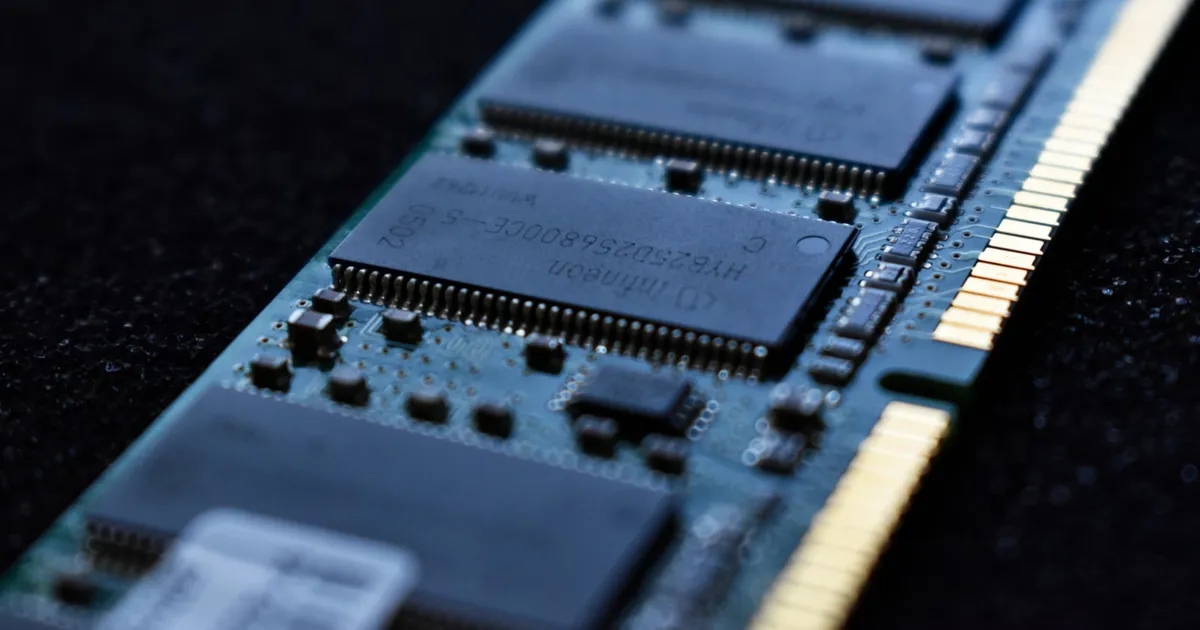
The single clearest gauge of the world’s appetite for AI hardware printed another record in August. South Korea’s semiconductor exports rose 209% year over year to $46.65 billion last month, an all-time high for the country’s chip industry, according to preliminary data released September 1 by the Ministry of Trade, Industry and Energy (MOTIE). It was the third straight month that chip shipments cleared $40 billion, and it pushed semiconductors to nearly half of everything the country sold abroad.
The report follows July’s 179% surge and extends a run that has turned Korea’s monthly customs ledger into a high-frequency proxy for global AI capital spending. On that reading, August says the same thing July did, only louder: at the level of actual shipments and actual dollars, demand for memory and AI compute is still accelerating.
The chip numbers
The headline is the growth rate. A 209% year-over-year jump is extraordinary for any category at this scale, and it reflects both surging volumes and the elevated prices Korean memory makers have been able to command through the AI memory supercycle. MOTIE attributed the gain to sustained purchases from global cloud providers building out AI infrastructure, singling out heightened capital spending by hyperscalers such as Google and Amazon.
The base effect flatters the percentage — August 2025 was a comparatively soft month for chips — but the absolute figure removes any ambiguity about the trend. At $46.65 billion, semiconductor exports were up sharply from roughly $41 billion in July, a meaningful sequential gain in a business that was already running near capacity. When the largest line in a $98 billion export economy grows month over month at this altitude, it is not statistical noise; it is order flow.
The composition matters as much as the total. The demand is concentrated in high-bandwidth memory and advanced DRAM — the HBM stacks that sit beside AI accelerators in data-center racks — where Samsung Electronics and SK Hynix hold a commanding share of global supply. That is the product hyperscalers cannot get enough of, and it is the reason a national trade release now moves in lockstep with the buildout plans of a handful of American cloud companies.
Chips are approaching half of all exports
The structural story underneath the monthly number is concentration. Semiconductors accounted for 47.5% of Korea’s total exports in August — chips are now approaching half of everything the country ships. That is a remarkable degree of dependence on a single sector, and it cuts both ways.
Korea’s total exports rose 68.7% year over year to $98.25 billion, a very strong month by any historical standard, though shy of June’s all-time record above $102 billion. Imports rose 22.6% to $63.51 billion, leaving a trade surplus of $34.75 billion — a wide gap driven by high-value chip and computing exports against more modestly rising imports. A surplus of that size is the macro signature of an economy sitting at the center of a global capital-spending boom.
The flip side is fragility. When roughly half of a country’s export revenue rides on one product category, the national trade balance inherits that category’s cycle. On the way up, as now, it produces near-record months and a swelling surplus. On the way down — whenever hyperscaler buildout cools — it would hit Korea’s headline numbers faster and harder than almost any other economy’s. Seoul has chosen to lean into that bet rather than away from it, anchoring its industrial strategy in the $950 billion chip and manufacturing pact struck with the United States and continued capacity expansion by both memory makers.
The market and the data, still diverging
The August report lands into the same unresolved argument that has defined the memory trade all year. The customs data measures the present — what actually shipped last month — and on that question it is unambiguous: prices are elevated, volumes are enormous, and AI-driven demand is accelerating. The record earnings SK Hynix posted told the same story in a different ledger.
The stock market, by contrast, prices the future — specifically, how long the shortage and the fat margins last. That is why memory names have been so volatile even as the underlying business set records: investors are repricing the durability of the cycle, not reacting to current demand. The bearish thesis was never that shipments are weak today. It is that new supply — aggressive capacity additions by the incumbents and steady Chinese progress up the manufacturing stack — will eventually erode the scarcity that justifies the valuations.
August’s data does not refute that thesis. It just confirms, again, that the erosion has not started. If supply were catching up, it would show first in prices and volumes, and this is exactly the report that would reveal it. Instead, both moved higher.
What a trade release can and can’t settle
A monthly customs release is a lagging, backward-looking instrument, and it is worth being precise about what it decides. It confirms that demand and pricing held — and strengthened — through August. It does not forecast the fourth quarter, it does not capture the contract negotiations that will set memory prices into 2027, and it says nothing directly about the valuation question driving the swings in Samsung and SK Hynix shares.
What it does is keep one hypothesis off the table. Anyone arguing that the AI hardware cycle is rolling over in real time has to reconcile that view with a 209% surge in chip exports from the single economy most exposed to the trade. The concern about a future glut may still prove right. It is not a description of what shipped in August.
The same numbers that reassure on demand are precisely why the AI hardware chain has grown so interdependent — Korean memory feeds American accelerators, which fill data centers financed by hyperscaler balance sheets. Broadcom’s fiscal third-quarter results, due this week with AI semiconductor revenue guided to roughly $16 billion, are the next data point in that same chain, from the chip-design side rather than the memory side.
What it means
August is the cleanest evidence yet that the AI memory cycle is still expanding, not peaking. A record $46.65 billion in chip exports, up 209% year over year and rising sequentially, is not the fingerprint of a market softening. Whatever the equity market is pricing about future supply, the present-tense demand for memory and AI compute is accelerating, and Korea’s customs data measures the present in the hard currency of shipped dollars.
Korea has become a levered, high-frequency bet on global AI capital spending. With chips at 47.5% of exports, the country’s trade performance is now one of the most sensitive available reads on hyperscaler buildout. That has delivered a string of near-record months and a $34.75 billion monthly surplus on the way up. It also means a genuine slowdown in data-center spending — whenever it arrives — would surface here first and hit hardest.
Watch the monthly cadence for the first crack. The bearish case predicts that new supply eventually softens prices and volumes, and the export report is where that would show before it reaches earnings. The signals to track into the autumn: whether semiconductor exports hold above $40 billion for a fourth and fifth straight month, whether the chip share of total exports keeps climbing past 47.5%, and whether fourth-quarter contract prices confirm the strength August just recorded. For now, the ledger and the stock market are still telling opposite stories — and the ledger is the one counting real dollars.
Tagged
Keep reading
 Kurumi · · 5 min read
 Samsung, SK Hynix Rally as KOSPI Chip Rebound Builds
The KOSPI jumped 3.7% as Samsung rose 6.7% and SK Hynix 5.5%, powered by a Temasek investment report, shareholder-return hopes and fading AI capex fears.
 Kurumi · · 5 min read
 Korea July Exports Jump 63% on Record Chip Shipments
South Korea's July exports rose 62.8% to $98.89B, the second-highest ever, as chip shipments jumped 179% on AI memory demand, trade ministry data showed.
 Kurumi · · 6 min read
 AI Memory Boom Goes Bust as KOSPI Crashes
South Korea's KOSPI triggered back-to-back circuit breakers and memory names shed 30% as the AI memory trade unwound — even with record earnings and rising prices.