SK hynix Nasdaq Listing: $29B ADR Debut Explained
SK hynix debuts on Nasdaq under SKHY in a ~$29B ADR offering, the largest-ever US listing by a foreign firm. The figures, the HBM context, and what to watch.
The largest supplier of the memory that powers artificial intelligence is going public in the United States. On July 10, 2026, SK hynix — the world’s second-largest memory chipmaker and the dominant supplier of high-bandwidth memory to Nvidia — begins trading on the Nasdaq under the ticker SKHY, with when-issued trading set to start the same day. The company is raising roughly $29 billion through American depositary receipts, a sum that makes this the largest-ever US stock sale by a foreign company, surpassing the records set by Alibaba and Saudi Aramco.
The numbers behind the offering
SK hynix is issuing 17.79 million new shares via ADRs, valued at about 45.45 trillion won, or roughly $29.65 billion. The offering has drawn extraordinary demand: reports put it more than seven times oversubscribed, a signal of how eager US investors are for direct exposure to AI-adjacent semiconductor names. The lead underwriters are Bank of America, Citigroup, Goldman Sachs, and JPMorgan — the full complement of Wall Street’s largest banks for a deal of this scale.
The listing lands amid a broad rally in chip stocks. On July 9, the Nasdaq Composite rose about 1.3% as semiconductors staged a comeback, and memory names led the charge — a rebound that followed the chip-stock selloff earlier in July and coincided with Micron’s $3 billion US supply-chain investment. Against that backdrop, an oversubscribed mega-listing from the HBM leader reads as a vote of confidence that the AI memory cycle still has room to run.
Why SK hynix is listing in the US
SK hynix already trades in Seoul, where it is one of the KOSPI’s largest constituents. A Nasdaq ADR listing does not replace that; it opens a second, deeper pool of capital and puts the company’s shares directly in front of American institutional and retail investors who cannot easily buy Korean equities.
The strategic logic is about proximity to demand. SK hynix’s fortunes are now tied almost entirely to the US-centric AI buildout — its biggest customer is Nvidia, and the hyperscalers driving memory demand are overwhelmingly American. Listing where those customers and their investors trade aligns the company’s shareholder base with the market it serves, raises its profile among US buyers, and gives it a hard-currency war chest to fund the enormous capital spending that leading-edge memory now requires.
The HBM engine
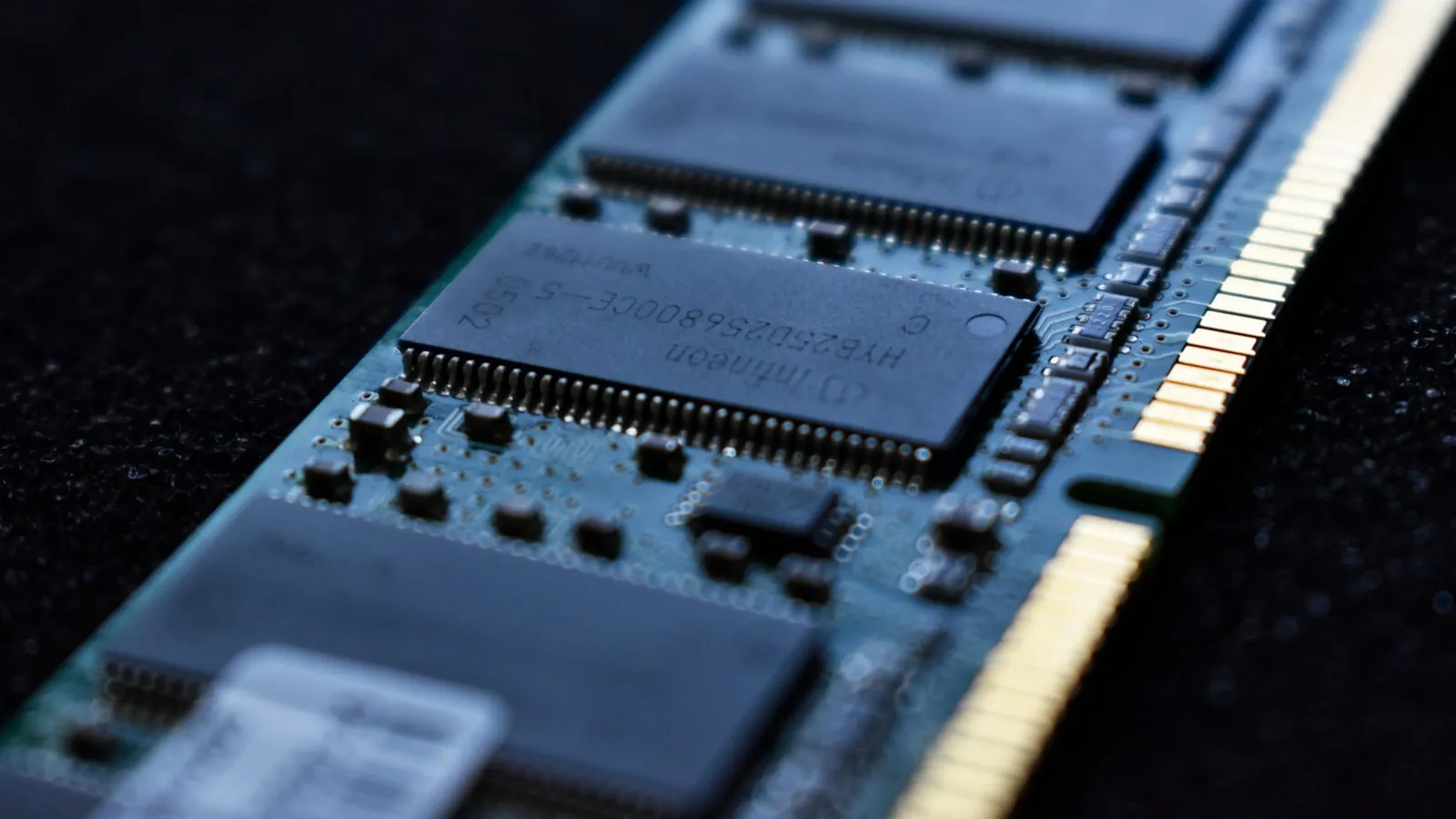
To understand why the offering is seven times oversubscribed, you have to understand what SK hynix sells. The company is the runaway leader in high-bandwidth memory — the stacked, high-throughput DRAM that sits beside AI accelerators and feeds them data fast enough to keep expensive GPUs busy. If you want the mechanics, our explainer on what HBM is covers how the stacking works and why it commands premium pricing.
The market position is commanding. SK hynix held roughly 56% of the HBM market by revenue in the first quarter of 2026, and in the emerging HBM4 generation — the memory built for Nvidia’s next-generation platforms — Counterpoint Research projects it will capture around 54% of the market, ahead of Samsung Electronics at about 28% and Micron at roughly 18%. More striking, the company has reportedly secured close to 70% of Nvidia’s HBM4 orders, cementing it as the anchor supplier for the HBM4 supply race that is reshaping the memory industry.
That leadership is showing up in the financials. SK hynix reported first-quarter 2026 revenue of 52.58 trillion won, about $35.53 billion, up a remarkable 198% year over year and 60% from the prior quarter — its strongest quarter on record, driven by surging AI demand for HBM and broader memory. The broader market is expanding just as fast: HBM revenues are forecast to climb from about $33 billion in 2025 to $86 billion in 2027, a compound annual growth rate above 60%.
The DRAM backdrop
HBM is the growth story, but SK hynix is also the second-largest supplier of conventional DRAM, with about 29% of that market by revenue in the first quarter of 2026. The DRAM industry is a tight oligopoly — SK hynix, Samsung, and Micron together control more than 90% of revenue — which is part of what makes the AI memory boom so lucrative for the incumbents. Limited supply, three rational players, and demand that is outstripping capacity is a recipe for pricing power, and it is the same dynamic driving the broader AI memory supercycle that has lifted the entire group.
What US investors are actually buying
An ADR is not the ordinary share itself but a US-traded certificate that represents an underlying interest in the company, issued by a depositary bank and priced in dollars. For US buyers, that removes the friction of trading a Korean equity directly — no foreign brokerage account, no won conversion, and settlement inside the familiar Nasdaq plumbing. The ADRs trade under SKHY, and the offering being new shares rather than a secondary sale means the roughly $29 billion raised flows to the company’s balance sheet to fund capital spending, not just to existing holders cashing out.
That distinction matters for the investment case. A company issuing fresh equity at the top of a demand cycle is signaling it intends to spend the proceeds building capacity — leading-edge fabs and HBM packaging lines are extraordinarily expensive — rather than simply monetizing insider stakes. It also means existing Seoul-listed shareholders face some dilution, the trade-off for a larger, dollar-denominated capital base and a higher US profile.
The risks
The bull case is straightforward; the risks are just as real. Memory is historically the most cyclical corner of the chip industry, prone to violent boom-and-bust swings as capacity catches up with demand. A listing priced at the top of an AI-driven upcycle carries the obvious danger that investors are extrapolating peak conditions. Customer concentration is another concern — a revenue base leaning heavily on Nvidia and a handful of hyperscalers is exposed to any slowdown in their spending. And competition is intensifying: Samsung and Micron are pouring capital into HBM4 specifically to erode SK hynix’s lead, which could pressure both market share and the premium pricing that HBM currently commands.
What it means
This is the AI trade being priced in public, at scale. A $29 billion ADR offering that clears at seven times oversubscribed is the market’s clearest statement yet that investors want direct exposure to the physical supply chain behind AI — not just the chip designers and model labs, but the memory that makes the accelerators work. SK hynix is the purest play on that thesis available, and the demand reflects it.
The record size matters beyond the headline. Surpassing Alibaba and Aramco to become the largest US listing ever by a foreign company is a milestone for both SK hynix and the Nasdaq, and it signals that the IPO window — which has been reopening alongside deals like Anthropic’s confidential filing — is wide enough to absorb offerings of almost any scale when the story is compelling. Expect it to embolden other AI-adjacent names weighing a debut.
The winners are clear; the risk is timing. SK hynix wins a deeper capital base, a US shareholder register aligned with its customers, and a currency for future spending. Investors win direct access to the HBM leader. What everyone is really buying, though, is a bet that the memory cycle does not peak on schedule — that AI demand keeps HBM pricing elevated long enough to justify a top-of-cycle valuation. The things to watch next are HBM4 order momentum into Nvidia’s next platform, whether Samsung and Micron can close the share gap, and the first sign of any softening in hyperscaler memory demand. Get those right and SKHY is a generational franchise; get the timing wrong and it is a reminder that memory has always been a cyclical business.
Tagged
Keep reading
 Kurumi · · 4 min read
 CXMT IPO: China Memory Chipmaker Soars 470% on Debut
ChangXin Memory (CXMT) raised $8.6B in Asia's biggest IPO of 2026, then jumped ~470% on its Shanghai STAR Market debut. What the listing means for global DRAM.
 Kurumi · · 5 min read
 MetaX Files for Hong Kong IPO in China GPU Race
Chinese GPU designer MetaX has confidentially filed for a Hong Kong IPO, targeting a listing by end-2026 after a 693% Shanghai debut. The details and the anti-Nvidia push.
Kurumi · · 5 min read Moonshot AI IPO: Hong Kong Filing, $50B Valuation
Moonshot AI confidentially filed for a Hong Kong IPO, targeting about $3B on the strength of its Kimi K3 model and a $50 billion private valuation. Here's the breakdown.