Nvidia–SK Group $500B Deal: HBM Supply, AI Factory
Nvidia and SK Group unveiled a $500B+ AI partnership locking in SK Hynix HBM4 supply and a 2GW AI factory in Korea. Here are the details and what to watch.
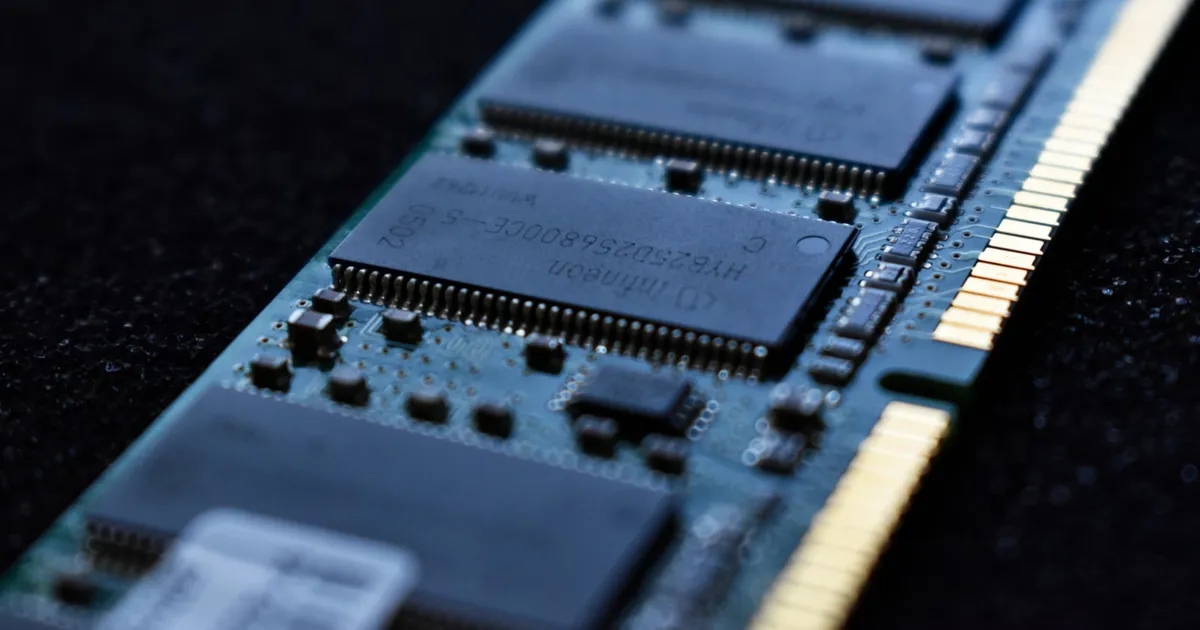
Nvidia’s answer to the AI memory shortage is to buy its way out of it. On July 25, 2026, SK Group and Nvidia announced a comprehensive partnership valued at more than $500 billion to build AI infrastructure in South Korea and secure the memory that feeds it. The centerpiece is a long-term deal that locks in SK Hynix — the company that already controls roughly 60% of the global high-bandwidth memory market — as Nvidia’s strategic supplier of next-generation HBM, plus a 2-gigawatt AI factory slated to come online in 2027.
The announcement stitches together the two scarcest inputs in the AI buildout: advanced memory and the power-hungry data centers that consume it. For Nvidia, whose accelerators are gated less by GPU fabrication than by the supply of HBM stacked alongside them, tying up SK Hynix’s roadmap is as strategic as any chip design.
What the two companies agreed to
The partnership has two distinct pillars.
Memory supply and co-development. Nvidia and SK Hynix established a long-term arrangement to secure and jointly develop next-generation AI memory, spanning applications from large language model training to physical and robotic AI. SK Hynix said it has completed supply agreements for its highest-speed, highest-performance HBM4 with major customers and will begin shipments in the fourth quarter of 2026, ramping through next year. Co-development means Nvidia gets an early seat at the table on the memory generations that will define its 2027–2028 platforms.
A 2-gigawatt AI factory. SK Telecom will construct a large-scale AI cloud facility in South Korea built on Nvidia’s DSX full-stack AI factory architecture. The site will deploy Nvidia’s next-generation Vera Rubin platform running on SK Hynix’s HBM4 modules. Nvidia describes DSX as an integrated stack of accelerated computing, systems, software, and partner technologies engineered to deliver the lowest token cost at maximum energy efficiency — the metric that increasingly governs AI data center economics. The first factory is planned to come online in 2027.
The companies framed the effort as targeting sovereign, physical, agentic, and enterprise AI services, and said they intend to jointly serve rising demand across the Asia-Pacific region.
Why HBM is the bottleneck
Modern AI accelerators pair a compute die with towers of stacked DRAM sitting inches away, connected by thousands of wires. That high-bandwidth memory is what lets a GPU stream the enormous weight matrices of a frontier model fast enough to keep its compute units busy. Without enough HBM bandwidth, expensive silicon sits idle — which is why memory, not logic, has become the choke point of the AI memory supercycle.
SK Hynix has been the clear leader of that cycle. The company’s HBM4 roadmap and its dominant market share have made it the single most important memory supplier to Nvidia’s platforms, and the race to secure HBM4 capacity has become one of the defining supply-chain contests of the AI era. Locking in a multi-year arrangement removes a major source of uncertainty from Nvidia’s ability to ship systems on schedule — and denies that certainty to competitors bidding for the same wafers.
The money and the context
The $500 billion-plus headline figure covers the full scope of the partnership across memory, systems, and data-center construction over a period of years rather than a single upfront check. Even discounted for the way these mega-partnerships bundle long-dated commitments, the number underscores how AI infrastructure spending has escalated into figures that rival national budgets — part of the broader hyperscaler capex boom reshaping the technology sector’s balance sheets.
The deal also lands days before a wave of memory earnings. SK Hynix is scheduled to report second-quarter results on July 29, with Samsung and Kioxia following that week. Consensus estimates had SK Hynix’s quarterly revenue climbing sharply year over year on HBM demand, and the Nvidia partnership hands the company a concrete forward narrative heading into that print — though it also raises the question of whether so much supply is being committed to a single customer.
For Nvidia, the arrangement echoes its pattern of vertical, capital-intensive alliances up and down the stack, from its 10-gigawatt compute partnership with OpenAI to earlier tie-ups securing manufacturing and power. Increasingly, the company is not just selling chips but underwriting the entire ecosystem that produces and consumes them.
What it means
The Nvidia–SK Group deal is a bet that AI compute demand keeps compounding, and a move to make sure Nvidia captures it regardless of how tight memory supply gets.
Who wins. SK Hynix is the obvious beneficiary: a long-term, co-development relationship with the dominant AI-systems vendor validates its HBM4 lead and gives it demand visibility competitors can only envy. SK Telecom gains an anchor tenant — Nvidia itself, effectively — for a gigawatt-scale build. And Nvidia wins the thing it needs most: assurance that the memory to fill its 2027 systems is spoken for.
Who feels the squeeze. Rival accelerator makers and cloud providers now face an HBM market whose leading supplier has committed a large slice of its roadmap to Nvidia. Samsung and Micron become even more strategically important to everyone else — a dynamic that keeps memory pricing power elevated and pressures anyone trying to build competing AI infrastructure on the same scarce parts.
What to watch. Three things. First, whether the 2027 timeline holds — HBM4 ramps and 2-gigawatt data centers are both prone to slipping. Second, concentration risk: how much of SK Hynix’s capacity is now effectively earmarked, and what that does to memory pricing for the rest of the market. Third, the circular-financing question that shadows every one of these mega-deals — when a chipmaker’s largest customers, suppliers, and infrastructure partners are increasingly the same handful of names committing hundreds of billions to each other, the sector’s growth and its risk concentrate together. This partnership makes both larger at once.
Keep reading
 Chisato · · 5 min read
 Nvidia Eyes Rebellions: AI Chip Deal, What to Know
Nvidia is in early talks with South Korean AI chip startup Rebellions on a partnership, investment, or acquisition. What Rebellions builds and why it matters.
 Chisato · · 7 min read
 Nvidia Vera CPU Specs: Olympus Cores, SPEC Benchmarks
Nvidia detailed its Vera CPU — 88 custom Olympus cores, 1.2 TB/s memory, and SPEC CPU 2026 scores that edge AMD's Epyc dual-socket flagship.
 Chisato · · 5 min read
 Nvidia Australia AI Factories: 2 GW Buildout by 2027
Nvidia lined up eight Australian data center operators to build up to 2 GW of AI factory capacity by 2027, roughly doubling the nation's compute footprint.