Korea's $950B US Chip Deal: Samsung, SK Hynix, Nvidia
Samsung and SK Hynix signed roughly $950 billion in chip-supply deals with US tech giants including Nvidia at Korea's San Francisco AI summit. The breakdown.
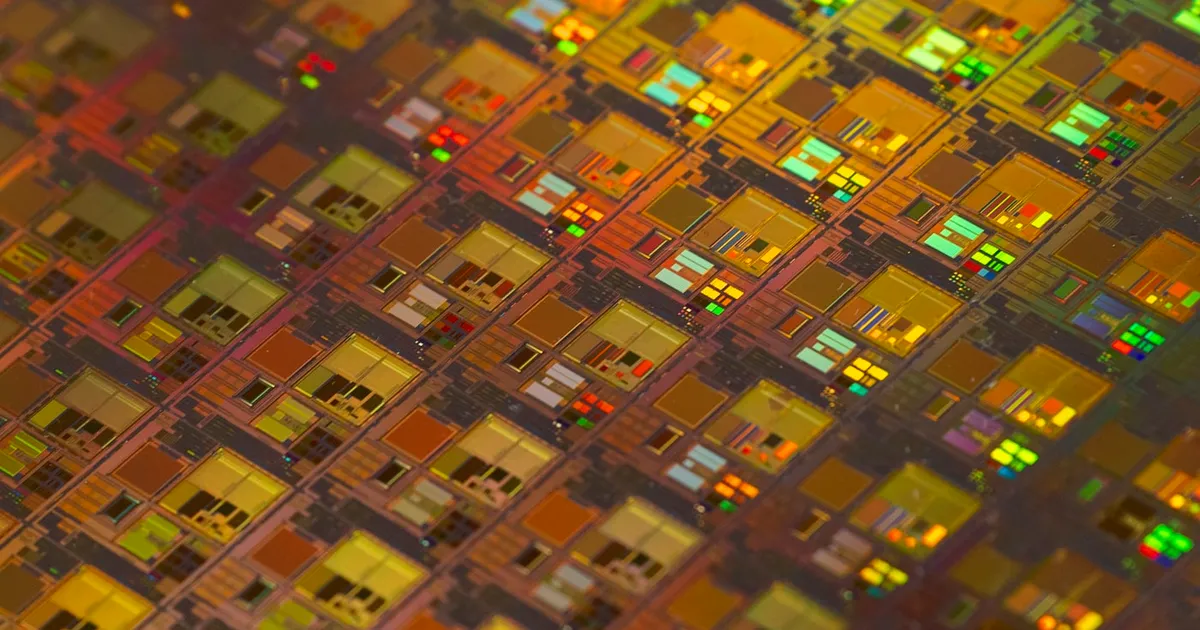
South Korea’s two memory giants have committed the bulk of their next several years of output to American AI. On July 25, 2026, at a government-backed summit in San Francisco, Samsung Electronics and SK Hynix signed a set of chip-supply and cooperation agreements with US technology companies — including Nvidia and Broadcom — that Seoul officials valued at roughly $950 billion combined. It is, by the count of the companies involved, the largest bundle of semiconductor supply commitments ever announced at once.
The agreements were unveiled as President Lee Jae Myung met one by one with the chief executives who now sit at the center of the AI economy — Nvidia’s Jensen Huang, OpenAI’s Sam Altman, Anthropic’s Dario Amodei, and Broadcom’s Hock Tan — before joining a broader summit of Korean and American business leaders. The message from the Korean side was that the country intends to be the indispensable supplier of the memory and manufacturing that the AI buildout runs on.
What was signed
The headline figure breaks into two dominant pieces, plus a wider web of cooperation.
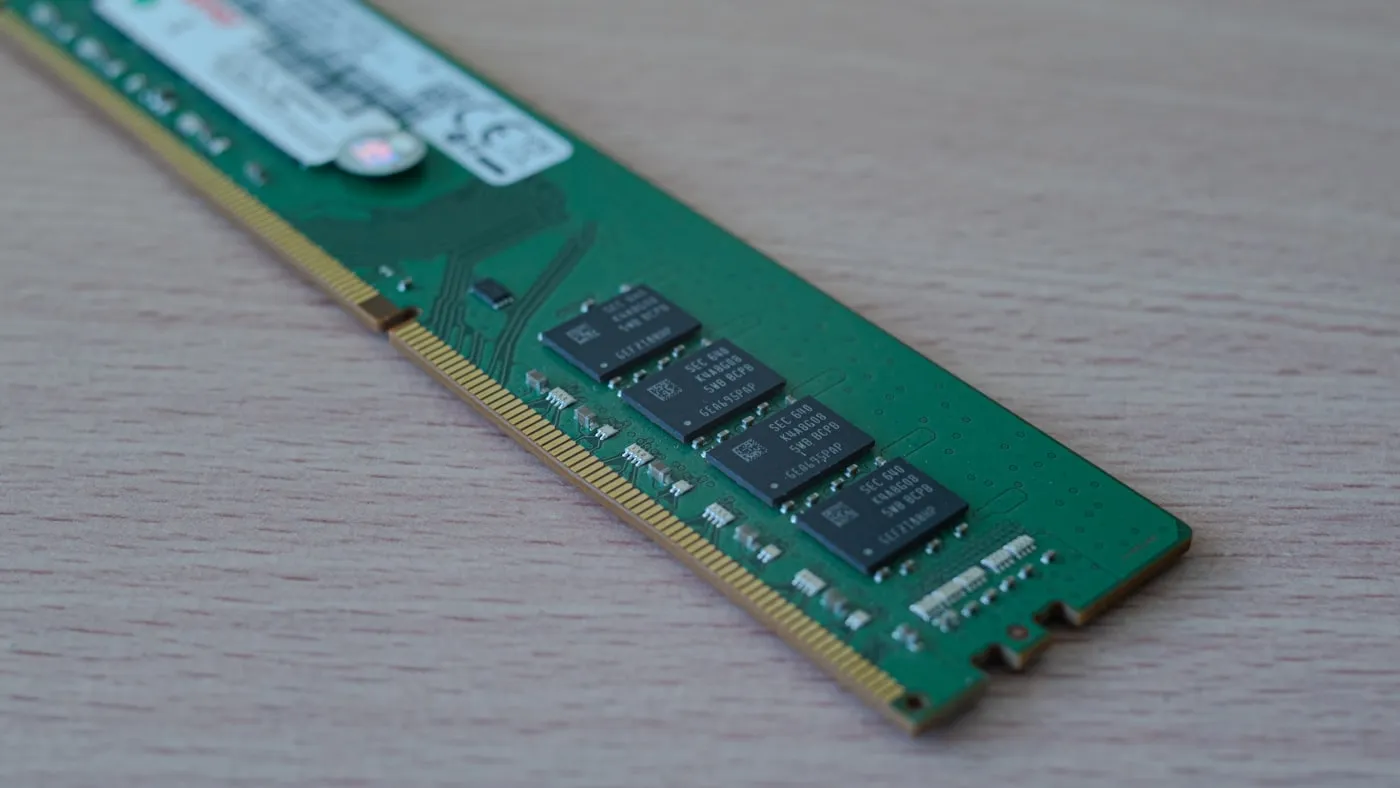
SK Hynix’s ~$750 billion memory pact. The larger commitment is a multi-year arrangement under which SK Hynix will supply high-bandwidth memory and other advanced chips to a group of US customers led by Nvidia. Korean officials put the value of the cooperation at roughly $750 billion spanning five years or more, structured as long-term agreements rather than a single purchase order. The deal converts what had been rolling, quarter-to-quarter allocation into locked, multi-year offtake — a form of certainty that matters enormously in a market where high-bandwidth memory has become the true bottleneck of AI hardware.
Samsung’s $200 billion Broadcom MOU. The second pillar is a memorandum of understanding worth about $200 billion (roughly 290 trillion won) between Samsung Electronics and Broadcom, running through 2030. It covers the supply of advanced memory and — significantly — foundry services for the custom AI accelerators that Broadcom designs for hyperscale customers. For Samsung, whose contract-manufacturing arm has struggled to win marquee logic customers against Taiwan’s TSMC, a long-dated Broadcom commitment is as much a validation of its foundry as it is a memory order.
Around those two anchors sit a cluster of smaller agreements struck during the same visit: an Anthropic–Korea science ministry MOU on AI-security and cyber cooperation, and a joint Nvidia–KAIST research lab in Seoul focused on agentic AI. Together they form a single strategic package — chips, data centers, and research — aimed at binding Korean industry to the American AI stack.
Why the timing matters
The announcements did not appear in a vacuum. They land alongside a separate, previously disclosed $500 billion Nvidia–SK Group partnership to build AI data centers in Korea and co-develop next-generation memory — a deal centered on a 2-gigawatt “AI factory” and SK Hynix’s HBM4 roadmap. The $950 billion in supply pacts is the commercial machinery that would feed such buildouts: the memory itself, contracted years in advance.
They also arrive as Korea’s chipmakers head into a pivotal earnings week. SK Hynix is scheduled to report second-quarter results on July 29, with Samsung close behind. SK Hynix already controls roughly 60% of the global HBM market, and its shares have been on a tear since its record-setting US listing earlier in July. A confirmed multi-year, multi-hundred-billion-dollar order book hands management an unusually concrete forward narrative heading into the print — and gives investors a reason to look past the memory-price volatility that has whipsawed the sector all year.
The geopolitics underneath
The deals are inseparable from trade politics. President Lee’s US trip has been framed in Seoul around a broader economic understanding with Washington, and the semiconductor commitments function as both commerce and diplomacy: Korean firms secure demand and a seat inside America’s AI supply chain, while the US secures a friendly, high-volume source of the memory it cannot produce at scale domestically.
For Korea, the calculation is existential. Memory is the country’s single most important export, and the AI era has turned HBM into the most profitable corner of that market. Anchoring the biggest US buyers into five-year contracts insulates Samsung and SK Hynix from the boom-bust cycle that has historically defined DRAM — where a glut can erase margins in a single quarter. It also positions the two firms against a rising tide of Chinese memory capacity, by tying their fortunes to the customers least likely to buy Chinese.
The concentration cuts both ways. Nvidia and Broadcom gain assured supply of the scarcest input in their stack; Korea gains assured demand. But the more the two sides commit to each other, the more each becomes a single point of failure for the other’s roadmap.
The custom-silicon angle
The Samsung–Broadcom foundry piece deserves its own attention. Broadcom has become the primary design partner for the in-house AI accelerators that hyperscalers use to reduce their dependence on Nvidia — the custom chips that power large training and inference clusters. Those designs still need someone to manufacture them, and until now the default answer has been TSMC.
A $200 billion Samsung commitment signals that Broadcom intends to dual-source its foundry supply, and that Samsung’s process technology is finally credible enough for leading-edge AI logic. If Samsung can convert an MOU into real, yielding wafers, it would mark the most significant crack in TSMC’s near-monopoly on advanced AI manufacturing in years — and give the hyperscalers a second place to build the custom accelerators they increasingly favor.
What it means
The $950 billion in pacts is best read not as $950 billion of new spending but as the formalization of a supply relationship that already existed — turned from spot buying into contract. That distinction matters for how much of the headline is genuinely incremental. But the strategic content is real.
Who wins. SK Hynix is the clearest beneficiary: multi-year visibility on the highest-margin product it makes, with the dominant AI-systems vendor as anchor customer. Samsung wins a foundry validation it has chased for years and a reason to accelerate its own HBM4 ramp. Broadcom secures a second manufacturing source and locks in memory for its accelerator customers. Nvidia removes memory scarcity as a gating factor for its 2027–2028 platforms.
Who feels the squeeze. Everyone bidding for the same wafers. With Korea’s leading suppliers committing large slices of their roadmaps to a handful of US names, the memory available to rival accelerator makers and second-tier cloud providers gets tighter — keeping HBM pricing power elevated and raising the cost of building competing AI infrastructure. TSMC, long the only credible high-end foundry, now faces a Samsung emboldened by a Broadcom order.
What to watch. First, execution — MOUs are not binding contracts, and a $200 billion foundry commitment lives or dies on Samsung’s yields. Second, concentration risk: how much of SK Hynix’s capacity is now effectively spoken for, and what that does to memory pricing for the rest of the market. Third, the circular-financing question that shadows every AI mega-deal — when the same handful of companies are simultaneously each other’s suppliers, customers, and infrastructure partners committing hundreds of billions back and forth, the sector’s growth and its risk compound together. The earnings prints on July 29 will offer the first read on whether the order book is already showing up in the numbers.
Keep reading
 Kurumi · · 6 min read
 Micron Stock Tops $1,000 as AI Memory Rally Heats Up
Micron closed above $1,000 for the first time as SanDisk, Western Digital and chip-equipment makers rallied on surging HBM and DRAM demand.
 Kurumi · · 6 min read
 Gimlet Labs Raises $300M at $3B for Inference Cloud
Gimlet Labs raised $300M at a $3B valuation in a Series B led by a16z to scale its multi-silicon inference cloud for agentic AI. The backers, the tech, the stakes.
 Kurumi · · 6 min read
 Broadcom Q3 2026 Earnings: AI Chips Triple, Stock Dips
Broadcom's fiscal Q3 2026 revenue hit a record $29.6B as AI chip sales more than tripled to $16.7B, but light Q4 guidance sent the stock lower.