RISC vs CISC: Instruction Set Architectures Explained
RISC and CISC are two philosophies for CPU instruction sets — simple fixed-length instructions versus fewer, complex ones. How they differ and why.
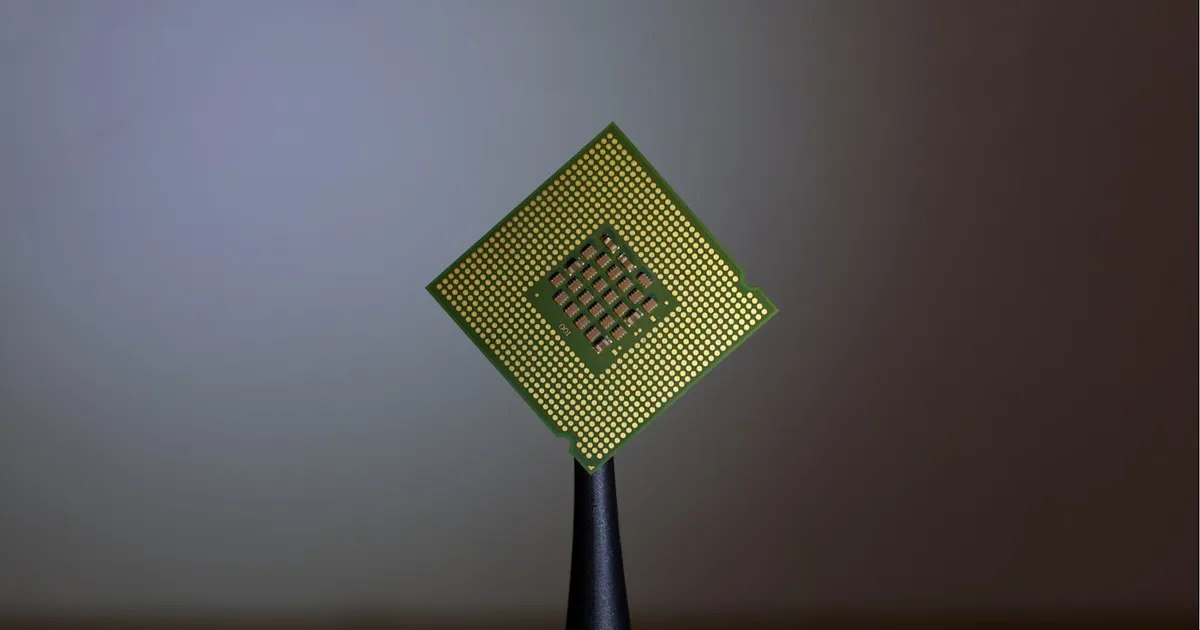
RISC (reduced instruction set computer) and CISC (complex instruction set computer) are two competing philosophies for designing a CPU’s instruction set — the vocabulary of low-level operations a processor can execute directly. CISC favors a large set of powerful, variable-length instructions that each do more work per instruction; RISC favors a small set of simple, fixed-length instructions that are easier to decode and pipeline at high speed. Nearly every processor you interact with today, from a phone’s SoC to a laptop’s main CPU, sits on one side of this divide or borrows heavily from both.
Where the split came from
Early processors leaned toward CISC because memory was scarce and slow relative to the CPU, so packing more functionality into each instruction reduced how many instructions a program needed to fetch. A single complex instruction might load a value from memory, perform an arithmetic operation on it, and store the result back — work that would take several simpler instructions on a different design. This kept programs compact, which mattered when memory itself was a limited resource.
As compilers improved and memory got faster and cheaper, that tradeoff shifted. It became easier to have a compiler emit many simple instructions than to encode complex behavior directly in hardware, and simple, uniform instructions turned out to be far easier to pipeline — to have a CPU start executing the next instruction before the current one finishes. RISC designs leaned into that: keep every instruction the same length and complexity, and let the compiler generate more of them rather than asking the CPU to interpret fewer, denser ones.
The core differences
- Instruction complexity. CISC instructions can each perform multiple operations (memory access plus computation in one step). RISC instructions each do one simple thing.
- Instruction length. CISC instructions are variable-length, which complicates decoding since the CPU doesn’t know how long an instruction is until it starts parsing it. RISC instructions are fixed-length, so the decoder can process them uniformly and predictably.
- Memory access. CISC allows instructions to operate directly on memory operands. RISC typically enforces a load/store architecture — memory is only touched by dedicated load and store instructions, while arithmetic and logic instructions work purely on registers.
- Decode and pipeline complexity. Fixed-length, uniform instructions make it far simpler to build deep, fast pipelines, since the hardware doesn’t need complex logic to figure out instruction boundaries. Variable-length CISC instructions make pipelining harder, requiring more decode logic.
- Code density. CISC’s denser instructions mean smaller compiled programs for equivalent functionality. RISC programs need more instructions to do the same work, trading code size for decode simplicity.
Real-world architectures
x86, the architecture behind most desktop and server CPUs, is the classic CISC example — see ARM vs x86 for how it stacks up against a RISC competitor directly. ARM and RISC-V are RISC architectures, prioritizing power efficiency and simpler, more predictable decoding, which is a large part of why RISC designs dominate battery-constrained devices like phones.
The line has blurred over time in practice: modern x86 chips internally decode their CISC instructions into simpler, RISC-like micro-operations before actually executing them, borrowing the pipelining advantages of a RISC design while staying compatible with decades of CISC software. So the distinction today is less about which chips are “purer” and more about which philosophy the externally visible instruction set follows.
RISC vs CISC at a glance
| RISC | CISC | |
|---|---|---|
| Instruction set size | Small, simple instructions | Large, complex instructions |
| Instruction length | Fixed | Variable |
| Memory access | Load/store only; arithmetic on registers | Instructions can operate directly on memory |
| Decode complexity | Low, uniform | Higher, variable |
| Pipelining | Easier, more predictable | Harder, more decode logic needed |
| Code density | Lower (more instructions per program) | Higher (fewer instructions per program) |
| Common examples | ARM, RISC-V | x86 |
Compiler complexity and the software side
The RISC/CISC split isn’t purely a hardware concern — it shapes how much work the compiler has to do. A CISC compiler can lean on the hardware’s complex instructions to do more per line of generated assembly, which historically made the compiler’s job comparatively simpler at the cost of a more complicated chip. A RISC compiler, by contrast, has to work harder to schedule and order many simple instructions efficiently, since the hardware offers less built-in complexity to lean on. That shift — pushing complexity from silicon into software — was itself part of the original RISC bet: transistors and compiler engineering both became cheaper and more capable over time, so it made sense to move complexity to wherever it was easiest to iterate on.
This also affects how predictable performance is across different programs. A simple, uniform RISC instruction set makes it easier for both compilers and CPU designers to reason about how long a given sequence of code will actually take to execute, since every instruction has roughly the same shape and cost. Variable-length CISC instructions introduce more variance, since the decode cost of one instruction can differ meaningfully from the next.
Why this still matters
The RISC/CISC distinction shapes real engineering tradeoffs beyond CPU design trivia. It’s a large part of why ARM-based chips tend to win on power efficiency in mobile and increasingly in laptops, why compilers targeting RISC architectures generate more instructions but simpler ones, and why open instruction sets like RISC-V are attractive to chip designers who want to build custom silicon without licensing an existing architecture. Understanding which philosophy a given CPU follows also clarifies why certain performance characteristics — like how well a chip scales its pipeline depth, discussed alongside CPU cache design — differ across chip families even when raw clock speeds look similar.
The takeaway
RISC and CISC represent two different bets on where complexity should live: in the compiler generating many simple instructions, or in the hardware interpreting fewer complex ones. RISC’s fixed-length, load/store instructions favor simple, fast, power-efficient decoding and pipelining; CISC’s variable-length, memory-operating instructions favor denser code at the cost of decode complexity. Modern high-performance CISC chips have absorbed much of RISC’s pipelining advantage internally, but the split still explains real differences in power efficiency, code size, and instruction set licensing across today’s processors.
Tagged
Keep reading
 Chisato · · 5 min read
 What Is a Memory Controller?
A memory controller is the circuit that manages every read and write between the CPU and main memory, setting the ceiling on bandwidth and latency.
 Chisato · · 4 min read
 What Is a DPU (Data Processing Unit)?
A DPU is a specialized chip that offloads networking, storage, and security tasks from the CPU. How data processing units fit alongside CPUs and GPUs.
Chisato · · 4 min read What Is a Semiconductor Process Node?
A process node like '5nm' or '3nm' names a chipmaker's manufacturing generation, not a literal measurement anymore. Here's what the number means.