ARM vs x86: CPU Architecture Compared
ARM and x86 are the two dominant CPU instruction set architectures — how RISC vs CISC design differs and why it affects power and performance.
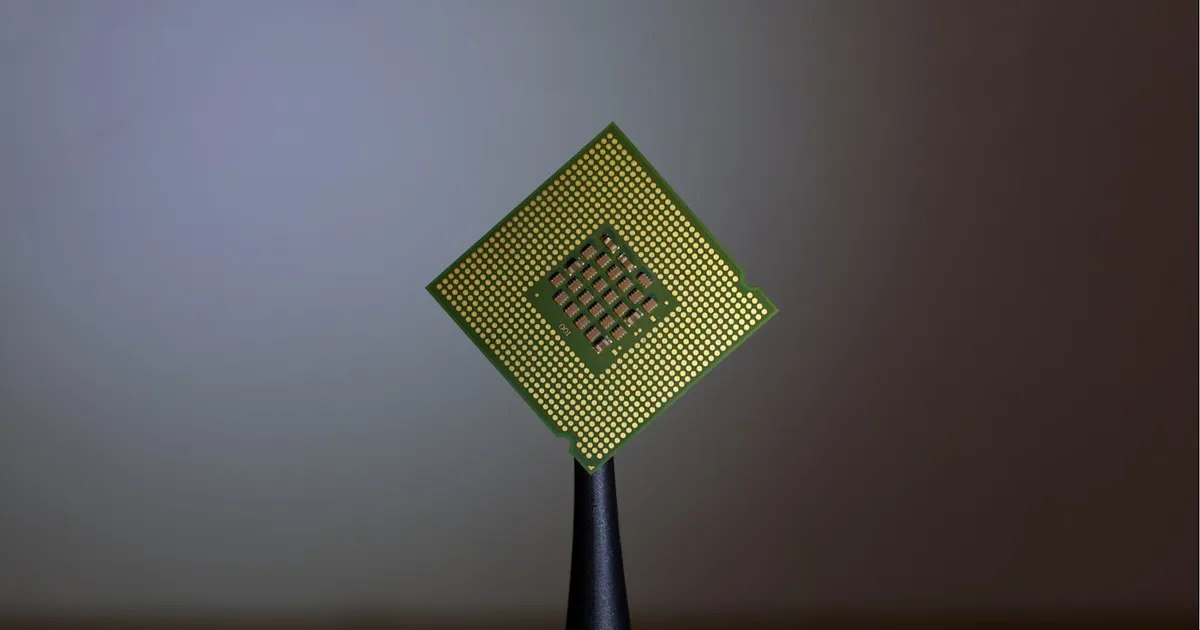
ARM and x86 are the two dominant CPU instruction set architectures (ISAs) — the vocabulary of low-level commands a processor understands. ARM is built around a RISC (reduced instruction set computer) philosophy, favoring a small set of simple instructions; x86 is CISC (complex instruction set computer), offering a much larger set of more powerful, variable-length instructions. That one design choice, made decades ago, still shapes how power-efficient and how fast chips from each camp tend to be.
What an instruction set architecture actually is
An ISA is the contract between hardware and software: the set of instructions a CPU can execute, the registers it exposes, and the rules for how memory gets addressed. Software compiled for one ISA won’t run on a CPU built for another without translation, which is why ISA choice has such long-lasting consequences — it locks in an entire ecosystem of compilers, operating systems, and compiled binaries. It sits below the layer discussed in what a CPU cache is and above the physical transistors themselves.
RISC vs CISC, the original divide
x86 traces back to Intel’s 8086 in 1978 and has accumulated new instructions with nearly every generation since, while staying backward compatible with decades of old software. That history is why x86 instructions are complex and variable in length — some instructions can do a load, an arithmetic operation, and a store in one go — which keeps compiled programs compact but makes the decoding hardware more complicated.
ARM took the opposite approach from the start. Its instructions are simple, fixed-length, and each one typically does one thing: load a value, add two registers, store a result. Programs need more instructions to accomplish the same task, but each instruction is cheap and fast to decode. This is the core RISC bet: trade instruction count for decoder simplicity, and let the compiler do more of the work that a CISC chip does in hardware.
Why this affects power efficiency
Decoding a variable-length, complex x86 instruction takes more transistors and more power than decoding ARM’s simple, fixed-length instructions. That decoding overhead is roughly constant per instruction regardless of workload, so it adds up as a real power tax on x86 chips — one reason ARM designs have historically dominated battery-powered devices, from phones to tablets. Modern x86 chips claw back a lot of this gap with techniques like micro-op caching, which decodes common instructions once and reuses the result, but the fundamental decoding cost is baked into the ISA.
ARM’s efficiency advantage is also why it’s licensable in a way x86 traditionally hasn’t been: ARM Holdings licenses its instruction set and core designs to many companies, who then build their own chips around it. That licensing model is a big part of why ARM cores show up everywhere from smartphones to servers to embedded devices, while x86 has remained concentrated among a much smaller number of manufacturers.
Performance in practice
For decades, the assumption was that x86 held the performance crown for demanding, single-threaded workloads, while ARM won on power efficiency at lower performance points. That gap has narrowed considerably as ARM designs have scaled up into laptop and server chips with aggressive out-of-order execution, wide pipelines, and large caches — the same techniques covered conceptually in CPU vs GPU vs TPU. Meanwhile, x86 manufacturers have pushed hard on power efficiency features of their own, including aggressive clock and voltage scaling. In short: the RISC/CISC split still explains the origin of the tradeoff, but modern implementations on both sides have narrowed the practical gap through engineering effort rather than pure ISA advantage.
Software compatibility is the real moat
The bigger practical difference for most users isn’t raw performance — it’s software compatibility. Decades of Windows and professional software were compiled specifically for x86, and running that software on an ARM chip requires either recompiling it natively or running it through an emulation/translation layer, which carries a performance penalty — though Windows on Arm in 2026 shows how far that translation story has come. This compatibility inertia is the main reason x86 has remained entrenched in desktop and enterprise computing even as ARM has become competitive on raw performance — switching an entire software ecosystem is far harder than switching a chip.
ARM vs x86 at a glance
| ARM | x86 | |
|---|---|---|
| Design philosophy | RISC — simple, fixed-length instructions | CISC — complex, variable-length instructions |
| Power efficiency | Generally higher | Generally lower, improving with newer designs |
| Licensing model | Licensed IP, many manufacturers | Concentrated among few manufacturers |
| Historical strength | Mobile, embedded, now scaling to laptops/servers | Desktop, enterprise, legacy software compatibility |
| Software ecosystem | Growing, native recompilation ongoing | Decades of existing compiled software |
Where each one dominates today
ARM remains the default for phones, tablets, and most embedded and IoT hardware, and has expanded meaningfully into laptops — led by chips like the Snapdragon X2 Elite — and data center servers where power efficiency translates directly into lower electricity and cooling costs. x86 remains dominant in traditional desktops, gaming PCs, and enterprise servers running software with long compatibility chains. Chiplet-based designs — where different parts of a processor are manufactured separately and combined into one package, as covered in what a chiplet is — have made it more practical for manufacturers on both sides to mix specialized components without committing an entire chip to one monolithic design.
There’s also a third path gaining ground: RISC-V, an open, royalty-free RISC instruction set that lets companies design custom chips without licensing ARM’s IP or being locked into x86 compatibility at all.
The takeaway
ARM and x86 differ at the most fundamental level of chip design: ARM’s RISC approach favors simple, fixed-length instructions and generally better power efficiency, while x86’s CISC approach carries decades of complex, backward-compatible instructions and a deep software compatibility moat. The performance gap between them has narrowed as both sides borrow engineering techniques from each other, but the underlying tradeoff — and the software ecosystems built on top of each — is what actually decides which one shows up in a given device.
Tagged
Keep reading
 Chisato · · 5 min read
 What Is a Memory Controller?
A memory controller is the circuit that manages every read and write between the CPU and main memory, setting the ceiling on bandwidth and latency.
 Chisato · · 4 min read
 What Is a DPU (Data Processing Unit)?
A DPU is a specialized chip that offloads networking, storage, and security tasks from the CPU. How data processing units fit alongside CPUs and GPUs.
Chisato · · 4 min read What Is a Semiconductor Process Node?
A process node like '5nm' or '3nm' names a chipmaker's manufacturing generation, not a literal measurement anymore. Here's what the number means.