What Is a DPU (Data Processing Unit)?
A DPU is a specialized chip that offloads networking, storage, and security tasks from the CPU. How data processing units fit alongside CPUs and GPUs.
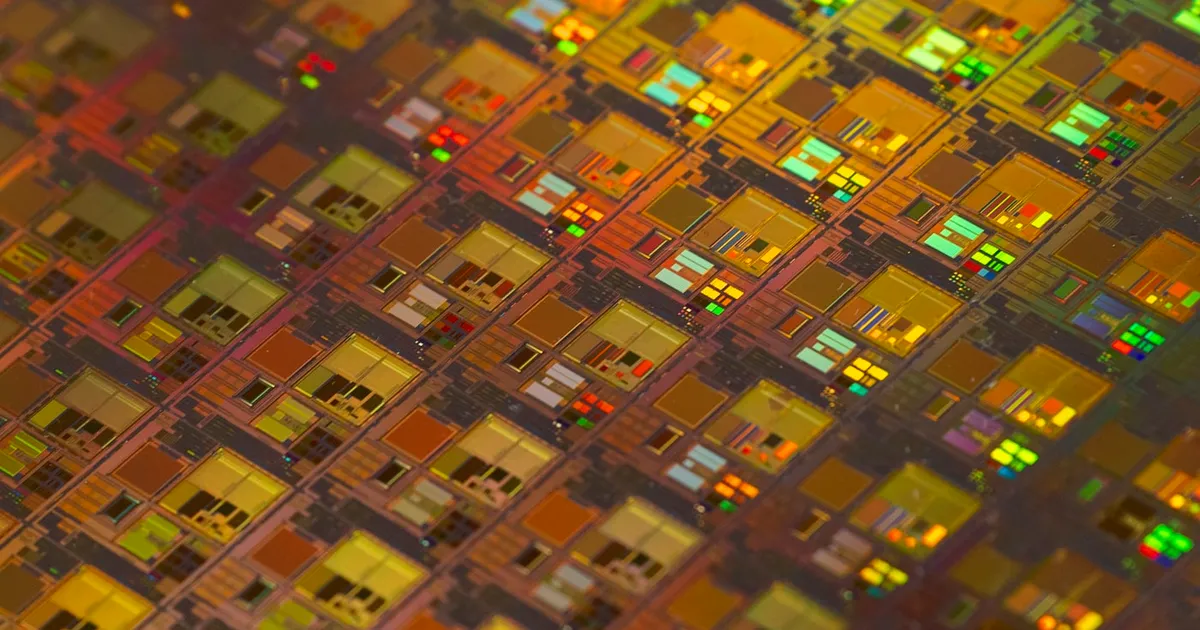
A DPU, or data processing unit, is a specialized chip that offloads networking, storage, and security processing away from a server’s main CPU, freeing it to spend its cycles on application logic instead of infrastructure plumbing. Where a GPU accelerates parallel math and a TPU accelerates machine learning tensor operations, a DPU accelerates the data movement and infrastructure services that every server needs regardless of what application is actually running on it.
The problem DPUs solve
Modern data center servers spend a surprising share of CPU time on work that has nothing to do with the application itself: terminating network connections, encrypting and decrypting traffic, running the software-defined networking layer, handling storage protocol overhead, and enforcing security policy at the packet level. This is sometimes called the “infrastructure tax” — cycles that show up on the CPU’s utilization graph but don’t advance the actual workload a customer is paying for.
As network speeds climbed into the hundreds of gigabits per second, that tax grew heavier: processing packets at line rate in software increasingly meant dedicating entire CPU cores just to keep up with the network interface, cores that could otherwise run paying workloads. A DPU is a purpose-built chip that absorbs this work instead.
What’s actually on a DPU
A DPU typically combines three kinds of processing on one card or SoC:
- A high-speed network interface — often 100 to 400+ gigabit Ethernet, handling packet processing at line rate.
- Programmable acceleration hardware — fixed-function or programmable logic for tasks like encryption/decryption, compression, packet filtering, and virtual switching, offloaded from software into silicon purpose-built for it.
- General-purpose CPU cores — typically Arm-based, running an independent operating system so the DPU can manage its own workload (networking, storage virtualization, security policy enforcement) without depending on the host CPU at all.
That last point is what distinguishes a DPU from a traditional network interface card: it’s not just faster hardware for moving packets, it’s an independent, programmable computer sitting on the server’s I/O path, capable of running its own software stack.
Where DPUs sit in the data center
In a typical deployment, a DPU sits between a server’s CPU and the network, intercepting and handling infrastructure-layer traffic before it ever reaches the host CPU:
- Network virtualization and software-defined networking — implementing virtual switches, overlay networks, and network policy in DPU hardware instead of host software.
- Storage disaggregation — presenting remote storage to the host as if it were local, with the protocol translation handled on the DPU rather than burning host CPU cycles.
- Security enforcement — running firewall rules, encryption, and intrusion detection at the network edge of each server, isolated from the host OS, which limits what a compromised application on the host can reach or tamper with. This isolation property is part of why DPUs are attractive for zero trust architectures, which assume no part of the network is implicitly trusted.
- Multi-tenant isolation — in cloud environments, DPUs help enforce strict separation between tenants sharing the same physical hardware, handling the networking and security boundary in hardware rather than trusting host-level software alone.
DPU vs GPU vs CPU: different jobs, not competitors
It’s easy to lump DPUs in with GPUs and TPUs as “another AI-era accelerator chip,” but the comparison only holds loosely. GPUs and TPUs accelerate compute — massive amounts of parallel arithmetic for graphics or machine learning. A DPU accelerates data movement and infrastructure services; it isn’t primarily doing the kind of dense numerical computation a GPU is built for; it’s handling the networking, storage, and security layer so the CPU and any accelerators attached to it can spend more of their own cycles on the actual workload. In an AI training cluster, all three commonly coexist on the same server: CPUs for orchestration, GPUs for the training math, and a DPU handling the high-speed networking and storage that keeps those GPUs fed with data without starving the host CPU of cycles.
Why this matters now
The rise of large-scale AI training and inference clusters has made the case for DPUs stronger than it was a decade ago. Feeding banks of GPUs with training data at the throughput they can consume it requires very high-speed networking and storage, and doing that entirely in host CPU software would eat into the CPU capacity available for everything else. Offloading that path to a DPU keeps the CPU available for orchestration and application logic while a dedicated, purpose-built chip handles the data plane.
The takeaway
A DPU is a specialized, largely self-sufficient chip that takes over networking, storage, and security processing from a server’s CPU, running its own operating system on independent Arm cores alongside programmable acceleration hardware. It doesn’t replace the CPU or GPU — it removes infrastructure overhead from both, which matters most in high-throughput, multi-tenant, or AI-cluster environments where the “plumbing” work would otherwise consume a meaningful share of the compute a business is actually paying for.
Tagged
Keep reading
 Chisato · · 5 min read
 What Is a Memory Controller?
A memory controller is the circuit that manages every read and write between the CPU and main memory, setting the ceiling on bandwidth and latency.
 Chisato · · 4 min read
 What Is a Semiconductor Process Node?
A process node like '5nm' or '3nm' names a chipmaker's manufacturing generation, not a literal measurement anymore. Here's what the number means.
 Chisato · · 5 min read
 RISC vs CISC: Instruction Set Architectures Explained
RISC and CISC are two philosophies for CPU instruction sets — simple fixed-length instructions versus fewer, complex ones. How they differ and why.