Intel Q2 2026 Earnings: Revenue Up 25%, Stock Pops
Intel Q2 2026 revenue rose 25% to $16.1B and shares jumped ~13%. Data Center grew 59%, foundry 31%, but a CHIPS-tied charge drove an $11B GAAP loss.
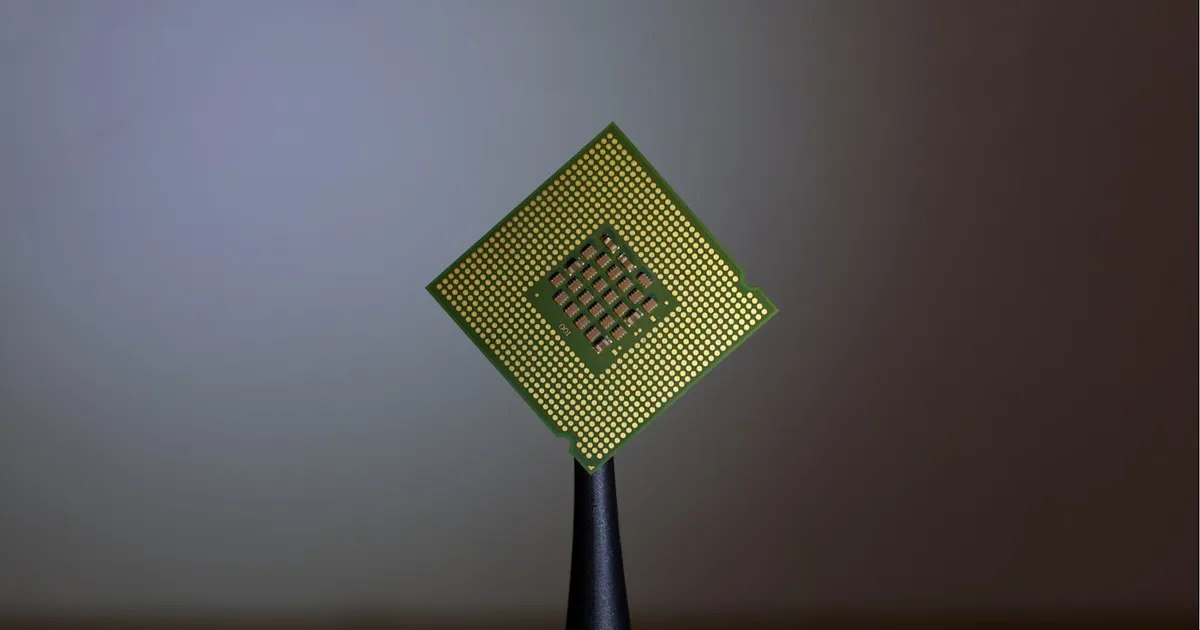
The most improbable chip trade of 2026 delivered its report card, and for once the numbers outran even a stretched stock. Intel reported second-quarter results after the close on Thursday, July 23, 2026, posting revenue of $16.1 billion, up 25% year over year — the company’s fastest quarterly growth in more than 15 years — and blowing past a Wall Street consensus that had called for roughly $14.4 billion. Adjusted earnings of $0.42 per share came in at double the $0.21 analysts expected. Shares rose more than 13% in after-hours trading.
The print lands after a run that had left little room for error. Intel entered the report up roughly 163% year to date, the best-performing large-cap chip stock of the year, in an earnings season that had repeatedly punished good results — from Alphabet’s capex-driven slide to a semiconductor selloff on a blowout TSMC quarter. This time the reaction was different, because the beat reached the one line the bull case is built on: the foundry.
The headline numbers
The quarter beat on nearly every operating metric that matters:
- Revenue: $16.1 billion, up 25% year over year, above the top end of Intel’s own $13.8 billion to $14.8 billion guidance.
- Adjusted EPS: $0.42, versus a roughly $0.21 consensus and Intel’s own guide of about $0.20.
- Data Center and AI revenue: $6.3 billion, up 59% year over year — the single largest growth driver in the quarter.
- Client Computing Group revenue: $8.9 billion, up 13%, as the PC business kept its footing.
- Intel Foundry revenue: $5.8 billion, up 31% year over year.
CFO Dave Zinsner said the quarter “exceeded financial guidance on the back of higher factory yields and faster production cycles,” and framed the beat as evidence that operational execution — not just a friendlier policy backdrop — was driving the recovery. The Data Center and AI segment’s 59% surge is the number that stops the eye: a business that spent years ceding ground to Nvidia and AMD in accelerators and to AMD in server CPUs put up growth that would look aggressive at a company a fraction of Intel’s size.
The $11 billion asterisk
There is a catch, and it is a large one. On a GAAP basis, Intel reported a net loss of about $11 billion, or $2.16 per share. The loss was driven almost entirely by a $12.5 billion mark-to-market charge on escrowed shares tied to Intel’s CHIPS Act agreement with the U.S. government — an accounting adjustment reflecting the value of equity linked to Washington’s stake, not a deterioration in the operating business.
That distinction is the whole story of the print. The cash-generating business improved sharply; the GAAP bottom line was swamped by a one-time, non-operating mark tied to the unusual structure of Intel’s government support. Investors treated it accordingly, focusing on the adjusted figures and the segment detail rather than the headline loss. It is a reminder of how entangled Intel’s balance sheet has become with U.S. industrial policy — the same dynamic visible in commitments like Intel’s $5 billion Ireland expansion and its broader domestic buildout.
The foundry finally has a customer
For most of the past decade, Intel Foundry was a cost center — a capital-hungry manufacturing arm serving Intel’s own product groups while bleeding cash trying to catch TSMC. The entire 2026 rally rested on that changing, and this quarter delivered the clearest evidence yet.
Alongside the numbers, Intel confirmed that its leading-edge 18A process has secured a manufacturing commitment from a major cloud service provider — described as the first commercially recognized external customer in volume. That is the data point the bull case demanded. Apple and Microsoft had already joined 18A as early design partners; a named hyperscaler taking volume moves the foundry from a validation story to a revenue story.
The manufacturing metrics backed the narrative. Yields on the 18A node have reportedly climbed to roughly 85%, up from about 65% the prior quarter — the difference between a fab that loses money and one that prints it. Foundry revenue of $5.8 billion, up 31%, still includes heavy internal demand, but the direction of travel and the external commitment are what reframe the multiple. For readers new to why nodes carry so much weight, our explainer on what a semiconductor process node is covers the fundamentals, and our piece on Intel’s High-NA EUV milestone traces the manufacturing bet underpinning the 18A roadmap.
The guide did the heavy lifting
If the quarter cleared the bar, the outlook is what sent the stock higher. Management guided third-quarter revenue to a range of $15.8 billion to $16.8 billion, above the roughly $15.1 billion Street consensus even at the low end, and set adjusted EPS guidance of about $0.38, well ahead of the $0.27 analysts had modeled.
Zinsner also lifted Intel’s 2026 capital-spending plan to about $20 billion, up from a prior $18 billion, and signaled that 2027 spending would rise “meaningfully” to support demand “across products and foundry.” In an earnings season that has sold strong prints, a company raising both its near-term guide and its capex is making a bet that the demand is durable — and, crucially, that it now has the customers to justify the spend.
What it means
Intel’s report is the most important turnaround print in the chip industry this year, and for the first time the fundamentals caught up to a stock that had already tripled. The setup into the quarter was brutal: after a 163% run, an in-line beat would likely have triggered the sell-the-news reaction that punished TSMC’s record quarter and Alphabet alike. Intel cleared that bar by beating on revenue, doubling the EPS estimate, guiding well above consensus, and — most importantly — putting a named hyperscaler on 18A.
Who wins. Intel’s turnaround thesis just got its strongest proof point. A blowout Data Center and AI segment, an 85% yield figure, a volume foundry customer, and a raised guide together validate the argument that the operating business is improving as fast as the multiple implied. The read-through extends beyond Intel: a healthy second leading-edge foundry at scale is the first real competitive check on TSMC’s dominance in years, with implications for every fabless designer — including Nvidia and Apple — that would prefer more than one advanced supplier. The capex hike also reinforces the AI capital-spending boom rippling through the entire supply chain.
Who should stay cautious. The $11 billion GAAP loss is a reminder that Intel’s fortunes are now tied tightly to a government equity arrangement whose accounting can swing results by double-digit billions in a single quarter. The 18A ramp is real but early; one volume customer is a start, not a franchise, and the foundry still leans heavily on internal demand. And a stock priced for perfection remains exposed — the after-hours pop rewarded a genuinely strong print, but it also raises the bar for the next one.
What to watch next. The specifics of the new foundry customer relationship — volume, timing, and whether more hyperscalers follow — will decide whether 18A becomes a durable business. Watch gross-margin progression toward the mid-40s as yields mature, the pace of the promised 2027 capex increase, and whether Data Center and AI can sustain growth anywhere near 59% as it laps easier comparisons. The report reframed Intel from a hope trade into a results trade; the burden now is to prove this quarter was the start of a trend rather than its peak. For the fuller setup into the print, see our Q2 earnings preview.
Tagged
Keep reading
 Kurumi · · 6 min read
 Intel Q2 2026 Earnings Preview: What to Watch
Intel reports Q2 2026 earnings July 23 after a 163% YTD run. Consensus is $14.4B revenue and $0.22 EPS. What to watch on 18A foundry, margins, and guidance.
 Kurumi · · 5 min read
 Marvell Q2 Earnings: Record $2.74B, Raised Guidance
Marvell posted record Q2 FY2027 revenue of $2.74B on a 46% data center surge, raised its outlook again, and guided Q3 to $3.15B. The numbers and what they mean.
Kurumi · · 5 min read SMIC Q2 2026 Earnings: Profit Jumps 262%, Stock Rises
SMIC's Q2 profit surged 262% to $479M as revenue rose 36% and margins expanded, sending the Chinese foundry's Hong Kong shares up as much as 6.4%.