Intel's €5B Ireland Fab Expansion: What to Know
Intel is investing €5 billion ($5.7B) to expand its Leixlip, Ireland campus, scaling Intel 3 production of Xeon 6 chips for AI demand. Here's the plan and why it matters.
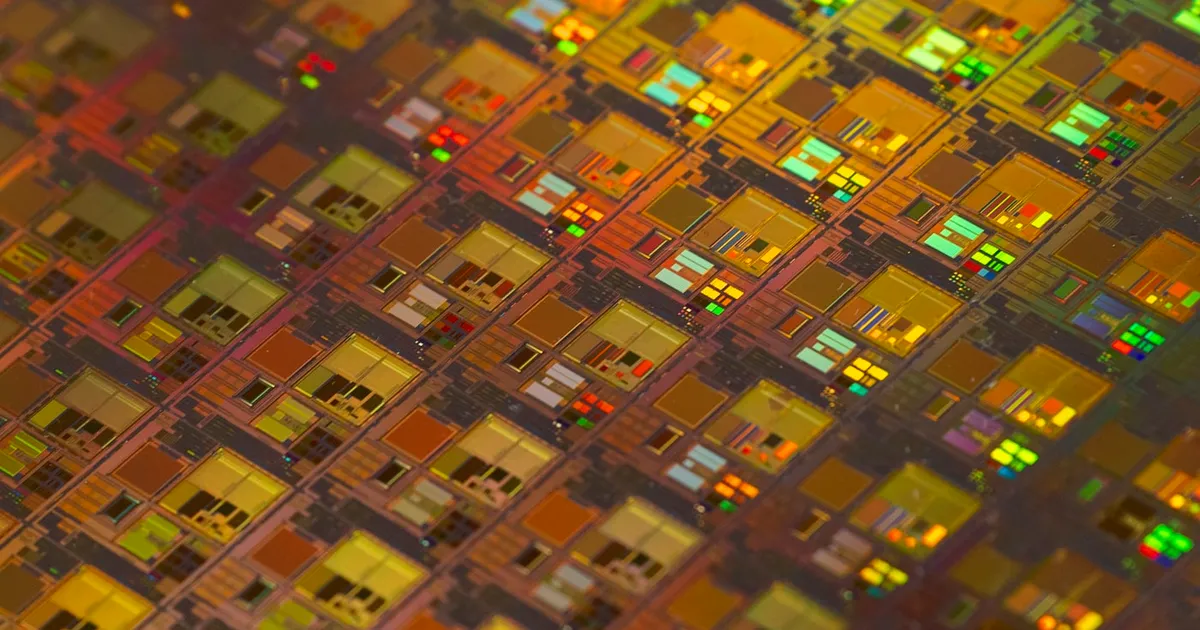
Intel is pouring more money into the one factory it cannot afford to run short on. On July 13, 2026, Intel announced a €5 billion capital investment — roughly $5.7 billion — to expand its Leixlip campus in Ireland, the next phase of a buildout the company framed as a direct response to surging demand for AI and high-performance computing. The money will scale production of chips built on Intel’s Intel 3 process node, the technology behind its Xeon 6 server processors and the next-generation Diamond Rapids parts that follow.
For a company that has spent two years cutting costs and shedding businesses, a multibillion-euro commitment to a single site is a notable statement of priorities. Leixlip is not an ordinary fab. It is Europe’s only EUV chip fabrication facility, and it is Intel’s sole manufacturing site anywhere in the world running the Intel 3 node — the exact process turning out the server CPUs now facing a global supply squeeze.
What Intel announced
The €5 billion will fund an expansion of Fab34 at Leixlip, upgrading existing fabrication facilities and installing leading-edge manufacturing equipment across cleanroom space the company already operates. Intel said the investment “expands current production output, advances research and development activities and utilises capacity across existing cleanroom space” — in plain terms, squeezing more Intel 3 wafers out of a site that is already one of its most advanced.
The output target is specific: Intel Xeon 6 processors and the next generation of Intel Xeon built on the Intel 3 node. These are data-center CPUs — the general-purpose brains that sit alongside GPUs in AI servers, handling orchestration, data movement, and the workloads that don’t run on accelerators. Demand for them has outstripped supply as hyperscalers race to stand up new capacity.
On timing, Intel said it expects to deploy most of the funds by end-2027. The figure amounts to roughly 30% of the $17 billion Intel has earmarked for total capital expenditure across 2026 — a meaningful share of a capex budget the company has otherwise been working to shrink. Intel has now invested more than €30 billion in Ireland since it began operations there in 1989.
The jobs and the politics
The expansion adds several hundred highly skilled roles to the 4,900 people Intel already employs in Ireland, plus thousands of construction and trade jobs during the build. That employment math is why the announcement drew immediate political attention.
Irish premier (Taoiseach) Micheál Martin called the investment “a powerful vote of confidence in Ireland, our skills base and our position at the heart of Europe’s most advanced manufacturing ecosystem.” He tied it explicitly to supply-chain resilience: “At a time of rapid technological change and global competition, this expansion strengthens Ireland’s role in securing resilient semiconductor supply chains.”
That framing is not incidental. Europe has spent the past several years trying to claw back a share of leading-edge chip manufacturing through the EU Chips Act and a wave of incentives, and Leixlip is the continent’s most advanced answer to that ambition. A €5 billion top-up at Europe’s only EUV site slots neatly into a policy agenda that treats domestic silicon as strategic infrastructure rather than a commercial afterthought.
Why Intel is spending here, now
Intel’s broader story in 2026 has been one of retrenchment. The company has trimmed capex, narrowed its roadmap, and worked to convince investors it can fund a turnaround without the balance-sheet strain that dogged it through the middle of the decade. Against that backdrop, choosing to expand a fab rather than pause one signals where management sees the surest return.
The logic runs through the product mix. AI data centers are voracious consumers of accelerators, but every accelerator rack still needs server CPUs to feed it — and Xeon 6, built on Intel 3, is Intel’s competitive answer in that market. When the parts you can actually sell are supply-constrained, the highest-return use of capital is often not a new node or a new geography but more capacity on the line that’s already running and already sold out.
The AI capex wave is the demand engine underneath all of this. As we’ve covered in AI data center economics and the hyperscaler spending boom, the largest cloud operators are committing hundreds of billions of dollars to buildouts that need both accelerators and conventional compute. Intel is positioning Leixlip to capture the CPU side of that spend.
The chip-cycle backdrop
The announcement lands in a jittery moment for semiconductors. Earlier this month, the sector suffered its first real pullback of the year — the July 2026 chip selloff that dragged memory names and the broader complex lower on fears that AI infrastructure spending had run ahead of itself. Reports during the slide put Intel down roughly 21% at one point, as investors questioned whether the capex boom could sustain the sector’s valuations.
A €5 billion capacity commitment reads as a counter-signal. A company does not expand its most advanced fab if it expects demand for the chips that fab produces to roll over. Intel is effectively telling the market it is planning for structurally higher Xeon volumes — a message that echoes the confidence Micron projected with its own $3 billion US investment days earlier, and one investors will weigh against the same demand-durability fears that drove the selloff.
The read-through extends to the whole foundry world. All eyes remain on TSMC, whose Q2 2026 earnings arrive this week as a health check for the entire AI trade. Intel’s expansion is a reminder that the CPU side of the market is tight too, not just the accelerators and high-bandwidth memory that have dominated the supply-shortage narrative.
What it means
Intel’s €5 billion is best understood as a bet on the least glamorous corner of the AI boom: the server CPU. Accelerators get the headlines, but data centers can’t run on GPUs alone, and Intel 3 Xeon parts are supply-constrained precisely because demand for complete AI systems is real. Expanding the one site that makes them is a rational, if unflashy, use of scarce capital.
Who wins: Ireland, which cements its status as Europe’s most advanced chipmaking hub and adds high-skill jobs; the EU’s reshoring agenda, which gains a marquee data point; and Intel’s foundry narrative, which needs visible proof that its most advanced node is in demand. Customers waiting on Xeon 6 supply win too, if the capacity arrives on schedule.
What it doesn’t fix: Intel’s competitive position at the bleeding edge. This is capacity on an existing node, not a leap to the next one — it addresses supply of chips Intel already sells rather than closing any gap with TSMC on the most advanced processes. And it ties up nearly a third of the year’s capex in a single expansion, a concentration bet on Xeon demand staying hot.
What to watch: whether the capacity lands by the end-2027 target, whether Xeon 6 demand holds up if hyperscaler spending cools, and whether Europe’s incentive framework delivers the supply-chain resilience politicians are promising. For now, the signal from Leixlip is that Intel sees the AI buildout as a multi-year demand story worth expanding into — not a peak to ride down.
Tagged
Keep reading
 Kurumi · · 4 min read
 Intel's $15 Billion Stock Offering: What to Know
Intel plans to raise $15B in a common-stock sale to fund AI silicon, advanced packaging and foundry expansion. The details, dilution math, and what to watch.
 Kurumi · · 5 min read
 TSMC EMIB-Like Packaging: A CoWoS Alternative
TSMC is developing silicon-bridge packaging similar to Intel's EMIB with Kinsus, an alternative to sold-out CoWoS. Intel and AMD stocks jumped on the report.
Kurumi · · 6 min read Intel Q2 2026 Earnings: Revenue Up 25%, Stock Pops
Intel Q2 2026 revenue rose 25% to $16.1B and shares jumped ~13%. Data Center grew 59%, foundry 31%, but a CHIPS-tied charge drove an $11B GAAP loss.