Stock Market Aug 7 2026: Jobs Shock Sparks Rally
A surprise drop in July payrolls sent Wall Street to record highs on Aug 7, 2026, as rate-cut bets firmed and Atlassian surged 36% on earnings.
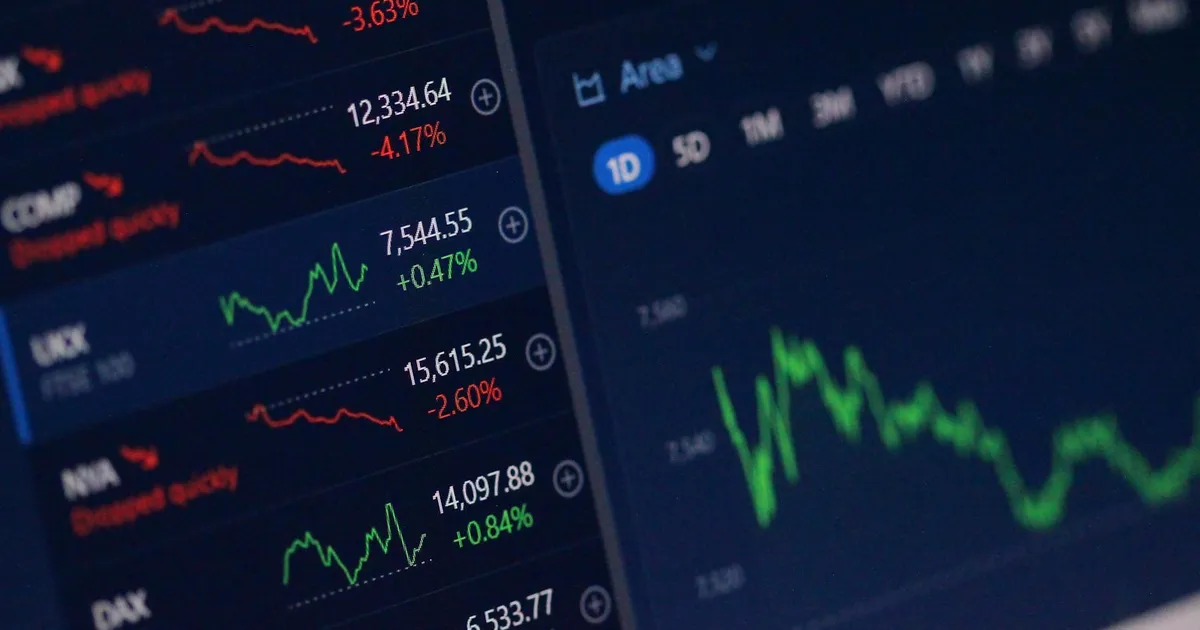
Weak jobs data was supposed to be bad news. On Friday, August 7, 2026, Wall Street decided it was a reason to buy. The S&P 500 rose 0.62% to a record close of 7,757.64, the Nasdaq Composite climbed 1.3% to 26,690.62, and the Dow Jones Industrial Average added 151.83 points, or 0.28%, to finish at 54,036.93. It capped Wall Street’s best week since April — a rally built almost entirely on a single number that came in far worse than economists had forecast.
The report that moved everything
Before the opening bell, the Bureau of Labor Statistics reported that nonfarm payrolls fell by 23,000 in July. Economists surveyed by Dow Jones had expected a gain of 83,000 — a miss of more than 100,000 jobs against consensus and one of the weakest prints of the cycle. The unemployment rate ticked down to 4.1%, against expectations for an unchanged 4.2%, a quirk driven more by a shrinking labor force than by robust hiring.
The market’s logic was straightforward, if uncomfortable. A cooling labor market strengthens the case for the Federal Reserve to cut interest rates at its September meeting, and traders moved quickly to price in an easing path. Lower rates reduce the cost of capital, lift the present value of future earnings, and disproportionately benefit the long-duration, high-growth technology names that dominate the major indexes. What looked like a warning sign for the economy read, to equity investors, as a green light.
Gold underscored the shift. The metal pushed to a record, trading near $4,300 an ounce, as the softer data pulled real yields lower and revived demand for a hedge against a more dovish Fed. Treasury yields eased across the curve, and rate-sensitive corners of the market — from housing to small caps — outperformed.
A dovish Fed comes back into view
For much of the summer, the debate on rates had been whether the Fed was done cutting at all, with some strategists warning that sticky inflation could even force the central bank to hold longer than markets wanted. July’s payroll miss reframed that conversation in a single morning. A near-halt in hiring, layered on top of downward revisions to prior months, hands the doves on the committee the evidence they have been waiting for.
Investors have seen this movie before. The AI-fueled advance that carried the big-tech rally through early August has repeatedly leaned on the idea that cheaper money and accelerating AI demand can coexist. Friday’s session was that thesis in its purest form: soft macro data, firm rate-cut odds, and a bid under the most expensive parts of the market all at once.
The risk, as always, is that the “bad news is good news” reflex has a shelf life. If hiring is stalling because the economy is genuinely slowing rather than simply normalizing, the earnings growth baked into record valuations becomes harder to defend. For now, though, the tape rewarded the optimists.
Atlassian steals the show
The single biggest story in individual stocks was Atlassian. Shares of the Australian software maker rocketed roughly 36% — trading near $149.51 in the session after results — following a fiscal fourth-quarter report that blew past Wall Street’s expectations.
Atlassian posted adjusted earnings of $1.87 a share on revenue of $1.77 billion, ahead of analyst forecasts of $1.50 and $1.66 billion. Total revenue rose 28% year over year, but the number that ignited the stock was cloud revenue, which reached $1.2 billion and grew 31% — an acceleration that eased fears the company’s migration to subscription software was running out of steam. Management also flagged surging usage of its AI features: its Model Context Protocol server and Teamwork Graph tools crossed one million monthly active users, more than doubling in a single quarter.
That last detail matters for how the market is now grading software. For months, investors have punished application-software names on the fear that generative AI would erode demand for their products. Atlassian’s print argued the opposite — that AI is pulling usage and revenue toward the platforms that embed it well. Twilio told a similar story the same week, jumping on its own earnings beat as investors rewarded firms showing that AI is a tailwind rather than a threat. The MCP standard that underpins much of this agent tooling has become a competitive battleground in its own right.
Chips and AI names join the move
The semiconductor complex, which had wobbled earlier in the week, firmed as the risk-on mood took hold and rate-cut bets lifted the highest-beta trades. The rebound extended a run of blockbuster results from the chip sector’s biggest names. AMD had already told investors it expects data-center sales to double in 2027, guiding current-quarter revenue to roughly $13 billion in its Q2 2026 report, while TSMC raised its 2026 capital-spending plan to $64 billion on the back of profit that jumped 77% year over year.
The AI-software cohort also participated. Palantir, fresh off its own Q2 2026 earnings, remained one of the year’s standout performers as investors continued to bet that enterprise AI deployment — not just model training — is becoming a real revenue line. The breadth of the advance, spanning chips, cloud, and applications, was itself a signal: this was not a narrow melt-up in a handful of megacaps but a broad repricing of risk following the jobs data.
A week of whiplash
Friday’s calm belied how choppy the week had been. Software stocks sold off earlier in the stretch on renewed AI-disruption fears, only to reverse hard once earnings from Atlassian and others landed. That pattern — sharp rotations between “AI winners” and “AI losers,” sometimes within the same 48 hours — has defined 2026’s market. It was on full display at the end of July, when Amazon soared and Apple sank in the same session despite both beating estimates.
The through-line is that investors are no longer asking simply whether a company is growing. They are asking whether AI is lifting it or squeezing it — and repricing stocks violently the moment a quarterly report answers the question. Memory-chip volatility earlier in the summer, including the Nasdaq’s brief AI-memory rout in July, showed how quickly the same forces can cut the other way.
What it means
Friday handed the market exactly the setup bulls wanted: a labor report soft enough to all but guarantee a September rate cut, but not so alarming that it triggered recession fears. That combination — easing policy without a hard landing — is the sweet spot that has powered risk assets all year, and record closes on the S&P 500 and a 1.3% Nasdaq jump show investors were happy to press the trade.
The winners are clear in the near term. Rate-cut bets favor long-duration growth stocks, which means the AI-linked leaders — chips, cloud, and now the application-software names proving they can monetize AI — stand to benefit most. Atlassian’s 36% surge is the template management teams will chase: show accelerating cloud growth and real AI adoption, and the market will pay up. Firms that instead look like AI victims will keep getting punished, and the gap between the two camps is widening.
The risk is that the market is reading a weakening economy as a purely monetary event. If July’s near-zero hiring is the start of a genuine slowdown rather than a soft patch, the earnings growth priced into record highs becomes vulnerable, and rate cuts arrive as damage control rather than a tailwind. Watch three things next: the August jobs report for confirmation that hiring is stalling, the Fed’s September decision and the tone of its guidance, and whether the next wave of software earnings validates Atlassian’s message that AI is driving demand — or undercuts it. For one Friday, at least, bad news was very good news. Whether it stays that way depends on which kind of slowdown this turns out to be.
Keep reading
 Kurumi · · 6 min read
 Stock Market Week Ahead: CPI, Oracle, Apple Event
A holiday-shortened week brings August CPI on Friday, Oracle and Adobe earnings Thursday, and Apple's iPhone event Wednesday. What to watch.
 Kurumi · · 4 min read
 August Jobs Report: 162K Beat Revives Fed Hike Bets
US payrolls rose 162,000 in August, nearly triple forecasts. The hot print pushed the 2-year yield to a 2025 high and lifted odds of a September Fed rate hike.
Kurumi · · 5 min read Stock Market Week Ahead: Jobs, Broadcom, Rate Hike Bets
August jobs data lands Friday as markets price rising odds of a September rate hike, with Broadcom and Palo Alto Networks earnings testing the AI trade.