Apple iPhone 18 Pro Event: Foldable iPhone, New CEO
Apple's September 9 'Surprise and shine' event is set to unveil the iPhone 18 Pro and a first foldable iPhone — the first launch under new CEO John Ternus.

Apple holds its annual fall event on Wednesday, September 9, at 10 a.m. Pacific, and this year the keynote carries unusual weight. Titled “Surprise and shine,” the event is expected to introduce the iPhone 18 Pro and iPhone 18 Pro Max, a new A20 Pro chip, refreshed Apple Watch and AirPods lines, and — most notably — Apple’s first foldable iPhone, widely reported to launch as the iPhone Ultra. It is also the first product launch of a new era at the company: John Ternus became Apple’s chief executive on September 1, ending Tim Cook’s 15-year tenure in the role.
A new CEO steps to the front
Ternus, 51, takes over as only the fourth CEO in Apple’s history. He is a hardware engineer by background — he joined Apple’s product design team in 2001, became a vice president of hardware engineering in 2013, and was elevated to senior vice president of Hardware Engineering in 2021, overseeing the silicon, iPhone, iPad, and Mac hardware programs. His ascension signals continuity on the product side rather than a strategic pivot: Apple is handing the top job to the executive who has spent years running the teams that build its devices.
Tim Cook is not leaving the company. He moves to the role of executive chairman, where Apple has said he will focus on areas including engagement with policymakers and governments around the world. The arrangement mirrors the deliberate, low-drama succession Apple has favored before — but a first keynote is still a first keynote, and Wednesday is Ternus’s introduction to consumers and investors as the person now accountable for Apple’s roadmap.
The foldable: Apple’s first new iPhone form factor in years
The headline hardware is the foldable iPhone. After years of watching Samsung, Google, and Chinese manufacturers iterate on folding designs, Apple is expected to enter the category with a book-style device that opens into a tablet-sized display. Reporting ahead of the event points to a premium position in the lineup: Taiwanese research firm TrendForce has estimated a starting price of $2,099 to $2,299, which would place the device at or near the top of the smartphone market and well above the standard Pro models.
That price is the strategic question in miniature. A foldable at roughly $2,000-plus is not a volume product; it is a halo device meant to establish Apple in a form factor its rivals have owned for years, and to lift the company’s average selling price at the high end. Whether Apple can make folding hardware feel worth the premium — durable hinges, a crease-free display, software that genuinely uses the larger canvas — is what will separate a category-defining launch from an expensive experiment.
Notably, the standard iPhone 18 is not expected at this event. Apple is reported to be splitting its iPhone launch cadence, holding the mainstream model for a spring 2027 debut and reserving the fall stage for the Pro tier and the foldable. If confirmed, it would be one of the more significant changes to Apple’s release rhythm in a decade.
The A20 Pro and a move to 2-nanometer silicon
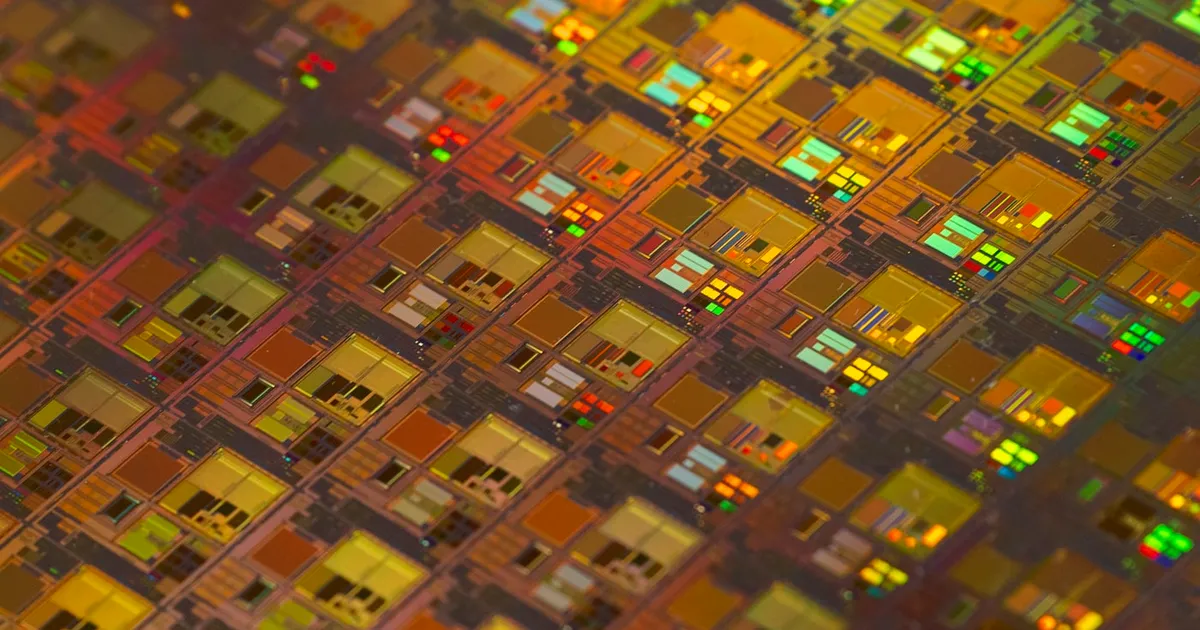
For a company now led by its former hardware chief, the chip is fitting as the technical centerpiece. The iPhone 18 Pro is expected to debut the A20 Pro, Apple’s first processor built on a 2-nanometer class manufacturing process from TSMC. Smaller process nodes pack more transistors into the same area, and the generational promise is the familiar one: more performance, better efficiency, or some blend of the two.
Reporting also points to packaging changes aimed at thermals — a persistent complaint on recent Pro models that run hot under sustained load such as gaming and on-device AI. How Apple distributes and dissipates heat inside the phone is increasingly as important as the raw transistor count; advances in how chips are assembled and stacked now shape real-world performance as much as the node shrink itself. A cooler-running A20 Pro would matter most for exactly the workloads Apple wants to push on-device, including the machine-learning features that power its assistant and camera pipeline. It also underscores how far Apple’s in-house silicon program — built on the Arm architecture — has come as a competitive moat.
The supporting cast
Beyond the phones, Apple is expected to round out the event with a familiar fall refresh:
- Apple Watch Series 12, reportedly with a ceramic case option among the finishes, plus an updated Apple Watch Ultra 4 for the rugged, high-end tier.
- AirPods 5, expected in versions with and without active noise cancellation, extending the range down and up the price ladder.
- Smaller design refinements across the iPhone Pro line, including reports of a smaller Dynamic Island, a simplified Camera Control, and a new Dark Cherry color.
None of these are franchise-defining on their own, but together they are the accessories-and-wearables engine that has become a meaningful, high-margin slice of Apple’s business — and a reason the fall event matters to the holiday quarter that follows.
The AI question hovering over the keynote
One storyline to watch is how prominently artificial intelligence features. Apple spent 2026 rebuilding its assistant, unveiling a generative-AI Siri redesign powered in part by Google’s Gemini, and the company has been widely characterized as playing catch-up in a field its rivals defined. A hardware event is not the natural venue for a software reset, but the degree to which Apple frames the iPhone 18 Pro and the A20 Pro around on-device AI — and how confidently it does so — will be read as a signal of where the assistant strategy stands under new leadership.
What it means
Wednesday is a bigger moment than a typical iPhone launch because three threads converge on the same stage: a leadership transition, a new product category, and a new chip generation — each of which alone would headline a normal year.
The leadership change is the quiet one. Handing the CEO role to a hardware engineer telegraphs that Apple sees its next chapter as an execution story — better devices, tighter silicon, disciplined expansion of the lineup — rather than a reinvention. That is reassuring to investors who prize Apple’s operational consistency, and it puts the burden on Ternus to prove the product engine still has range.
The foldable is the high-variance bet. If Apple lands it, the company enters a category its rivals have owned and immediately becomes the reference design, lifting average selling prices and giving the lineup a genuine flagship above the Pro Max. If the hinge, the crease, or the software disappoints — or if a $2,000-plus price simply finds too few buyers — it becomes a costly demonstration that being late can be worse than being first. Either way, it is the clearest test yet of whether Apple can still define a new form factor rather than perfect an existing one.
Watch three things. First, the foldable’s price and positioning — where Apple slots it, and how it justifies the premium. Second, what Apple claims for the A20 Pro, particularly on efficiency and thermals, the areas where the 2-nanometer move should pay off. And third, how much AI is in the pitch — a confident, device-first AI story would suggest the assistant strategy has found its footing; a quiet one would suggest Apple is still building. For Ternus, the keynote is a debut. For everyone else, it is the clearest look yet at what the post-Cook Apple intends to be.
Keep reading
 Chisato · · 4 min read
 Wafer-Scale Integration Explained
Wafer-scale integration builds one giant chip from an entire silicon wafer instead of cutting it into dies. How it works and its tradeoffs.
 Chisato · · 5 min read
 OpenAI Buys Tens of Thousands of Macs for AI Agents
OpenAI reportedly bought tens of thousands of Mac minis and Studios to train computer-use agents, while Anthropic rents Apple silicon via AWS.
Chisato · · 4 min read What Is Semiconductor Yield?
Yield is the share of chips on a wafer that work. It's the single biggest driver of chip cost, and why new process nodes start out expensive.