Michael Burry Shorts Oracle and Nebius: The AI Bear Case
Michael Burry disclosed short positions in Oracle and Nebius, warning that AI infrastructure leverage has pulled years of demand into one window. What to watch.
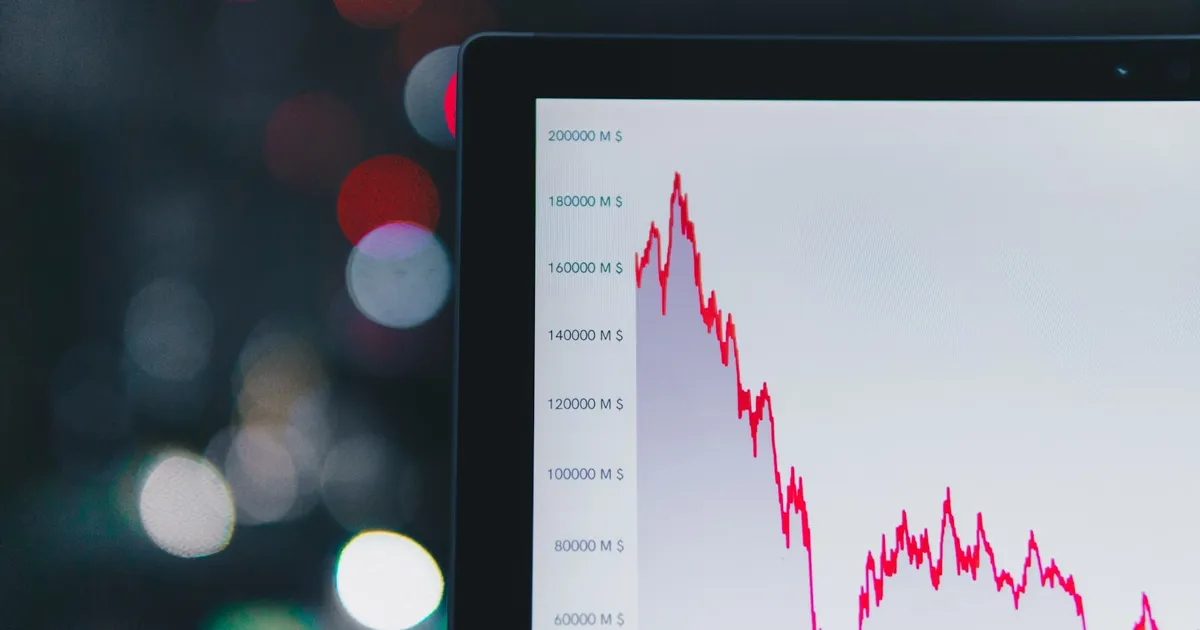
The investor who bet against the 2008 housing market is now betting against the AI infrastructure build-out. On Thursday, August 6, 2026, Michael Burry — the founder of Scion Asset Management, made famous by The Big Short — disclosed two new short positions: Oracle (ORCL) and Nebius Group (NBIS). Both companies sit at the center of the capital-intensive race to build data centers for AI, and Burry’s thesis is that the industry has borrowed and committed too much, too fast, against demand that may not arrive on schedule.
Nebius shares fell after the disclosure. The move reignited a debate that has simmered all year: whether the hundreds of billions of dollars flowing into GPUs, power, and real estate represent a durable platform shift or a classic capital-cycle overshoot.
What Burry disclosed
According to the filings and Burry’s own commentary, he shorted Oracle at $144.63 per share and established a larger short in Nebius at $211.77. Notably, he opted for direct equity shorts rather than put options, citing “exorbitantly priced” puts with implied volatility exceeding 100% — a sign that options markets are already charging a steep premium to bet against these names. When downside protection is that expensive, a short seller either pays up or takes the position directly on the tape. Burry chose the tape.
His framing was blunt. Burry warned of rising leverage risks tied to off-balance-sheet commitments across the technology and cloud sectors — the long-dated leases, prepayments, and supply agreements that don’t always show up cleanly on a balance sheet but represent real, contracted cash obligations. His core argument: the AI infrastructure boom has pulled years of demand forward into a compressed window. Companies that signed ten-year data-center leases and committed billions in GPU capacity at 2025 and 2026 prices — to serve demand they expect in 2026 and beyond — could find themselves over-leveraged if the cycle moderates before those bets pay off.
That is a capital-cycle argument, not a “the technology doesn’t work” argument. It is a bet on timing and financing, not on whether AI is useful.
The case against Oracle
Oracle has been one of the year’s most aggressive re-raters, transformed in the market’s eyes from a legacy database vendor into a hyperscale AI-cloud contender. The bull case is concrete: Oracle’s cloud infrastructure revenue surged 93% in its most recent quarter, and its remaining performance obligations (RPO) — the contracted backlog of future revenue — reached a staggering $638 billion. To bulls, that backlog is proof of demand: hundreds of billions of dollars in signed commitments from customers who need compute.
Burry’s counter is that a backlog of that size is also a commitment of that size. To deliver on $638 billion in obligations, Oracle has to build — and building means capital expenditure, debt, and multi-year leases negotiated at today’s elevated prices for power, land, and accelerators. This is the same hyperscaler capex dynamic reshaping every big-tech balance sheet: revenue that looks contracted on one side of the ledger corresponds to enormous fixed spending on the other. If utilization or pricing on that capacity disappoints, the fixed costs remain.
The case against Nebius
Nebius, the “neocloud” that emerged from the restructuring of the former Yandex, is a purer expression of the same bet — and a smaller, more leveraged one. Burry reportedly called shorting it “like shooting fish in a barrel,” a characteristically provocative line that points at the company’s financing profile.
The numbers he cited are aggressive by any standard. Nebius raised its 2026 capital-expenditure guidance from a range of $16–20 billion to $20–25 billion, and its long-term debt more than doubled to roughly $8.4 billion. For a company of Nebius’s size, that is a heavy load taken on to fund a build-out whose returns depend on GPUs staying scarce, rental prices staying high, and AI customers renewing at scale. Any of those assumptions loosening at once would compress the economics quickly. The underlying data-center economics leave little margin for error when the capital stack is that stretched.
For the mechanics of how a bet like this actually works — borrowing shares, selling them, and aiming to buy them back lower — see our explainer on short selling.
The bull rebuttal
Burry’s shorts are contrarian precisely because the tape has been going the other way. AI-exposed names have driven the broad tech rally that carried indexes to records through the summer, and the demand signals are not imaginary. Enterprises really are spending on AI. Cloud backlogs really are growing. The frontier labs really are committing to multi-year compute deals, some of them backstopped by their chip and cloud suppliers.
The bull rebuttal to Burry runs roughly like this: this is not 2008. The buyers of AI compute are the most profitable companies in history, funding much of their spending from operating cash flow rather than exotic leverage. Demand has repeatedly exceeded supply, not fallen short of it. And a short seller who is early is, in the market’s cruel arithmetic, simply wrong for as long as the position bleeds. Burry has been early before — and has also been right before. Which one this is won’t be settled by the disclosure; it will be settled by earnings and utilization over the next several quarters.
The macro backdrop
Burry’s timing landed in a jittery week for markets. The July jobs report, released August 1, showed the U.S. economy losing an estimated 23,000 jobs while unemployment held at 4.1% — a soft print that paradoxically lifted equities, as investors bet a weakening labor market raises the odds of a Federal Reserve rate cut. Lower rates would, in theory, ease the financing costs that Burry is warning about. But they would also signal an economy cooling enough to dent the very demand underpinning the AI build-out. That two-sided reading is exactly the ambiguity a short seller exploits: the same data point can be read as relief or as a warning.
Chip sentiment, meanwhile, remains volatile. Strong AMD data-center results have coexisted with sharp sell-offs on any hint that the memory and accelerator supercycle is peaking. Into that mood, a well-known bear attaching his name to two AI-infrastructure shorts is the kind of catalyst that moves a stock on the day and lingers as a talking point for weeks.
What it means
Burry’s positions are small relative to Oracle’s and Nebius’s market values, and a single investor’s short book does not decide a sector’s fate. What makes the disclosure matter is that it crystallizes the central question hanging over the AI trade: is contracted backlog an asset or a liability?
- The winners if Burry is wrong are the neoclouds and AI-cloud vendors whose backlogs convert into high-utilization, high-margin revenue — and the suppliers financing them. In that world, the leases and capex Burry flags are simply the cost of catching a generational demand wave.
- The losers if Burry is right are the most leveraged builders — companies like Nebius that took on debt to fund capacity at cycle-peak prices. If GPU rental rates soften or customers renew below plan, the fixed obligations stay fixed while the revenue that justified them shrinks. Oracle, larger and more diversified, would feel a valuation reset rather than an existential one.
- What to watch next: cloud-infrastructure utilization and gross margins (not just revenue growth), the cadence of new multi-year commitments, any downward revision to capex or backlog, and the cost and availability of debt for the neoclouds. Watch, too, whether other high-profile investors follow Burry into the trade — a lone bear is a talking point; a crowd of them is a signal.
The deeper point is one every capital cycle eventually tests. Building ahead of demand is how you win a platform shift — and how you go broke if the demand is late. Burry is betting on late. The bulls are betting on now. The next few earnings seasons will price the difference.
Tagged
Keep reading

 Kurumi · · 6 min read
 AI Stocks Fall, Cybersecurity Rallies on Slowdown Calls
Chip and AI names sold off while CrowdStrike and Palo Alto surged after Amodei, Altman and Musk backed pacing frontier AI. Jensen Huang pushed back.
 Kurumi · · 6 min read
 Fluidstack Hits $18B Valuation on AI Data Center Boom
Fluidstack, an Oxford-founded neocloud backed by Google, has reached a roughly $18 billion valuation on the back of a ~$50B Anthropic deal and Google TPU hosting.
 Kurumi · · 6 min read
 Adobe's New CEO: Anil Chakravarthy Replaces Narayen
Adobe named Anil Chakravarthy its next CEO, replacing Shantanu Narayen on Dec. 1 amid investor fears that AI is disrupting its creative software.