China Starts DUV Lithography Mass Production
China has begun limited mass production of home-grown immersion DUV lithography machines, with first units bound for SMIC, Hua Hong and CXMT. What it changes.
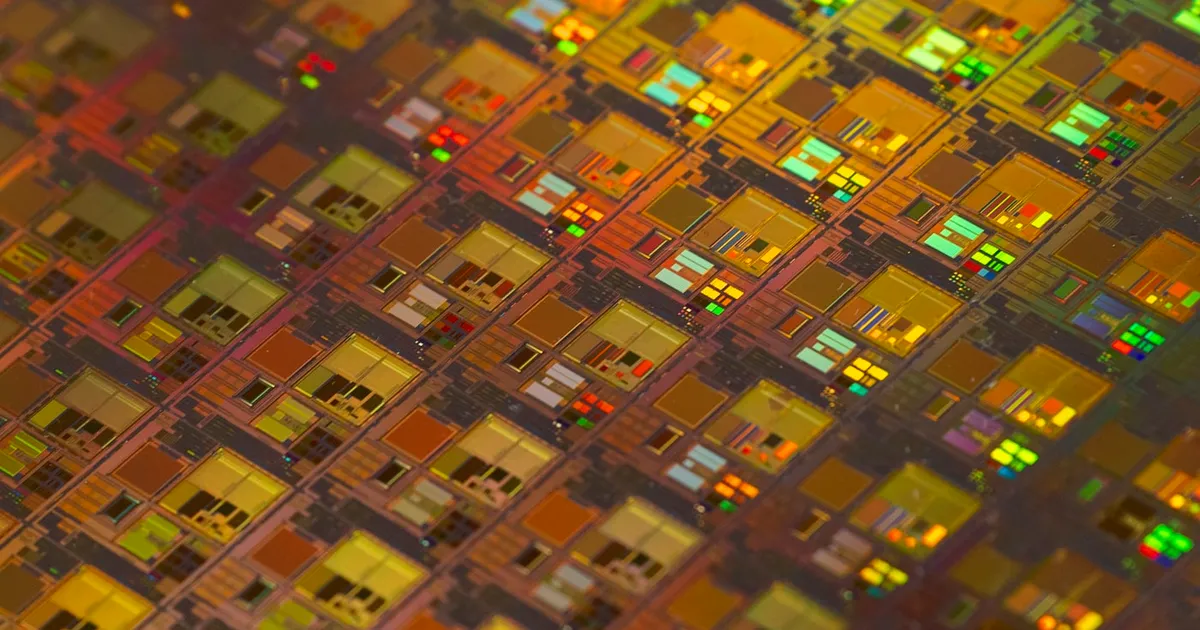
China has begun limited mass production of home-grown immersion DUV lithography machines, according to reports published this week — a step, if it holds up, toward manufacturing advanced chips without the Western tools that U.S. and Dutch export controls have kept out of reach. The news reverberated through global markets, pressuring equipment makers and feeding a broader semiconductor selloff.
Lithography — the process of printing circuit patterns onto silicon — is the single most concentrated chokepoint in chipmaking. Deep ultraviolet (DUV) immersion systems are the workhorses of the industry, capable of producing chips down to roughly the 7-nanometer class with multi-patterning. The most advanced extreme ultraviolet (EUV) machines, which China cannot buy at all, are made exclusively by the Netherlands’ ASML. A credible domestic DUV tool would loosen, though not remove, one of the tightest constraints on China’s ambitions.
The scope of the breakthrough
The reported effort is being led by Shanghai Aishengna Electronic Technology Group, a little-known state-owned company that has absorbed teams from domestic lithography players including startup Yuliangsheng and Shanghai Micro Electronics Equipment (SMEE), both central to Beijing’s self-sufficiency push.
The near-term volumes are modest. The plan reportedly targets delivery of about five units in 2026 and roughly 20 in 2027. Early customers are expected to include SMIC, Hua Hong Semiconductor and CXMT — the three companies at the center of China’s manufacturing ambitions, the last of which just staged a record public listing. That customer list is telling: these are the foundries and memory makers that most need a domestic alternative to keep expanding capacity under sanctions.
The context frames why this matters. U.S. export restrictions, combined with Dutch licensing controls, have prevented China from purchasing ASML’s most advanced EUV systems, turning immersion DUV into China’s most practical path to advanced chips at scale. Getting even a competent domestic DUV line into production removes a dependency that Washington and The Hague have used as leverage.
The caveats are large
Enthusiasm should be weighed against the details, and the details counsel caution. Chinese systems still lag ASML in performance, throughput and reliability, and reportedly require further qualification before they can be deployed in high-volume manufacturing. Lithography tools are among the most complex machines ever built, integrating optics, precision stages, light sources and control software to nanometer tolerances; matching ASML on paper is not the same as matching it on a production floor across millions of wafer passes.
The volume gap is stark. ASML expects to ship roughly 130 immersion systems in 2026 — many multiples of China’s initial targets. Five units this year does not reindustrialize a supply chain; it establishes a beachhead. And a domestic DUV tool does nothing to close the gap on EUV, which remains essential for the leading-edge logic nodes that power the most advanced processors.
For readers who want the underlying technology, our explainers on EUV lithography and the semiconductor process node lay out why each generation of tooling is so hard to replicate — and why leading-edge manufacturing has historically been the hardest part of the chip stack to localize. The frontier has kept moving; even Western leaders are only now bringing High-NA EUV into production, as we covered in Intel’s High-NA EUV milestone.
Market fallout
The report did not stay confined to industrial-policy circles. It landed as one of several catalysts behind a sharp global chip selloff, pressuring ASML and the broader equipment complex on the theory that a viable Chinese DUV tool could, over time, erode a lucrative export market. ASML has counted China among its largest revenue sources in recent years even under restrictions, a dynamic visible in its Q2 2026 results.
Combined with CXMT’s blockbuster debut and renewed AI-spending worries, the lithography news helped tip the Nasdaq 100 into a correction and sent Asian chip indices reeling — the market-wide move detailed in the July 28 rout. For equipment investors, the fear is less about 2026 volumes than about the long-run trajectory: if China can build competent DUV tools domestically, the addressable market for Western suppliers shrinks precisely where growth had been strongest.
What it means
Treated soberly, the announcement is a genuine milestone wrapped in real limits. It signals that Beijing’s decade-long, heavily subsidized effort is producing hardware, not just prototypes — but the volumes and performance gaps mean the practical impact will unfold over years, not quarters.
Who wins. Chinese foundries and memory makers gain optionality and a hedge against tightening controls, reducing the leverage that export restrictions confer on Washington and The Hague. Beijing gains a propaganda victory and proof that its industrial strategy can clear one of the field’s highest technical bars.
Who is exposed. ASML and the DUV-focused equipment makers face a long-term competitive question in their fastest-growing market, even if near-term sales are unaffected. Policymakers who built the export-control regime must now reckon with diminishing returns: controls that slow China also accelerate its incentive — and now its ability — to build alternatives. The tension between denial and indigenization, examined in the debate over AI chip export licenses, runs straight through this story.
What to watch next. First, qualification data — whether these tools actually hold yield and uptime in production rather than in a demo. Second, the 2027 ramp: hitting 20 units would signal a real manufacturing line, not a one-off. Third, any sign of progress toward domestic EUV, the true frontier that DUV cannot reach. For now, China has cracked the door on a chokepoint it has spent years trying to escape — but the room beyond it is still mostly held by others.
Tagged
Keep reading
 Chisato · · 4 min read
 Wafer-Scale Integration Explained
Wafer-scale integration builds one giant chip from an entire silicon wafer instead of cutting it into dies. How it works and its tradeoffs.
 Chisato · · 4 min read
 What Is HBM? High Bandwidth Memory Explained
HBM stacks DRAM dies vertically and connects them through a wide interface, trading capacity per chip for far higher bandwidth than standard DRAM.
 Chisato · · 4 min read
 What Is Dennard Scaling? Why Clock Speeds Stopped Climbing
Dennard scaling held that shrinking transistors kept power density constant, letting clock speeds rise for free. Its breakdown reshaped chip design.