Nasdaq Correction: AI Memory Rout Hits Chip Stocks
The Nasdaq 100 entered correction on July 28, 2026 as an AI memory selloff sent Kospi into a circuit breaker and Micron, SK Hynix and Nvidia lower. Here's why.
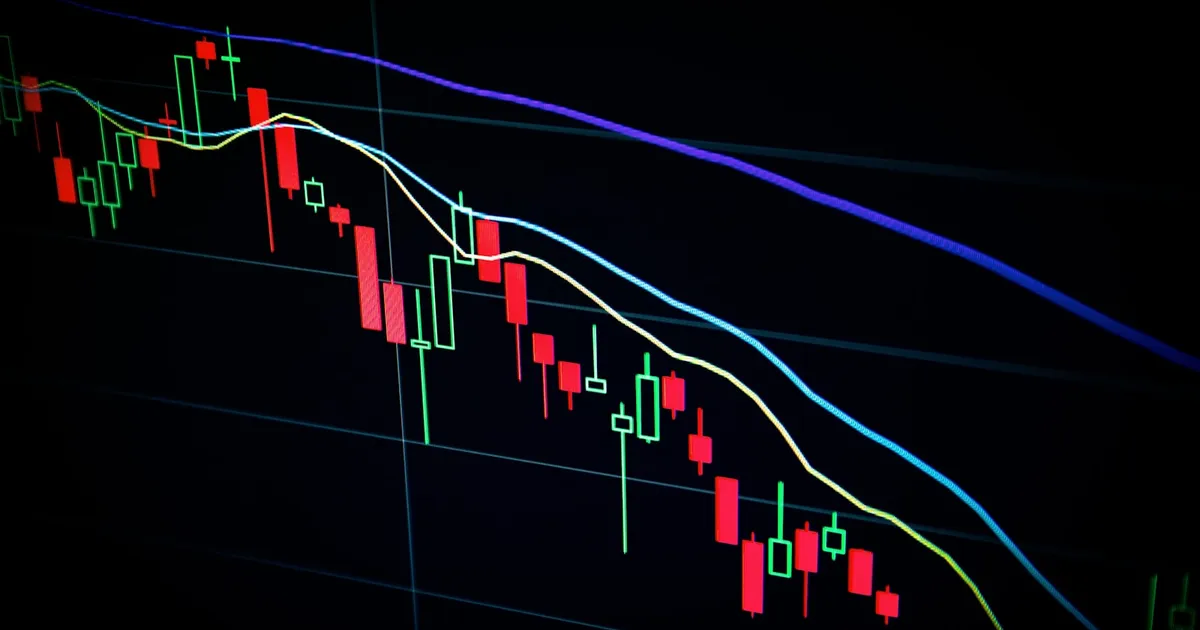
The AI trade that carried global equities to records for most of 2026 buckled on Tuesday, July 28. The tech-heavy Nasdaq 100 slid about 1.6%, leaving the index on track to close more than 10% below its June peak — the technical definition of a correction — as investors reassessed whether the industry’s enormous capital spending will ever pay off. The selling was sharpest in the corner that had run furthest: memory chips.
The rout began in Asia and rolled west. South Korea’s Kospi collapsed roughly 10% intraday, triggering a market-wide circuit breaker that halted trading for 20 minutes — the eighth time the index has tripped a breaker in 2026. Japan’s chip names fell in sympathy, and by the New York open the damage had spread to the U.S. mega-caps that anchor every major benchmark.
The scoreboard
The declines clustered in the highest-beta AI names. In Seoul, SK Hynix slumped about 14.6% to close near 1,550,000 won, and Samsung Electronics fell roughly 13.4% to about 220,000 won. In Tokyo, memory maker Kioxia plunged more than 18%, while SoftBank Group — a proxy for AI infrastructure exposure through its stakes and neocloud ambitions — dropped about 4.4%.
The weakness carried into U.S.-listed shares. Micron Technology fell about 6.4%, Intel shed roughly 5%, and even Nvidia, the single most valuable link in the AI chain, slipped about 1.2%. American depositary shares of TSMC and SK Hynix fell 2.7% and 6%, respectively. The PHLX Semiconductor Index (SOX) dropped more than 6% on the session, extending a slide that has now erased a large share of the year’s spectacular gains.
The scale of the reversal is easier to grasp against the run that preceded it. AI memory stocks had surged more than 600% at their peak as shortages of high-bandwidth memory drove premium pricing across the DRAM complex. Expanding supply has since erased between 30% and 50% of those gains, and the Kospi alone has fallen roughly 30% in a month.
Three catalysts converged
Traders and analysts pointed to a cluster of catalysts that arrived within hours of one another rather than a single trigger.
The first came from CXMT, China’s largest memory chipmaker, whose blockbuster debut on Shanghai’s STAR Market saw shares soar more than 470% and briefly made it the most valuable company listed in mainland China. A well-capitalized, fast-growing domestic DRAM supplier is precisely the kind of new entrant that threatens the pricing power of the incumbents — Samsung, SK Hynix and Micron — that investors had been paying up for.
The second was a report that China has begun limited mass production of home-grown immersion DUV lithography machines, a step toward manufacturing advanced memory and logic without Western tools. The news pressured equipment makers and reinforced the competitive-threat narrative already building around Chinese supply.
The third was renewed anxiety about “round-tripping” in AI — the concern that a handful of players are financing one another’s chip purchases and data-center buildouts in ways that inflate apparent demand. Those worries followed a wobble in Nvidia shares tied to its web of investments and supply commitments, including the reported $250 billion financing backstop for OpenAI’s data-center plans.
The deeper worry: spending versus payoff
Underneath the day’s headlines sits a structural question that has been building for weeks. Hyperscalers have committed unprecedented sums to AI infrastructure, and skeptics argue the returns have yet to show up.
By one widely cited estimate, AI capital expenditure has climbed from about 33% of hyperscalers’ cash flow from operations in 2023 to an estimated 93% in 2026 — leaving almost no margin for error if the productivity gains that justify the buildout fail to materialize on schedule. The financing has increasingly moved off the balance sheet and into debt markets, a dynamic we examined in hyperscaler off-balance-sheet AI debt. When sentiment cracks, leverage amplifies the move in both directions.
Memory is the tightest, most cyclical link in that chain, which is why it moves first and hardest. The same forces powering the AI memory supercycle on the way up — constrained supply, surging HBM pricing, feverish demand forecasts — reverse violently when investors start to doubt the demand curve. As we’ve written, Micron’s stock keeps swinging precisely because it distills that cyclicality into a single ticker.
Not the first tremor
This is not the first pullback of the year, and the pattern is becoming familiar. An earlier July selloff sent the SOX down 6.7% and the Kospi down 7.9% before the rally reasserted itself. What distinguishes Tuesday’s move is breadth and depth: a full-blown index correction, a sovereign-market circuit breaker, and catalysts that speak directly to the long-term competitive position of the incumbents rather than to short-term positioning.
The macro backdrop offered no cushion. Big Tech earnings from Microsoft, Meta, Apple and Amazon are due later in the week, and investors are fixated on capital-expenditure guidance after Alphabet’s elevated spending plans unsettled the market earlier in the quarter. Any company that raises its capex outlook now risks feeding the very fear driving the selloff; any that trims it risks signaling softening demand. It is an unforgiving setup.
What it means
A 10% drawdown after a near-doubling is a repricing, not necessarily a rupture — but the character of this one matters more than its magnitude.
Who feels it most. The memory and equipment names carry the highest beta to AI sentiment and will keep leading in both directions. SK Hynix, Samsung, Micron and Kioxia sit at the epicenter because their earnings are levered to a DRAM pricing cycle that the market now fears has peaked. Chinese competition — a well-funded CXMT and the prospect of domestic lithography — turns a cyclical worry into a structural one, and structural worries compress valuation multiples in a way that cyclical dips do not.
Who is insulated, for now. Diversified mega-caps with real cash flows and defensive earnings streams have held up better, and the divergence between the Dow and the Nasdaq reflects rotation rather than wholesale liquidation. Money has been leaving the most crowded AI trades, not the market as a whole.
What to watch next. Three things. First, this week’s hyperscaler earnings and, above all, their capex guidance — the single most important read on whether AI demand is durable. Second, DRAM spot and contract pricing, the cleanest real-time signal of whether the supply glut investors fear is actually forming. Third, follow-through in Asia: the Kospi and Kioxia moved first this cycle and have tended to lead the U.S. names by a session.
The question the market flinched at on Tuesday is the same one that has hovered over the entire boom: is AI demand strong enough, and soon enough, to justify valuations that assume years of uninterrupted growth and the debt taken on to fund it? A record IPO in Shanghai, a lithography breakthrough in China, and a circuit breaker in Seoul all landed on the same day. For once, the market chose to focus on the cost of the buildout rather than its promise.
Tagged
Keep reading
 Kurumi · · 5 min read
 Marvell Q2 Earnings: Record $2.74B, Raised Guidance
Marvell posted record Q2 FY2027 revenue of $2.74B on a 46% data center surge, raised its outlook again, and guided Q3 to $3.15B. The numbers and what they mean.
 Kurumi · · 5 min read
 Nvidia AI Server Prices to Rise 15%+ on Memory Costs
Nvidia's server builders have told Microsoft, Google and Oracle that Vera Rubin and Grace Blackwell system prices will climb more than 15% from early 2027 as memory costs soar.
Kurumi · · 5 min read Etched Raises $700M at $21B Valuation From Jane Street
Etched raised $700M led by Jane Street at a $21B valuation, doubling in a month, and shipped its first Sohu inference rack. The deal and the risks.