Big Tech Stock Rally: AI Fears Fade, Records Return
Big Tech stormed back in early August 2026 as strong AI earnings pushed the S&P 500 to a record, Nvidia past $5T, and the Magnificent Seven up ~10% in four sessions.
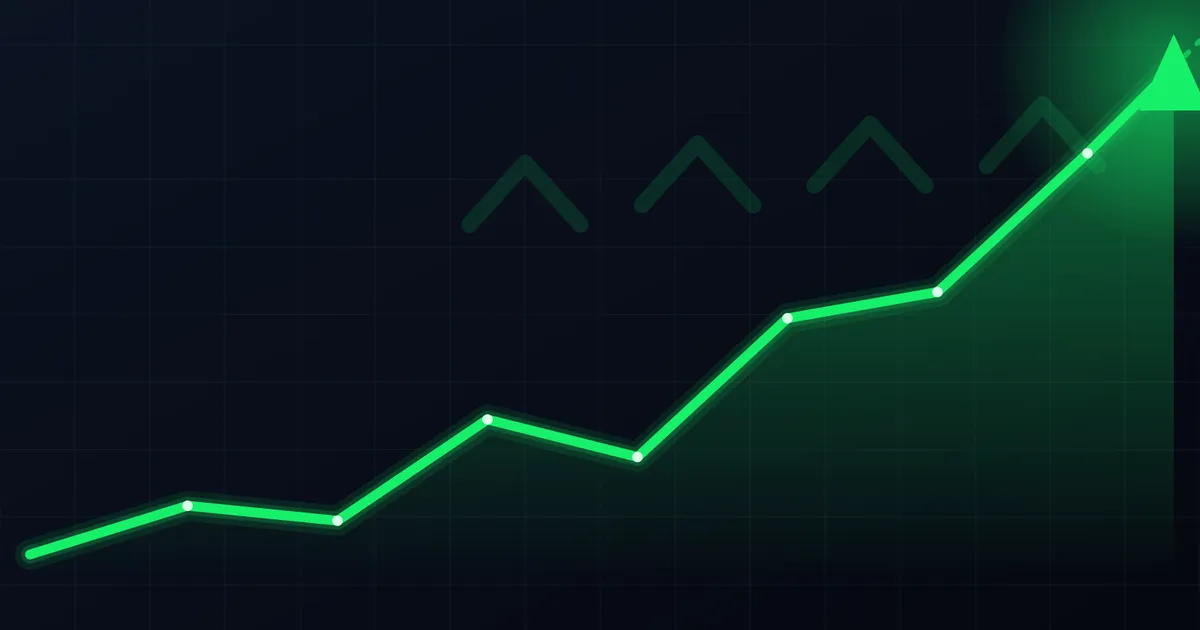
The world’s biggest technology companies have stormed back to the front of the market. After spending much of 2026 in the stock-market doghouse over fears about their spending on artificial intelligence, Big Tech is leading again — and it has dragged the broad indexes to fresh records with it. As of Friday, August 7, 2026, the Magnificent Seven group of megacap stocks had climbed nearly 10% over the prior four trading sessions, according to Bloomberg, restoring a euphoria that looked broken only weeks ago.
The turn was fast. Earlier this summer, the Philadelphia Semiconductor Index had fallen roughly 20% from its late-June peak, and chipmakers worldwide had shed more than $1 trillion in market value as investors questioned whether the AI buildout would ever pay for itself. That anxiety has, for now, evaporated.
What triggered the reversal
The catalyst was earnings. A pair of quarterly reports from what had recently been two of the group’s worst performers — Microsoft and Amazon — showed AI-related revenue growth accelerating rather than stalling. The read-through was simple and powerful: the enormous sums the hyperscalers are pouring into data centers and chips are beginning to show up as real, growing revenue.
Amazon’s report was the clearest signal. Its cloud unit, AWS, delivered record quarterly results, reaccelerating after several quarters in which rivals had appeared to close the gap. Microsoft’s cloud and AI franchises did the same in the megacap earnings wave that reset sentiment across the sector. Investors who had spent months fixated on rising capital expenditure suddenly had evidence on the other side of the ledger.
The rally has been broad. On its strongest session this week the S&P 500 advanced about 1.8% to close near 7,736 — its first record high since June — while the tech-heavy Nasdaq Composite jumped roughly 2.6% to close around 26,585. The information-technology sector rose about 4%. The gains extended a rebound that had been building since late July, when a single session split Amazon and Apple along the same AI fault line now driving the whole tape higher.
Milestones fall again
The record indexes came with headline milestones. Amazon’s market capitalization pushed back above $3 trillion, a level it first breached earlier in the summer before the correction knocked it back. Nvidia’s market value reclaimed the $5 trillion mark, restoring the chipmaker to the top of the global leaderboard weeks after Apple had briefly overtaken it as the most valuable company.
The moves capped a striking round trip. The same memory-chip rout that dragged the Nasdaq into a correction in July — driven by fears that surging component costs would crush hardware margins — has been set aside as the earnings picture brightened. Money that fled the AI trade at the first sign of margin pressure has come rushing back.
A broadening, not just a bounce
Analysts have been careful to frame the move as more than a reflexive bounce. Several described it as a “broadening out” of the AI boom: capital is no longer abandoning AI, but it is also no longer confined to the same handful of names. Strength in industrial and software stocks outside the core megacap group — with Caterpillar and Palantir cited as examples — has been read as a sign that market breadth is improving even as the AI cycle runs.
That breadth matters because the concentration risk in this market is extreme. By various estimates, direct AI-related investment now accounts for somewhere between one-quarter and one-third of recent U.S. GDP growth, an unusually heavy dependence of the broad economy on a single capital-spending cycle. A rally that leans only on seven stocks is fragile; one that pulls in a wider set of companies is sturdier.
The spending itself shows no sign of slowing. Nvidia chief financial officer Colette Kress has said AI infrastructure spending is on track to reach $3 trillion to $4 trillion annually by the end of the decade — a figure that underwrites the bull case and, to skeptics, defines the bubble. The hyperscalers’ own capital-expenditure guidance has continued to climb, with Alphabet among those raising its outlook even as investors demanded proof of returns.
The bear case hasn’t disappeared
For all the renewed optimism, the objections that drove the summer selloff remain intact. The AI buildout is being financed with escalating capital budgets, growing debt issuance, and a web of circular deals in which chipmakers, cloud providers, and model labs invest in one another’s balance sheets. Depreciation on hundreds of billions of dollars of hardware will land on income statements for years, and the useful life of today’s accelerators is a live debate.
The memory market that spooked investors in July has not healed either. Component costs remain elevated, and the same shortage that pressured hardware margins is still working through the supply chain. Sentiment can reverse as quickly as it recovered — a lesson the July correction delivered in a matter of days.
What it means
The August rally is a referendum on a single question that has hung over the market all year: is AI spending an investment or a write-off? For now, a run of strong cloud earnings has pushed the answer toward “investment,” and the market has repriced accordingly — records on the indexes, trillion-dollar milestones restored, and the Magnificent Seven back in front.
Who wins: the hyperscalers and their suppliers, whose capital-spending story now has revenue behind it, and index investors carried higher by the megacap weightings. Who’s exposed: anyone treating this as a durable all-clear. The rally rests on a narrow base of AI capital spending that, by some measures, is propping up a meaningful share of U.S. economic growth. That concentration cuts both ways — it powers the melt-up and defines the downside.
What to watch next: whether the broadening holds, or whether leadership narrows back to a handful of names; Nvidia’s upcoming quarterly report, the single most important data point for the AI-hardware trade; and any renewed stress in the memory market, where the cost pressures that triggered July’s rout have not gone away. The euphoria is back. Whether it lasts depends on the same earnings that summoned it.
Keep reading
 Kurumi · · 6 min read
 Broadcom Q3 2026 Earnings: AI Chips Triple, Stock Dips
Broadcom's fiscal Q3 2026 revenue hit a record $29.6B as AI chip sales more than tripled to $16.7B, but light Q4 guidance sent the stock lower.
Kurumi · · 5 min read Marvell Q2 Earnings: Record $2.74B, Raised Guidance
Marvell posted record Q2 FY2027 revenue of $2.74B on a 46% data center surge, raised its outlook again, and guided Q3 to $3.15B. The numbers and what they mean.
 Kurumi · · 6 min read
 Alibaba Earnings: AI Cloud Jumps 45%, Profit Drops 75%
Alibaba's June-quarter revenue rose 9% and cloud grew 45% on AI demand, while net income fell 75% as capex surged to nearly $10B. Full breakdown.