Apple Overtakes Nvidia as Most Valuable Company
Apple reclaimed the world's most valuable company title from Nvidia on July 17, 2026, at about $4.88T. Why the AI trade is rotating from chips to apps.
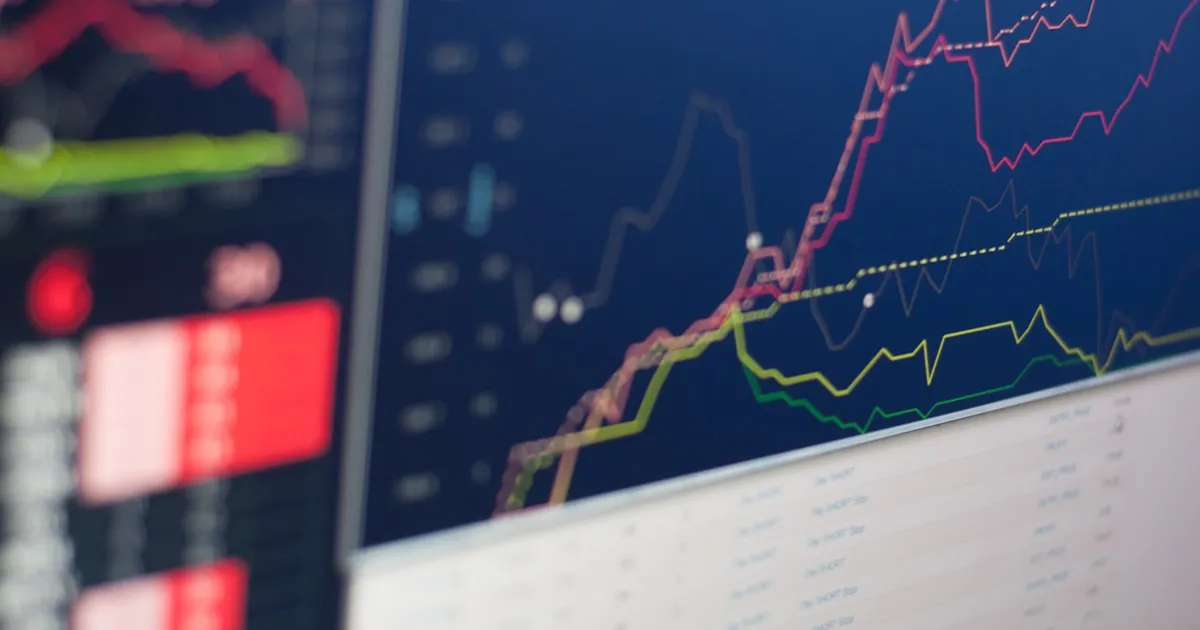
The AI trade has a new leader, and it is not a chipmaker. On Friday, July 17, 2026, Apple overtook Nvidia to reclaim the title of the world’s most valuable company, closing with a market capitalization of roughly $4.88 trillion against Nvidia’s $4.86 trillion. The move was driven as much by Nvidia’s slide — its shares fell about 3.5% on the day — as by Apple’s steady climb, and the gap between the two is razor-thin enough that the crown could change hands again on any given session. But the symbolism is hard to miss: for the first time since April 2025, the most valuable public company on earth is the one selling AI to consumers, not the one selling the hardware that trains it.
How the two companies swapped places
The reversal caps a year of sharply diverging trajectories. Apple has climbed roughly 23% in 2026, outrunning the broader market as investors reward a company that is monetizing AI through its installed base rather than spending tens of billions to build models. Nvidia, by contrast, is up only about 9% on the year and has largely sat out the rally it once led, as Wall Street’s attention rotated toward the memory and infrastructure layers of the data-center buildout — and, more recently, toward the question of whether the buildout has been priced too richly.
Nvidia’s reign was historic while it lasted. The chipmaker first became the world’s most valuable company in June 2025, when it passed Microsoft, and in October 2025 it became the first company ever to cross a $5 trillion market capitalization. That it has now surrendered the top spot — even narrowly, even temporarily — is a marker of how quickly sentiment around the AI trade can turn. As a reminder of the mechanics here, market cap is simply shares outstanding times share price, so a 3.5% down day in a $5-trillion stock erases more value in hours than most companies are worth in total.
Nvidia’s underperformance is not new. Its stock has lagged the broader chip rally for much of 2026 even as its GPUs remained the beating heart of every frontier model, a divergence that has puzzled bulls all year. Friday extended it into a symbolic milestone.
Why the rotation is happening
The swap is a clean expression of a thesis that has been building for months: in an AI boom defined by staggering capital spending, the market is starting to prize companies that can profit from AI without paying to build the infrastructure underneath it.
Apple is the purest version of that trade. In fiscal 2025, the company spent just $12.7 billion on capital expenditures while generating $98.8 billion in free cash flow — a ratio that looks almost quaint next to the hyperscalers now committing hundreds of billions to data centers. Apple ships AI features to more than a billion active devices, monetizes them through the highest-margin ecosystem in technology, and does so while its cloud rivals pour money into GPUs, memory, and power. The bull case is that Apple can ride the demand curve for consumer AI while someone else absorbs the capital risk.
That case gained ground in recent weeks. Apple secured regulatory approval to ship its China AI features through Alibaba’s Qwen model, removing an overhang that had dogged the stock in its single most important growth market. Reports also placed Apple in the market for chip acquisitions to build out its own AI servers — a bid to reduce its dependence on Nvidia silicon over time. Each development reinforced the same narrative: Apple is turning from an AI laggard into a company that controls its own AI destiny at a fraction of the cost.
Nvidia’s stumble is the mirror image. The company’s fundamentals remain extraordinary, but its valuation now carries the full weight of expectations that the AI capital-spending cycle will run for years without interruption. When investors began to question the durability of that spending — as they did across a bruising few weeks for semiconductors — the most richly valued name in the group had the most room to fall.
A market repricing the whole AI stack
Friday’s swap did not happen in isolation. It landed in the middle of a broad, ongoing repricing of the AI trade that has been anything but gentle.
A day earlier, semiconductor stocks sold off even after TSMC delivered a blowout quarter and raised guidance, a paradox that told investors more about crowded positioning than about demand. The pressure carried into the following sessions, with chip names giving back ground and the sector’s high-beta memory and design franchises leading the declines. The through-line is consistent: after a first half in which semiconductors soared as a group, the marginal buyer has thinned out, and the trade has become sensitive to any excuse to consolidate.
Two catalysts sharpened the mood. Reports that Google had again delayed its most capable model raised questions about the pace of frontier progress at one of the sector’s anchors. And the release of a powerful new open-weight model from a Chinese startup stoked fears that the economics of frontier AI — the assumption that leading models stay scarce and expensive — could erode faster than the bulls assume. Neither story touches Apple’s business directly. Both feed the same rotation away from the capital-intensive supply side of AI and toward the companies positioned to sell the finished product.
What the crown does — and doesn’t — mean
It is worth being precise about the milestone. The lead is narrow, it was contested intraday, and a single strong session from Nvidia could reverse it. Being the largest company by market value is a headline, not a verdict on either business. Nvidia still sells the scarcest, most sought-after hardware in the industry, and its data-center franchise remains the reference point for the entire buildout. Apple, for its part, still has to prove that its AI features drive the upgrade cycle and services growth that its valuation now assumes.
What the swap does capture is a genuine shift in what the market is willing to pay for. For two years, investors rewarded proximity to the metal — the chips, the memory, the power. The lesson of July 17 is that the pendulum has started to swing back toward proximity to the customer.
What it means
The handoff at the top of the market is a sentiment signal, and sentiment is what sets prices when valuations are stretched this far.
Who wins. Companies that monetize AI with light capital budgets and heavy cash generation — Apple foremost among them — are being re-rated as the “safe” way to own the theme. Apple’s roughly 8-to-1 ratio of free cash flow to capex is the exact profile investors are gravitating toward as they grow wary of the hyperscaler capital-spending boom. Expect that preference to keep flattering asset-light AI beneficiaries.
Who feels the pressure. The capital-intensive supply side — chipmakers, memory producers, and the hyperscalers financing the buildout — now carries the burden of proof. Nvidia’s slide shows that even a peerless franchise is vulnerable when its multiple already prices in years of flawless execution. The highest-beta names will keep leading the tape in both directions.
What to watch next. Three things. First, whether Apple can hold the crown through the coming megacap earnings season, when the hyperscalers open their books and defend their spending. Second, Nvidia’s own results later in the cycle, which will test whether demand is decelerating or merely digesting. Third, any evidence that consumer AI is actually pulling through revenue at Apple — because the market has now priced the story, and the receipts come due next. The crown may change hands again before this is settled. The rotation underneath it looks more durable than the daily scoreboard.
Keep reading
 Kurumi · · 6 min read
 AI Stocks Fall, Cybersecurity Rallies on Slowdown Calls
Chip and AI names sold off while CrowdStrike and Palo Alto surged after Amodei, Altman and Musk backed pacing frontier AI. Jensen Huang pushed back.
 Kurumi · · 6 min read
 Fluidstack Hits $18B Valuation on AI Data Center Boom
Fluidstack, an Oxford-founded neocloud backed by Google, has reached a roughly $18 billion valuation on the back of a ~$50B Anthropic deal and Google TPU hosting.
 Kurumi · · 6 min read
 Adobe's New CEO: Anil Chakravarthy Replaces Narayen
Adobe named Anil Chakravarthy its next CEO, replacing Shantanu Narayen on Dec. 1 amid investor fears that AI is disrupting its creative software.