Microsoft, Meta Q2 2026 Earnings: The AI Capex Test
Microsoft and Meta reported strong revenue but raised AI spending again on July 29, 2026. Azure topped $100B, Meta lifted capex to $145B, and both stocks wobbled.
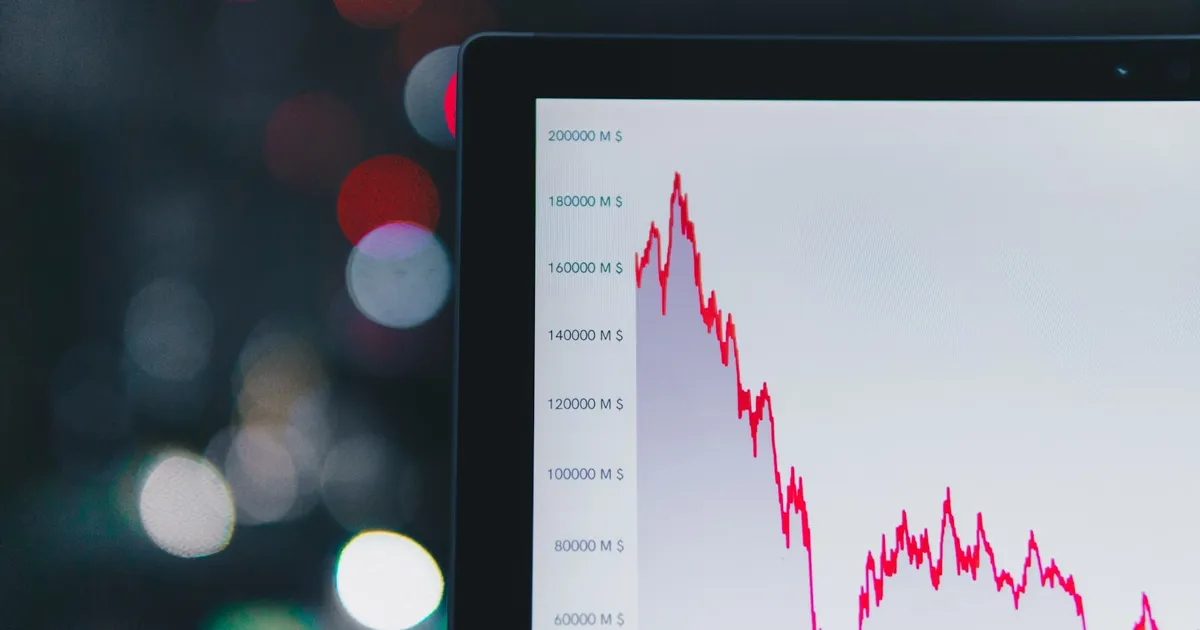
Two of the biggest names in technology delivered strong quarters and got a wary reception. After the close on Wednesday, July 29, 2026, Microsoft and Meta each reported revenue and cloud figures that met or beat Wall Street’s estimates — and then told investors that spending on artificial intelligence infrastructure is going higher still. In a market that has spent weeks punishing anything short of a flawless print, that combination sent both stocks lower in extended trading and turned the reports into the clearest referendum yet on the economics of the AI build.
The prints landed into an unusually nervous tape. Chip stocks had been selling off for days, the Nasdaq 100 was flirting with a correction on AI and memory jitters, and investors were openly questioning whether the industry is building more data-center capacity than it can profitably fill. Against that backdrop, “beat and raise” was not enough — the raise part was aimed at capital expenditures, and the market has stopped cheering that line.
Microsoft: Azure clears $100 billion, capex guidance jumps
Microsoft’s fiscal fourth quarter, ended in June, was a beat on the metrics that usually matter most. The company reported quarterly revenue of roughly $90 billion, up about 18% year over year, with earnings per share near $4.81, up roughly a third from a year earlier. The engine, as it has been for two years, was the cloud.
- Azure revenue for fiscal 2026 crossed $100 billion for the first time, with growth around 41% for the year. On a constant-currency basis, management guided to Azure growth near 45% for the current quarter — comfortably ahead of the consensus in the low 40s.
- Commercial bookings and remaining performance obligations — the backlog of contracted-but-unrecognized revenue — remained large, the signal Microsoft points to when it argues the demand behind its spending is real.
- First-quarter fiscal 2027 revenue guidance of roughly $90 billion to $91 billion implied about 16% growth, modestly ahead of the Street.
On the fundamentals, in other words, the quarter validated the bull case: enterprises are still consuming Azure and Copilot capacity faster than Microsoft can build it. The problem was the bill attached to that demand.
The number that moved Microsoft’s stock
The figure that decided the after-hours reaction was capital expenditures. Microsoft signaled fiscal-2027 capital spending in the range of $255 billion to $260 billion, up roughly a third from about $190 billion in fiscal 2026. CFO Amy Hood framed the increase as a response to demand the company cannot currently meet — data-center shells, GPUs, custom silicon, networking, and the power to run all of it.
That is a bullish story about the size of the opportunity, and it is also a cost that lands on the income statement now while the revenue it underwrites arrives over years. Depreciation on tens of billions of dollars in servers and buildings flows straight through to operating margins, and a higher capex run-rate today means heavier depreciation drag tomorrow. It is the same tension at the center of the entire hyperscaler capex boom: the spending is real, the demand behind it appears real, and the payback is a matter of faith until the returns show up in cash flow.
Microsoft has spent the year rationing its own compute — prioritizing Copilot and paying Azure customers over internal experiments during a capacity crunch. A capex guide a third higher is the company’s answer to that scarcity. Whether investors read it as confidence or as overreach is the question the stock is now pricing.
Meta: revenue beats, earnings miss, spending climbs
Meta’s second quarter told a similar story with a sharper edge. Revenue came in at $60.8 billion, up 28% year over year and slightly ahead of the roughly $60.2 billion analysts expected. Advertising — still essentially all of Meta’s profit — held up, and management again credited AI-driven improvements to ad targeting and ranking.
The bottom line was softer. Earnings per share of about $6.18 fell short of the roughly $7.14 some analysts had modeled, weighed down by the cost of Meta’s AI push and continued losses at its Reality Labs hardware unit. And, as at Microsoft, the guidance was the story: Meta raised its full-year 2026 capital-expenditure outlook to $135 billion to $145 billion, up from a prior range that started lower, with the spending directed almost entirely at data centers and AI infrastructure. The CFO declined to give a specific 2027 capex figure, citing a wide “range of outcomes” — a non-answer the market rarely likes in the current mood.
CEO Mark Zuckerberg leaned into the ambition rather than away from it, reiterating that the company is “on track to deliver personal superintelligence to billions of people” through its Superintelligence Labs unit. The pitch is expensive: the day before earnings, Meta detailed a roughly $14 billion data-center joint venture with BlackRock to build out capacity, part of the same infrastructure land-grab covered in our look at the Meta–BlackRock data-center venture. Meta shares fell in after-hours trading as investors weighed the earnings miss and the higher spending against a vision whose payoff remains years out.
Why the market flinched at good numbers
The through-line across both reports is that megacap tech is being judged on the cost of AI, not the promise of it. That is a shift from a year ago, when any mention of AI momentum was enough to lift a stock. The pattern was set earlier this earnings season, when Alphabet beat on revenue and cloud but sank on a raised capex forecast; Microsoft and Meta walked into the same trap from the same direction.
Three forces are compounding the skepticism. First, positioning: megacap tech has carried the broader market on the strength of the AI trade, which leaves little room for surprises on the spending side. Second, the memory and chip selloff that has dominated the week — record earnings from memory suppliers met with falling stocks — has primed investors to see AI capacity as a glut risk rather than a scarcity story. Third, the returns question: as our primer on the economics of AI data centers lays out, these projects are front-loaded with cost and back-loaded with revenue, and the gap between the two is exactly where a jittery market goes looking for trouble.
None of this means the demand is fake. Azure at 40%-plus growth and Meta’s ad engine both argue the opposite. It means the market has moved from underwriting the narrative to auditing the arithmetic — and a capex line that keeps ratcheting higher is the hardest part of that arithmetic to love.
What it means
Microsoft and Meta both delivered quarters that, on the fundamentals, were strong — accelerating cloud, resilient advertising, double-digit top-line growth — and both stocks still came under pressure because each company committed to spending more than the Street wanted to hear. That gap between the business and the reaction is the whole story, and it is now the defining feature of the 2026 megacap earnings season.
Who wins. If the AI infrastructure race is winner-take-most, the companies pouring capital in from positions of strength are building moats smaller rivals cannot match. Their chip suppliers, power providers, and data-center partners get customers that just raised their order books by tens of billions of dollars. And if the demand curve holds, today’s capacity looks cheap in hindsight.
Who feels it. Shareholders underwriting near-term margin expansion take the hit. Heavier capex means heavier depreciation and compressed free cash flow before the payoff, and stocks priced for efficiency do not enjoy being told the spending is accelerating. Meta’s earnings miss is the early warning: the costs are hitting the income statement now.
What to watch next. Three things. First, whether cloud and ad growth hold near current rates — those are the numbers that justify the buildout, and any deceleration reframes the capex as overreach. Second, the depreciation and margin trajectory over the next few quarters as new capacity comes online, since that is where the spending shows up in earnings. Third, the rest of the calendar: Amazon reports after the close on July 30, with its own roughly $200 billion capex program under the microscope, and Apple is due the same week. With the whole sector guiding spending higher, the market is deciding in real time whether AI infrastructure is a moat or a money pit — and this week it kept voting for caution while the businesses voted for the build.
Tagged
Keep reading

 Kurumi · · 5 min read
 Microsoft Stock: Record $450B One-Day Market Cap Gain
Microsoft added about $450 billion in value on July 30, 2026 — the largest single-day gain in market history — as Azure cloud growth accelerated. What drove it.
 Kurumi · · 6 min read
 Broadcom Q3 2026 Earnings: AI Chips Triple, Stock Dips
Broadcom's fiscal Q3 2026 revenue hit a record $29.6B as AI chip sales more than tripled to $16.7B, but light Q4 guidance sent the stock lower.
Kurumi · · 5 min read Marvell Q2 Earnings: Record $2.74B, Raised Guidance
Marvell posted record Q2 FY2027 revenue of $2.74B on a 46% data center surge, raised its outlook again, and guided Q3 to $3.15B. The numbers and what they mean.