OpenAI Buys Tens of Thousands of Macs for AI Agents
OpenAI reportedly bought tens of thousands of Mac minis and Studios to train computer-use agents, while Anthropic rents Apple silicon via AWS.
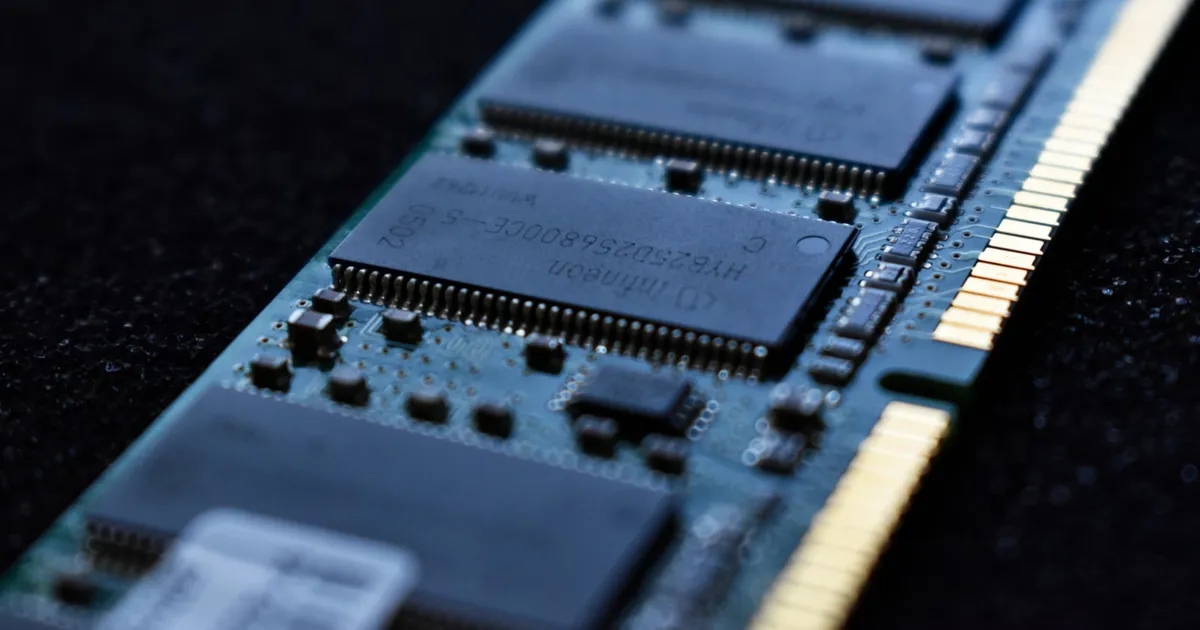
The most sought-after machine in AI training right now may not be a rack of Nvidia accelerators. According to a report from The Information, OpenAI has bought tens of thousands of Mac minis and Mac Studios over recent months, and is using them to train the kind of software-operating “computer-use” agents that have become the industry’s next race. Rival Anthropic is pursuing similar work on Apple silicon, but renting the machines through Amazon Web Services rather than buying them outright.
Neither OpenAI nor Apple has officially confirmed the figures. But the reporting lines up with a set of otherwise puzzling market signals — most conspicuously Apple’s decision to refresh its desktop Macs weeks ahead of schedule — and it reframes a company usually discussed as a consumer-devices maker as an unexpected player in AI infrastructure.
What the Macs are actually doing
The workload is specific. OpenAI is said to be using the Macs primarily for reinforcement learning aimed at computer-use agents — models that operate real software the way a person would: clicking through interfaces, filling forms, running and testing code, and completing multi-step digital tasks inside a live operating system.
That is a different problem from training a large language model, and it rewards a different kind of hardware. Frontier pretraining is dominated by raw matrix throughput, which is why it runs on dense clusters of GPUs wired together with high-bandwidth interconnects. Training an agent to use a computer, by contrast, needs thousands of independent, self-contained computers — each running a full OS, real applications, and a sandboxed environment the agent can poke at and learn from. Breadth of parallel environments, not peak FLOPS in a single node, is the bottleneck.
A Mac mini turns out to be an almost ideal unit for that. It is a complete, low-power desktop that boots macOS, runs ordinary software, and — thanks to Apple’s unified-memory architecture — holds a capable local model in the same pool of RAM the CPU and GPU cores share, without the cross-device shuffling a discrete-GPU box requires. Buy tens of thousands of them and you have a fleet of cheap, uniform sandboxes in which agents can practice the messy, interactive tasks that define real-world work.
Why Apple, and why now
Apple did not set out to become an AI-training supplier. But its silicon has quietly accumulated exactly the traits this workload wants: large unified memory, respectable on-device inference performance, low power draw per unit, and a standardized, mass-produced form factor. The company leaned hard into those attributes with its August 25 desktop refresh, introducing an M6 Mac mini and an M5 Ultra Mac Studio that top out at 512GB of unified memory and lead on every published AI benchmark.
Tellingly, that refresh arrived without a keynote and weeks ahead of Apple’s usual autumn Mac cadence — landing just days before its iPhone event. The reporting offers a reason: AI labs and businesses were buying the desktops faster than Apple had planned for, and the company moved its roadmap up to meet demand it had not fully anticipated. A consumer-desktop launch pulled forward by enterprise AI buyers is not a pattern Apple’s product calendar was built around.
Nvidia’s new sightline
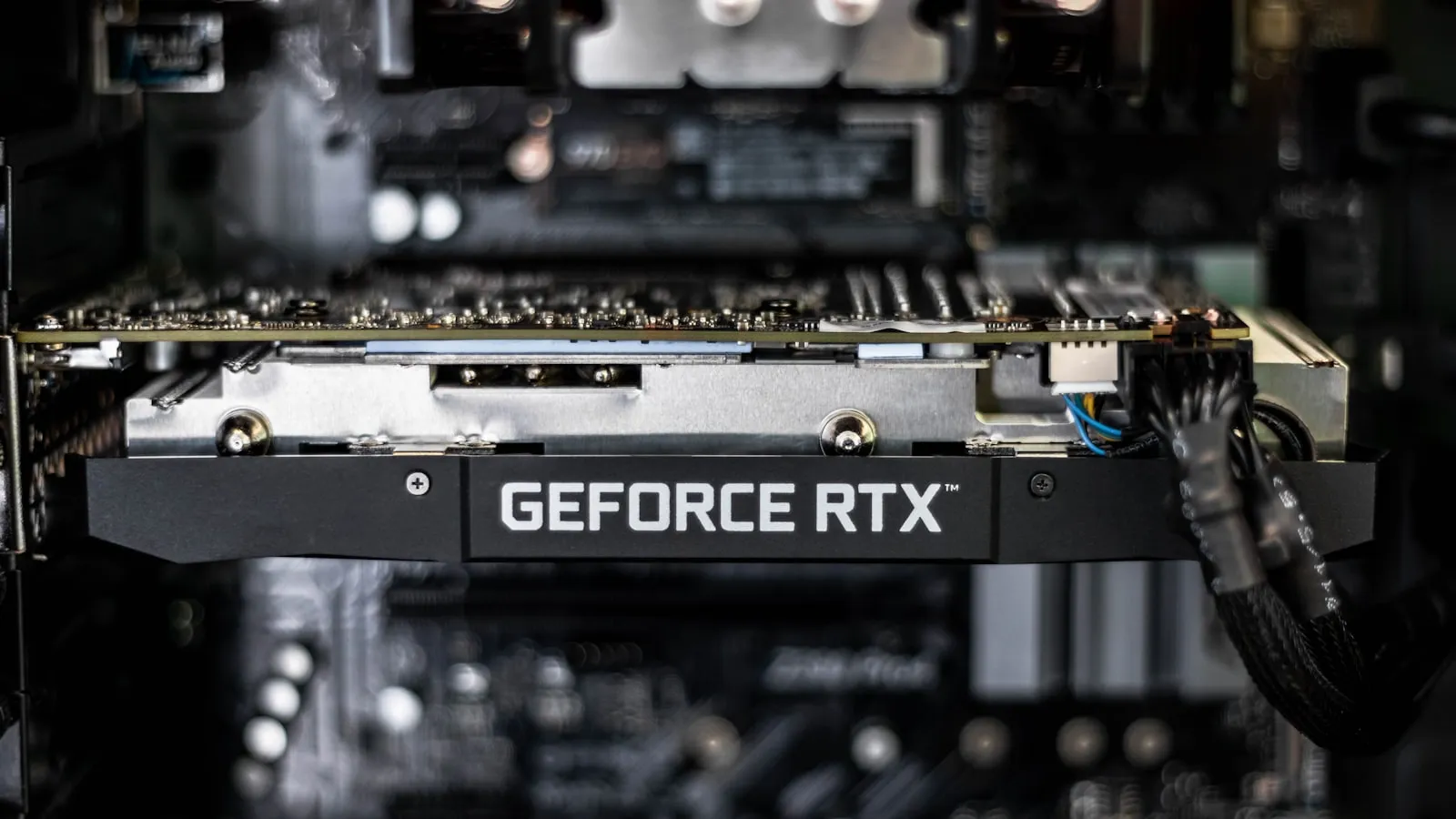
The most striking claim in the reporting is competitive: The Information says Nvidia now regards Apple as its principal rival in local AI processing. That framing needs care. No one is arguing that Mac minis are displacing GPU data centers for frontier training — the labs building the biggest models still run them on the same massive accelerator clusters they always have, and OpenAI’s own compute commitments remain overwhelmingly GPU-based.
What is happening is a bifurcation of the workload. There is now a distinct tier of AI work — agent training, on-device inference, latency- or privacy-sensitive local deployment — where breadth of many modest machines beats a few enormous ones, and where Apple silicon is genuinely competitive. Nvidia has recognized that tier as contestable, and Apple, almost by accident, is the incumbent in it. That is a smaller pool than the training-cluster market, but it is real, and it is one Nvidia had not previously had to defend.
Apple as an “AI infrastructure” story
For Apple, the shift is less about a new product line than a new narrative. The company has spent the AI cycle being framed as a laggard — slow on generative features, dependent on partners for frontier models. The Mac-buying reports invert that story: without launching a data-center business or a cloud service, Apple has become a supplier of AI-training capacity, its highest-margin desktop hardware absorbed by the very labs it was said to be trailing.
That is a durable kind of demand if it holds. Desktop Macs are high-margin, and orders measured in tens of thousands of units — with a second lab, Anthropic, sourcing the same hardware indirectly through AWS — represent a meaningful, recurring pull on a product family Apple sells at premium prices. It also gives Apple a foothold in the AI buildout that does not depend on winning the model race outright, a useful hedge as it continues to trade the most-valuable-company crown with Nvidia.
The caveats are real. The figures are unconfirmed, sourced to reporting rather than disclosure; procurement of this kind can be lumpy, front-loaded as labs stand up new environments and then tapering; and Apple has said nothing to suggest it intends to court this demand as a business line rather than simply fill the orders. A buying spree is not yet a strategy.
What it means
The core lesson is that AI compute is fragmenting into workloads, and the hardware is fragmenting with it. For two years the story was singular: more GPUs, bigger clusters, higher-bandwidth memory. That story is intact for pretraining. But the frontier of usefulness is moving toward agents that do real tasks, and training those agents rewards a fleet of cheap, complete, parallel computers more than another marginal ton of GPU throughput. Apple happens to make the best mass-market version of that computer.
Who benefits. Apple gains an enterprise demand source it did not design for and a fresh narrative that reframes it as an AI-infrastructure participant. OpenAI and Anthropic get a cost-effective substrate for the agent work that increasingly defines their roadmaps — and, notably, a hedge against total dependence on a single accelerator vendor. Nvidia is not threatened in its core, but it now faces a credible competitor in a growing adjacent tier it once owned by default.
What to watch. First, whether the demand recurs or was a one-time build-out — the difference between a quarter’s order and a standing business. Second, whether Apple leans in, with server-oriented configurations, rack density, or fleet-management tooling aimed squarely at labs, or stays a passive beneficiary. Third, whether other labs and enterprises follow OpenAI and Anthropic into Apple-silicon fleets for their own agent training. If they do, “how many Macs did you buy” becomes a real line in the AI infrastructure conversation — a sentence that would have read as a joke a year ago, and increasingly does not.
Keep reading
 Chisato · · 6 min read
 Apple Mac Studio M5 Ultra and Mac mini M6: Specs, Price
Apple refreshed the Mac Studio with M5 Max and M5 Ultra and the Mac mini with M6, adding up to 512GB of unified memory and big on-device AI gains. What to know.
 Chisato · · 6 min read
 Apple Sues OpenAI: Trade Secret Lawsuit Explained
Apple sued OpenAI, io Products and two ex-employees for trade secret theft over AI hardware. Here are the allegations, the players, and what's at stake.
 Chisato · · 6 min read
 OpenAI Dots: Always-On ChatGPT Agents Explained
OpenAI's Dots are always-on agents with their own cloud computer, powered by GPT-6 Astra. How they work, who gets them, and the safety questions.