Nvidia-Amkor $1.5B Deal: US Chip Packaging Buildout
Nvidia is prepaying Amkor $1.5 billion to expand advanced chip packaging in Arizona, building a second CoWoS source outside TSMC. The deal and what's next.
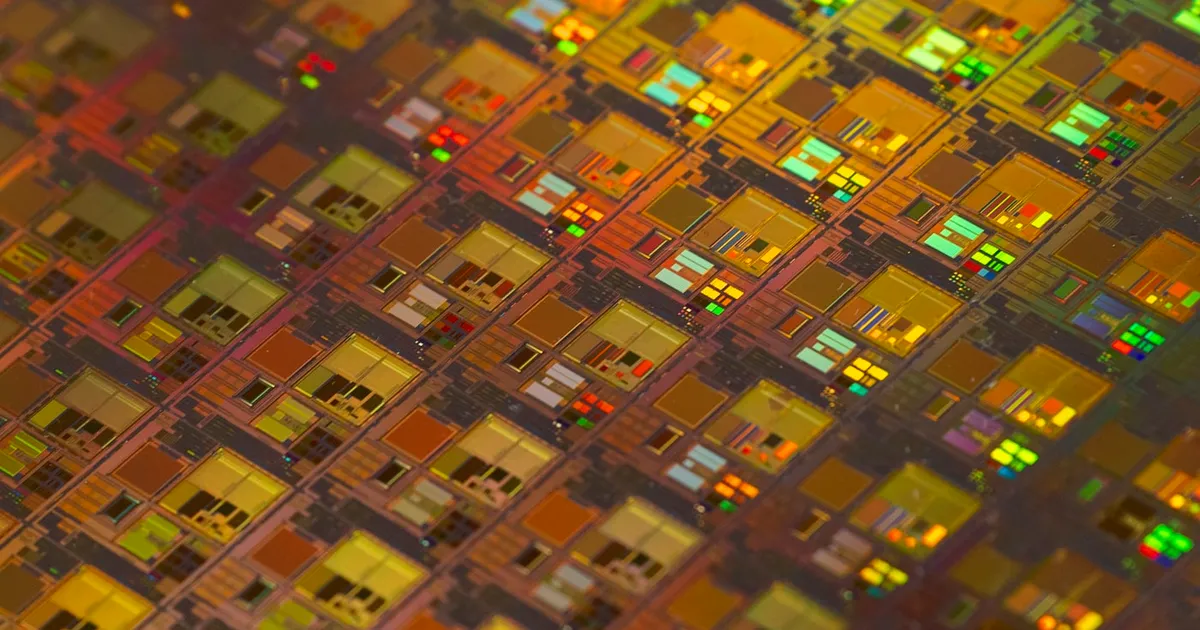
The most important bottleneck in the AI hardware supply chain is packaging, and Nvidia just put $1.5 billion behind fixing part of it on American soil. On Thursday, July 23, 2026, Amkor Technology said it had entered a multi-year strategic partnership with Nvidia under which the chipmaker will provide a $1.5 billion prepayment to expand Amkor’s advanced semiconductor packaging and test capacity in Arizona. Amkor shares jumped as much as 17% in extended trading after the announcement.
The deal is not an equity investment. It is cash committed upfront against future capacity — a structure that lets Amkor build ahead of demand it might otherwise hesitate to fund alone, and that guarantees Nvidia priority access to a scarce resource. In an industry where the constraint on AI accelerators has shifted from raw transistor supply to the ability to assemble finished packages, that guarantee is the point.
Why packaging is the choke point
For most of the AI boom, the public story of chip scarcity has focused on fabrication — the wafers that come out of the world’s most advanced fabs. But the real ceiling for the last two years has been the step that comes after: advanced packaging, the process of stitching a logic die together with stacks of high-bandwidth memory and other components into a single working module.
Nvidia’s accelerators rely on 2.5D and 3D packaging, most prominently the CoWoS (chip-on-wafer-on-substrate) family, to place a GPU die next to towers of HBM on a shared interposer. That technique is what makes the Rubin platform and its predecessors possible — and CoWoS capacity, overwhelmingly concentrated at TSMC, has been one of the primary limits on how many AI chips Nvidia can ship. When analysts talk about Nvidia being “supply constrained,” packaging is usually what they mean.
The technical work sits at the frontier of heterogeneous integration — combining different kinds of silicon, logic, memory, and I/O inside one package — and high-density interconnect, the fine wiring that ties those pieces together. It is the same architectural shift toward disaggregated designs that we cover in our explainer on what a chiplet is: as it gets harder to shrink a monolithic die, more of the performance gain comes from how the pieces are assembled, not just the process node they’re printed on.
The Arizona facility
The prepayment funds a facility already under construction. Amkor broke ground on a greenfield packaging and test campus in Peoria, Arizona, in October 2025, and at the time raised its planned outlay by more than $5 billion to a total of roughly $7 billion across two phases. The company has positioned the site to become the first high-volume advanced packaging facility on U.S. soil, with Apple and Nvidia named as anchor customers from the start.
Under the new agreement, the two companies said they will align long-term technology roadmaps spanning advanced packaging, high-density interconnect, heterogeneous integration, and production-scale test — meaning Amkor’s Arizona capacity is being purpose-built around the packaging formats Nvidia’s future accelerators will need, rather than retrofitted after the fact.
The location is not incidental. Nvidia’s most advanced logic is increasingly printed at TSMC’s Arizona fabs, and TSMC has been pouring capital into the state — including an additional $100 billion commitment announced the week before that lifts its total Arizona pledge to around $265 billion. A domestic packaging campus a short distance away means a wafer could, in principle, be fabricated, packaged, and tested without leaving the country — closing a gap that has forced U.S.-made dies to fly to Asia for final assembly.
A second source outside TSMC
The strategic logic runs beyond capacity. By funding Amkor, Nvidia is establishing a second packaging source outside of TSMC, diversifying a supply chain that has been dangerously concentrated in a single vendor and a single region. TSMC’s packaging lines have been the gating factor on Nvidia’s output; a well-capitalized alternative gives Nvidia leverage on pricing, resilience against disruption, and a hedge against the geopolitical risk that hangs over any Taiwan-centric supply chain.
It also fits a pattern that has defined 2026: hyperscalers and chipmakers using their balance sheets to underwrite the physical infrastructure of the AI buildout. Nvidia has spent the year signing capacity and investment agreements up and down the stack, and the Amkor prepayment is the packaging-layer equivalent — money moving upstream to guarantee that the parts of the supply chain outside a company’s own walls scale in step with demand.
For Amkor, a mid-cap outsourced assembly and test provider, an anchor commitment of this size from the most valuable customer in the industry de-risks an enormous capital project and hands it a multi-year demand signal. The market’s reaction — a double-digit pop on the news — reflected exactly that: a company whose fortunes are tied to a volatile capital-spending cycle just locked in a large, named, prepaid customer.
The agreement also sits inside a broader policy push. Washington has spent three years using subsidies and incentives to pull leading-edge chip manufacturing back onto U.S. soil, and packaging has been the conspicuous hole in that strategy: a wafer fabricated in Arizona still had to travel to Asia for assembly before it could ship. With Apple and Nvidia — two of the largest buyers of advanced silicon in the world — anchoring a domestic packaging campus, the industry gains the missing back-end step of a fully onshore supply chain. That matters strategically as much as commercially, because packaging is where the highest-value assembly happens, and where a disruption in Asia would otherwise stop U.S.-fabricated dies from ever becoming finished products. The proximity to TSMC’s Arizona fabs turns a cluster of separate megaprojects into something closer to an end-to-end domestic pipeline.
What it means
This is a supply-chain resilience move as much as a capacity move, and it reads as a bet that the AI buildout is a durable, multi-year structural shift rather than a cycle about to roll over. Nvidia does not spend $1.5 billion upfront on packaging capacity it expects to sit idle.
Who wins: Amkor, which converts a speculative Arizona megaproject into a de-risked, anchor-funded one, and the broader case for U.S. semiconductor onshoring, which gains its first credible high-volume advanced-packaging node. Nvidia wins optionality — a second packaging path that loosens its dependence on a single supplier and a single geography, easing the constraint that has capped its shipments.
Who feels the pressure: TSMC’s packaging monopoly, which now has a customer-funded rival forming next door, and competitors without the balance sheet to prepay their way to guaranteed capacity. In a market where whoever can package the most modules ships the most accelerators, the ability to bankroll supply is itself a competitive weapon — one that favors the largest players and squeezes everyone else. The dynamic is part of why the chip trade has stayed so volatile even as demand looks secure.
What to watch next: the ramp timeline at Peoria and whether first high-volume output arrives on schedule; whether other Nvidia customers or rival chipmakers follow with their own prepay-for-capacity packaging deals; and how much of Nvidia’s persistent supply constraint this actually relieves. Packaging has been the quiet governor on the entire AI hardware market. A second large-scale source coming online is one of the more consequential things that can happen to it — and it is now being built in Arizona.
Tagged
Keep reading
 Kurumi · · 5 min read
 Nvidia AI Server Prices to Rise 15%+ on Memory Costs
Nvidia's server builders have told Microsoft, Google and Oracle that Vera Rubin and Grace Blackwell system prices will climb more than 15% from early 2027 as memory costs soar.
 Kurumi · · 6 min read
 Chip Stocks Brace for Nvidia Earnings, Jackson Hole
Semiconductor stocks enter a decisive week caught between a 19-year high in long-term yields and rate-cut hopes, with Nvidia's report Wednesday the main event.
Kurumi · · 6 min read Nvidia Q2 FY2027 Earnings Preview: What to Watch
Nvidia reports Q2 fiscal 2027 results on August 26. The Street sees roughly $93–95B in revenue against $91B guidance. Here's what matters for the AI trade.