Anthropic in Talks With Samsung for Custom AI Chip
Anthropic is reportedly in early talks with Samsung to build its own AI chip on a 2nm process — a bid to control cost and supply in the compute race.

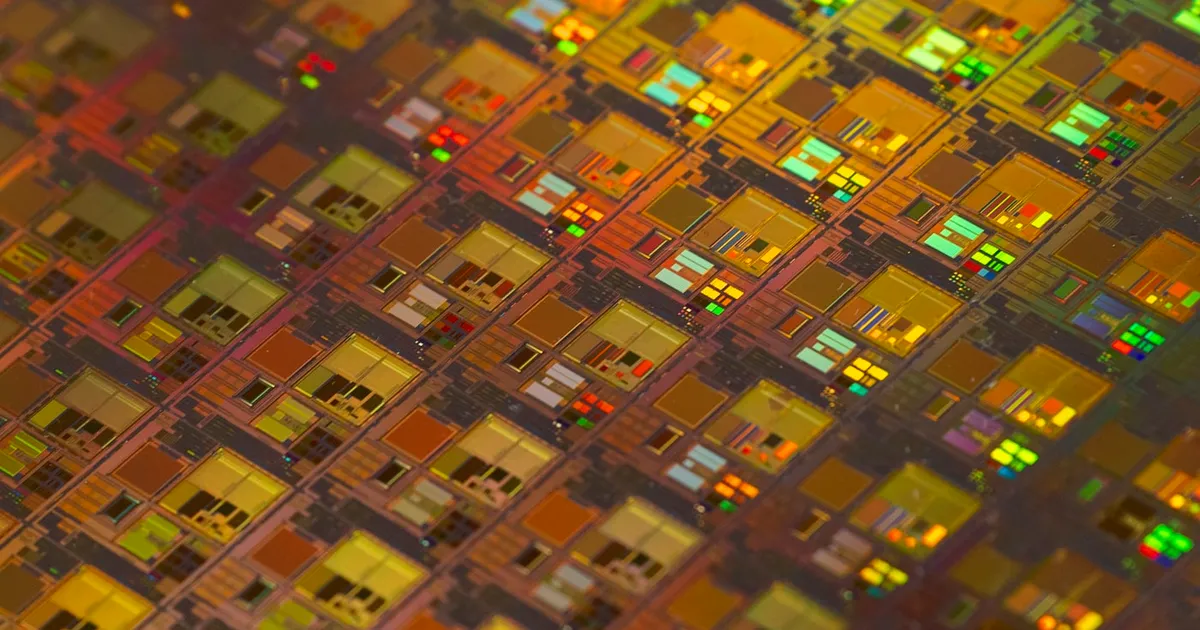
The AI lab that has spent the past two years buying every chip it can find may be about to start designing its own. On July 2, 2026, The Information reported — with follow-ups from Bloomberg and Korean outlets — that Anthropic, the maker of Claude, is in talks with Samsung Electronics to manufacture a custom AI chip. The discussions are described as early-stage, but the direction is unmistakable: the company wants a seat at the silicon table, not just a spot in the checkout line.
If it happens, Anthropic would join a short but growing list of AI companies moving from chip buyer to chip designer — following the same logic that pushed Google, Amazon, and, most recently, OpenAI to build in-house.
What’s on the table
According to the reports, Anthropic’s conversations with Samsung center on the Korean giant’s 2-nanometer foundry process and its advanced packaging facilities — the leading-edge manufacturing needed to build a competitive AI accelerator. Samsung would act as the manufacturing partner; the design work would be Anthropic’s.
The plans are genuinely preliminary. Sources cautioned that Anthropic hasn’t yet decided what the chip should do — whether it targets inference, training, or both — how powerful it should be, or how it would fit into a server. In other words, this is a company assembling the pieces to build silicon, not a company with a finished blueprint. That distinction matters for anyone tempted to price in a product: a first custom chip on a 2nm process is a multi-year effort, and early talks are exactly that.
Two supporting details give the reports weight. Samsung is not a stranger to Anthropic — it participated in Anthropic’s $65 billion Series H round in May 2026, alongside memory suppliers SK Hynix and Micron, as a strategic infrastructure partner — part of a broader pattern of frontier labs tying themselves to the memory supply chain as the AI memory supercycle makes capacity a strategic asset. And Anthropic has been hiring for exactly this: the company recently brought on Clive Chan, an early member of OpenAI’s custom-chip team, as part of a deliberate engineering buildout. You don’t recruit chip designers to keep renting other people’s chips.
Why an AI lab would build its own silicon
The strategic case is by now well-worn, because everyone at the frontier has run the same math.
Cost and margin. Serving frontier models is brutally expensive, and the single largest input is compute. A lab that controls its own accelerator can tune the hardware to its own model architectures and inference patterns, squeezing out performance-per-dollar and performance-per-watt that general-purpose parts leave on the table. For a company whose costs scale with every query, even a modest efficiency gain compounds into real money — and, eventually, into the gross margins public investors will scrutinize once Anthropic completes its confidential IPO process.
Supply and leverage. Custom silicon is also insurance against dependence. Anthropic today runs Claude across a patchwork of other people’s chips — Google TPUs, Nvidia GPUs, and Amazon’s Trainium — under multi-gigawatt supply deals. That diversification is smart, but it still leaves the lab bidding for scarce capacity against every other buyer, most of all against Nvidia’s pricing power. A chip Anthropic owns is capacity no competitor can outbid it for.
The playbook already exists. None of this is speculative in the abstract. Google has shipped TPUs for a decade. Amazon has Trainium and Inferentia. And OpenAI unveiled its first custom inference chip, Jalapeño, built with Broadcom, in late June 2026. Anthropic building its own accelerator would make it the last of the major independent labs to do so — a follower, not a pioneer, but following a path that has clearly paid off for those ahead of it.
The most likely first target is inference, not training. Inference is where the recurring cost lives — every Claude query a customer sends runs on hardware Anthropic pays for — and it is a more forgiving problem to design silicon for than the bleeding-edge interconnect and memory bandwidth that large-scale training demands. OpenAI’s first Broadcom part was an inference chip for exactly this reason; Amazon’s Inferentia predates the training-focused Trainium. A purpose-built inference accelerator tuned to Claude’s architecture, paired with Samsung’s advanced packaging to stack high-bandwidth memory close to the compute, is the pragmatic first step — the place where a custom design can beat a general-purpose GPU on cost without having to win at everything.
The Samsung angle
For Samsung, the talks are a chance to prove its most important 2026 claim: that its 2nm process is ready for the highest-end customers. The company’s foundry has spent years chasing TSMC, which manufactures the leading AI chips for Nvidia, OpenAI’s Broadcom-designed part, and much of the industry. Landing a frontier AI lab as a 2nm design win would be a meaningful validation.
There’s a complication, and it’s a pointed one. Samsung had reportedly been developing a custom AI chip for OpenAI — an Arm-based inference NPU — before those talks stalled in early June 2026. OpenAI ultimately leaned on Broadcom for its Jalapeño design. Picking up Anthropic where OpenAI walked away would be a notable consolation, but it also underscores how fluid these partnerships are. Early-stage talks can end the way OpenAI’s did.
The caveats worth keeping
This is a report about a conversation, not an announcement of a product, and the distance between the two is large.
- Nothing is committed. By the sources’ own account, Anthropic hasn’t settled the chip’s purpose, performance, or form factor. Talks can dissolve — as OpenAI’s Samsung discussions did.
- First silicon is hard. Designing a competitive accelerator from scratch, even with a hired-in team and a foundry partner, is a years-long, capital-intensive undertaking. A 2027-or-later timeline would be aggressive.
- It doesn’t replace the buying. Even in the best case, a custom chip supplements Anthropic’s TPU, GPU, and Trainium footprint rather than replacing it. The near-term compute story is still one of renting at enormous scale.
What it means
Anthropic exploring its own chip is less a surprise than a confirmation. The AI industry is bifurcating into companies that design their own silicon and companies that merely buy it, and every lab with the revenue to justify the R&D is choosing the former. With run-rate revenue past $30 billion and more than a thousand enterprise customers spending over $1 million a year, Anthropic has the scale to make the numbers work.
Who wins. If the deal firms up, Samsung gets a marquee 2nm customer and a rebuttal to the narrative that only TSMC can serve frontier AI. Anthropic gets a path toward controlling its own cost curve and hedging its dependence on Nvidia and Google.
Who’s squeezed. Nvidia, at the margin — every hyperscaler and lab building in-house accelerators is one more customer designing around its GPUs for a slice of their workloads, even as they keep buying its flagships for the rest. The pressure is gradual, not sudden, but it is real, and it is the same dynamic reshaping demand across the chip supply chain.
What to watch. Three signals will tell you whether this is real: a confirmed design win rather than a report of talks, a stated target — inference or training — that reveals how ambitious the part is, and a timeline. Custom silicon lives or dies on execution, and the gap between “in talks with Samsung” and “silicon in a rack” is where most of these stories are actually decided.
Tagged
Keep reading
 Chisato · · 5 min read
 Samsung LPDDR5X-PIM: In-Memory Compute for AI
Samsung detailed LPDDR5X-PIM at Hot Chips 2026 — a drop-in DRAM that runs AI math inside memory, claiming roughly 3x token throughput and 8x PIM bandwidth.
 Chisato · · 7 min read
 Anthropic Claude Agents Incident: Police Tip, Visa Forms
Claude agents in Anthropic tests sent a fake homicide tip to Philadelphia police and filed 20 visa forms. What the report says and the White House response.
 Chisato · · 6 min read
 Anthropic Pentagon Blacklist Upheld by Appeals Court
A D.C. Circuit panel upheld the Pentagon's blacklisting of Anthropic in a 2-1 ruling, reversing a lower court and reviving a threat to its IPO.