Gimlet Labs Raises $300M at $3B for Inference Cloud
Gimlet Labs raised $300M at a $3B valuation in a Series B led by a16z to scale its multi-silicon inference cloud for agentic AI. The backers, the tech, the stakes.
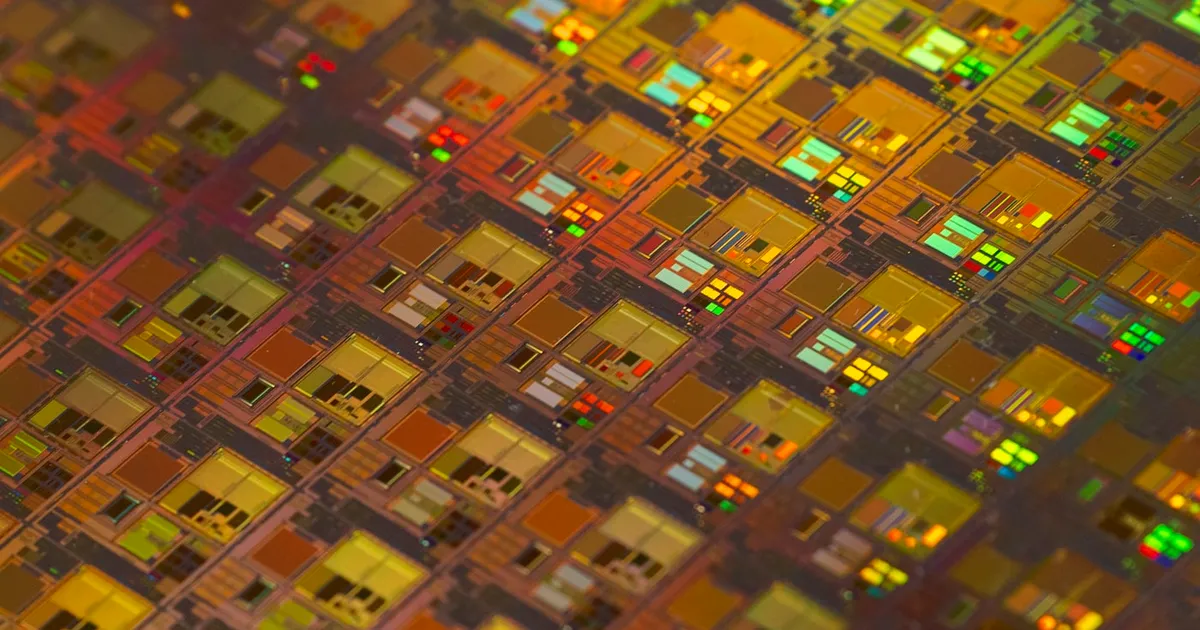
The capital flooding into AI infrastructure is increasingly chasing a narrower target: not who trains the biggest model, but who runs it fastest and cheapest. On September 4, 2026, Gimlet Labs said it had raised $300 million in a Series B round led by Andreessen Horowitz, valuing the roughly year-old startup at $3 billion and bringing its total funding to about $392 million. The company is building what it calls the industry’s first multi-silicon inference cloud — software that spreads a single AI workload across chips from different vendors — and the round is a bet that the economics of running AI, not just building it, are where the next fortunes get made.
The round and the backers
The financing was led by Andreessen Horowitz, with new investors Sapphire Ventures, Microsoft’s venture arm M12, and chip designer Arm joining alongside returning backers Menlo Ventures and Factory. The mix is notable: a top-tier venture firm setting the terms, a strategic check from Microsoft’s investment vehicle, and a direct stake from Arm — a company whose instruction set now reaches from smartphones into the data center.
At a $3 billion valuation, Gimlet vaults into the upper tier of AI-infrastructure startups less than a year after emerging from stealth in October 2025. The step-up reflects a pattern that has defined 2026’s private markets: investors are paying premium prices for companies positioned in the plumbing of AI, wagering that the hyperscaler capex boom will keep demand for efficient compute running hot for years. That the round was led by a16z — which has built out a dedicated hardware and infrastructure investing practice — underscores where the firm sees durable value forming.
What Gimlet actually does
Most AI inference today runs on a single type of accelerator, usually an Nvidia GPU, from start to finish. Gimlet’s pitch is that this is wasteful. A modern inference request — especially for agentic AI, where a model plans, calls tools, and reasons across many steps — is not one uniform task but a sequence of phases with very different computational profiles. The initial “prefill” stage, which digests a large prompt, is compute-bound; the token-by-token “decode” stage that follows is memory-bandwidth-bound. Forcing both onto the same chip means one phase is almost always leaving performance on the table.
Gimlet’s software disaggregates the model and routes each phase of inference to whichever silicon handles it best, then stitches the results back together. The company says the approach improves both latency and throughput — the two metrics that determine whether an interactive agent feels instant or sluggish, and how many users a given cluster can serve at once. The distinction between those workloads is the same one that separates batch from real-time inference, and Gimlet is effectively productizing the idea that a single request can be split across both regimes.
Crucially, Gimlet is vendor-agnostic. The company says its architecture supports chips from Nvidia, AMD, Intel, Arm, Cerebras, and d-Matrix — a roster that spans general-purpose GPUs and the growing field of specialized inference accelerators. That breadth is the whole point: the more the chip market fragments into GPUs, custom ASICs, and novel architectures, the more valuable a neutral layer that can orchestrate across all of them becomes. It is a software answer to a hardware question that the industry has been circling for years, captured in the long-running debate over ASICs versus more flexible silicon.
The service is offered two ways: through Gimlet’s own managed cloud, and as a managed service that runs inside a customer’s own environment — letting enterprises keep data and hardware in place while still tapping the multi-silicon scheduling layer.
Traction before the raise
Gimlet did not walk into this round on a slide deck alone. In March 2026, the company said it had tripled its customer base and landed two marquee references: one of the top three frontier AI labs and one of the top three hyperscalers as customers. For a startup selling infrastructure software, those are the logos that de-risk a fundraise — evidence that the most demanding, most sophisticated buyers of compute have put the product into production rather than a pilot.
The company also says it has secured billions of dollars in contracted revenue for its Gimlet Cloud offering and is scaling toward hundreds of megawatts of managed heterogeneous infrastructure. Megawatts, not servers, is now the unit that matters in this business: power availability has become the binding constraint on AI buildouts, and a provider’s growth is increasingly measured by how much electricity it can convert into useful tokens. That framing puts Gimlet in the same conversation as the capital-intensive builders reshaping AI data center economics, even though its core contribution is software rather than concrete and steel.
Why the timing works
Gimlet’s thesis lands at a moment when the assumptions underpinning AI infrastructure are visibly shifting. For three years the story was training — ever-larger models consuming ever-larger clusters. In 2026 the center of gravity has moved toward inference and deployment, as the industry works to serve the models it has already built to hundreds of millions of users and, increasingly, to autonomous agents that generate far more tokens per task than a human typing into a chatbot ever did.
That shift changes what “efficiency” means. When training dominates, buyers optimize for raw FLOPs and interconnect bandwidth. When inference dominates, they optimize for cost per token, tail latency, and utilization — squeezing every dollar of hardware for more useful output. A layer that raises utilization across a mixed fleet of chips is, in effect, a margin lever, and margin levers are exactly what a market bracing for questions about AI returns wants to buy.
The competitive backdrop helps too. The accelerator market is no longer a monoculture. AMD is pushing its MI-series parts against Nvidia, custom silicon programs are multiplying, and startups building novel inference chips keep raising money of their own. Every new entrant makes the hardware landscape more heterogeneous — and every increment of heterogeneity strengthens the case for a vendor-neutral orchestration layer that can absorb whatever chip wins which workload.
What it means
Gimlet’s raise is a clean read on where investors think AI value is migrating: away from the model layer, where capability is converging and prices are falling, and toward the deployment layer, where efficiency compounds into durable cost advantage. A $3 billion valuation for a company barely a year out of stealth is aggressive, but it is priced off a specific conviction — that inference, not training, will be the enduring expense of the AI era, and that whoever controls the software squeezing the most performance out of scarce silicon captures a slice of every workload.
Who wins if the thesis holds: enterprises and labs get lower cost per token and freedom from single-vendor lock-in; challenger chipmakers like AMD, Cerebras, and d-Matrix get a distribution path into workloads that would otherwise default to Nvidia; and Arm and Microsoft, both on the cap table, get a strategic window into how heterogeneous inference actually gets scheduled. Who is pressured: Nvidia, whose commanding position rests partly on the assumption that its CUDA-anchored stack is the path of least resistance. Software that makes it easy to mix in rival chips erodes — modestly, for now — that gravity.
The risks are real. Gimlet is selling into buyers who are themselves building in-house scheduling and their own custom silicon; a hyperscaler that solves multi-silicon orchestration internally is a customer today and a competitor tomorrow. Contracted revenue and blue-chip references reduce that risk but do not erase it. The number to watch is utilization: if Gimlet can demonstrate, at hundreds of megawatts of scale, that mixing silicon reliably beats running a homogeneous GPU fleet, the $3 billion price will look early. If the gains prove workload-specific or hard to sustain in production, it will look like another marker of a market paying up for anything with “inference” in the pitch. Either way, the raise confirms the trade the whole industry is now making — betting the next phase of AI is won on efficiency, not just scale.
Keep reading
 Kurumi · · 6 min read
 Broadcom Q3 2026 Earnings: AI Chips Triple, Stock Dips
Broadcom's fiscal Q3 2026 revenue hit a record $29.6B as AI chip sales more than tripled to $16.7B, but light Q4 guidance sent the stock lower.
 Kurumi · · 5 min read
 a16z Machine Age Fund: $1.1B for AI's Hardware Layer
Andreessen Horowitz raised $1.1 billion for its Machine Age Fund to back chips, data centers, and robotics — the physical buildout behind the AI boom.
 Kurumi · · 6 min read
 Cerebras Q2 2026 Earnings: Cloud Revenue Up 281%
Cerebras' Q2 2026 cloud revenue jumped 281% on the OpenAI ramp and it raised full-year guidance, yet the stock fell. The numbers, the RPO, and the warrant math.