Nvidia Australia AI Factories: 2 GW Buildout by 2027
Nvidia lined up eight Australian data center operators to build up to 2 GW of AI factory capacity by 2027, roughly doubling the nation's compute footprint.
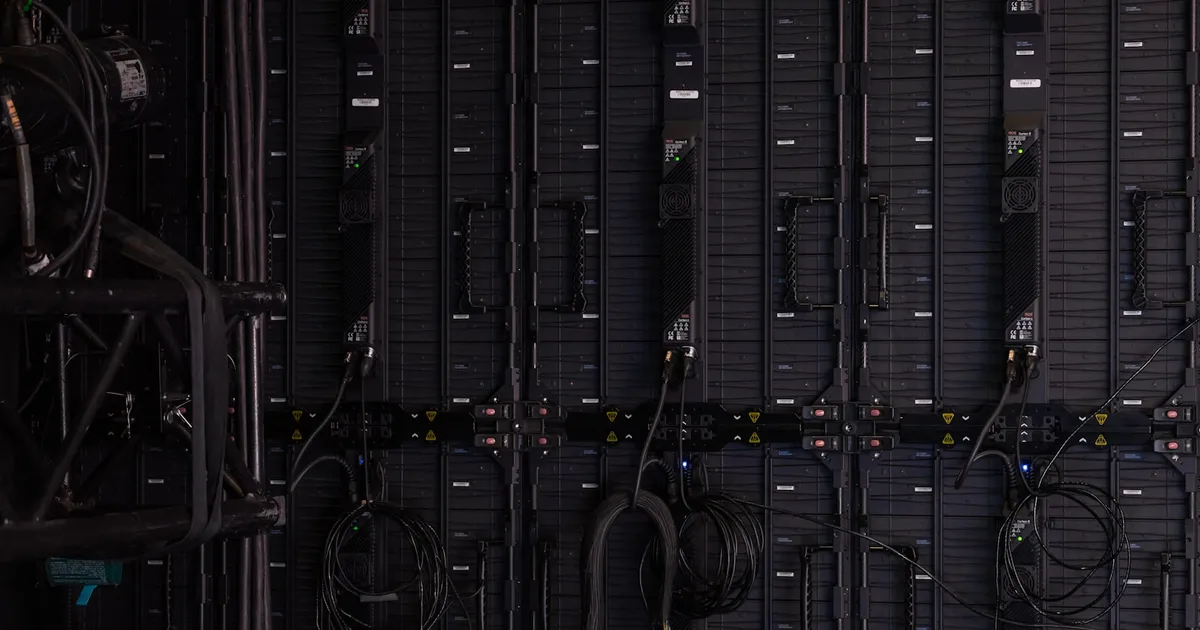
Nvidia is trying to plant a national-scale compute base in the Southern Hemisphere. This week the chipmaker said it has lined up eight Australian data center operators to build up to 2 gigawatts of AI factory capacity by 2027 — a buildout large enough to roughly double the country’s current computing footprint. Under the arrangement, the local providers own and operate the facilities while Nvidia supplies the platform that fills them.
The partners and the plan
Nvidia named eight participants: Firmus, Sharon AI, IREN, Megaport, ResetData, CDC, NEXTDC, and AirTrunk. Together, the company said, the group will expand land, power, and shell capacity designed to host multiple generations of Nvidia DSX AI factories — the rack-scale, full-stack systems Nvidia sells as pre-integrated units of AI compute rather than loose GPUs.
The division of labor is the same one Nvidia has used in similar national deals: the operators run the facilities, and Nvidia delivers the DSX platform, accelerated computing, networking, software, and ecosystem support. That keeps Nvidia’s balance sheet light — it is not building or owning the data centers — while ensuring the capacity that comes online is standardized on its hardware and software stack.
The phrase “multiple generations” is deliberate. By securing land, grid connections, and building shells now, the partners create sites that can absorb successive Nvidia platforms as they ship, rather than one-off installations tied to today’s silicon. The current flagship is the Rubin generation, which we detailed in the Nvidia Rubin platform; future systems would drop into the same prepared sites.
Doubling a nation’s compute
The headline number is the scale relative to what Australia already has. Nvidia put the country’s existing computing capacity at about 1.6 GW, which means a 2 GW expansion would more than double the national load dedicated to this kind of infrastructure. That framing — measuring AI buildout in gigawatts of power rather than counts of chips or servers — has become the industry’s default, because electricity, not silicon, is increasingly the binding constraint.
Power is the reason the operator list looks the way it does. Names like AirTrunk, NEXTDC, and CDC are among the largest hyperscale data center developers in the Asia-Pacific region, with existing grid relationships and land banks; IREN and Firmus bring energy-focused site strategies. Assembling capacity at this scale is less about GPUs — which Nvidia can ship — than about securing the megawatts to run them and the cooling to keep them alive. The economics of that tradeoff, where power and utilization increasingly determine whether AI infrastructure pays off, are the subject of AI data center economics.
A template Nvidia keeps reusing
The Australia announcement follows a pattern Nvidia has repeated across countries this year: partner with local operators, supply the DSX platform, and brand the result a “national AI factory” buildout. We covered a comparable arrangement in Noetra’s national AI factory in Japan built on Nvidia Rubin. The strategy lets Nvidia expand its installed base into new geographies without the capital intensity of owning the real estate, while giving each host country a claim to sovereign AI capacity — compute that sits under domestic jurisdiction rather than in a foreign hyperscaler’s cloud.
For the local operators, the appeal is demand certainty. Nvidia’s brand and platform anchor the projects and signal to their own customers — startups, universities, researchers, and enterprises — that the capacity will be current-generation and well-supported. Nvidia said the factories are aimed at exactly that base of Australian startups, universities, researchers, enterprises, developers, and AI-native companies.
The buildout also plugs into the broader capital-spending surge reshaping the industry. Hyperscalers and their partners are pouring hundreds of billions into AI data centers, a wave we tracked in the AI capex boom and hyperscaler spending. Nvidia’s national-factory deals are a way to extend that spending into markets where the largest US cloud providers have a smaller footprint, seeding demand for its chips outside the handful of customers that currently dominate its order book.
The constraints that will decide it
Two hard limits sit between the announcement and 2 gigawatts of running capacity. The first is power. Doubling a nation’s compute load means securing grid connections, and in some cases new generation, on a timeline that utilities and regulators do not always move quickly to meet. The 2027 target implies that at least some of these sites already have power pathways in view; others may hinge on approvals still in progress.
The second is demand. Building the capacity is a bet that Australian enterprises, researchers, and AI-native startups will consume 2 GW of frontier AI compute within a few years. If domestic demand lags, the operators are left with expensive, power-hungry facilities and the pressure to fill them with overflow workloads from abroad — which would undercut the “sovereign capacity” rationale.
There is also a concentration question. Standardizing a country’s next-generation AI infrastructure on a single vendor’s platform deepens dependence on that vendor’s roadmap, pricing, and supply. It is efficient, and it is what the operators want today; it also means Australia’s AI compute base rises and falls with Nvidia’s ability to deliver successive DSX generations on schedule.
What it means
The Australia deal is a small dollar figure by the standards of Nvidia’s US mega-partnerships, but strategically it is of a piece with them: Nvidia is racing to install its platform as the default substrate for AI compute in as many jurisdictions as possible, using local operators’ capital and power to do it. Each national buildout widens the moat — more sites standardized on DSX, more developers trained on Nvidia’s stack, more countries whose AI ambitions run through its hardware.
The immediate winners are the eight Australian operators, who gain a marquee anchor tenant and demand signal, and Nvidia, which extends its reach without carrying the real estate. The risk lands on the same operators if demand or power fails to materialize on schedule. For Australia, the payoff is domestic AI capacity and the jobs and research capability that come with it — set against a deeper reliance on one foreign supplier for critical infrastructure.
Watch whether the power commitments behind these sites are firm or aspirational, how quickly the first DSX factories actually energize against the 2027 target, and whether other mid-sized economies follow with their own Nvidia national-factory deals. If they do, the gigawatt-by-gigawatt map of global AI compute will increasingly be drawn in Nvidia’s colors.
Tagged
Keep reading
 Chisato · · 6 min read
 Anthropic Lambda $35B Deal: Texas Data Center, Nvidia Twist
Anthropic signed a six-year, $35B cloud deal with Nvidia-backed Lambda for 350MW at a Hut 8 site in Texas. Here's the structure and the circular-financing question.

 Kurumi · · 6 min read
 Starcloud Raises $250M for Orbital AI Data Centers
Starcloud raised $250M at a $2.3B valuation, with Nvidia joining, to build AI data centers in orbit. Why space compute is drawing capital now.
Chisato · · 6 min read Anthropic Theseus Venture: Macquarie, GIC Build Data Centers
Anthropic, Macquarie and GIC formed Theseus Infrastructure to develop and lease US data centers to Anthropic as anchor tenant. Here's the breakdown.