Japan National AI Factory: Noetra, Nvidia Rubin GPUs
Japan and Nvidia launched Noetra, a 140MW Vera Rubin AI factory with 27,500 GPUs, to build sovereign robotics foundation models under the FRONTia plan.

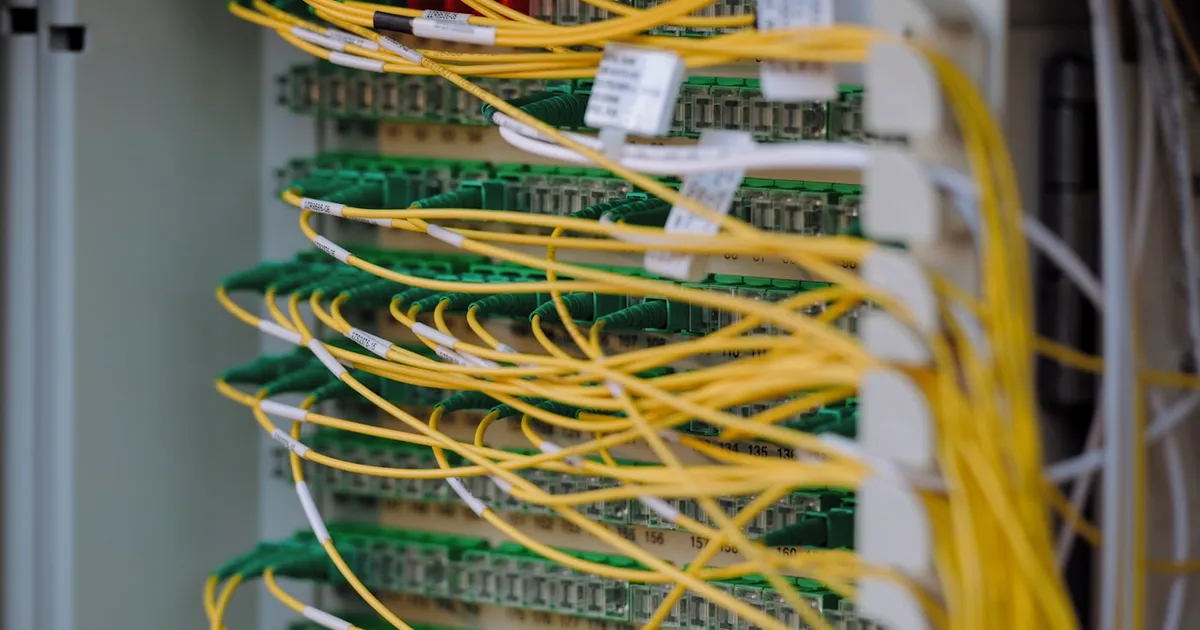
Japan has moved its AI ambitions onto the balance sheet of the state. On July 16, 2026, the Japanese government, a consortium of the country’s largest industrial companies, and Nvidia announced what they billed as “the world’s first national AI infrastructure” — a 140-megawatt AI factory to be built and operated by a new entity called Noetra Corp. The facility will be packed with 27,500 Nvidia Rubin GPUs and 13,750 Vera CPUs, and it exists to serve a single strategic goal: training Japanese-developed foundation models for robots, factories, and physical systems, with the weights shared broadly across the domestic economy.
The announcement reframes a question that has, until now, been answered almost entirely by American hyperscalers writing their own checks. Japan is treating frontier compute the way it once treated ports, railways, and power grids — as national infrastructure to be planned, funded, and owned by the country rather than rented from abroad.
What was announced
At the center of the plan is a purpose-built AI factory based on Nvidia’s DSX platform. According to the joint announcement, Noetra will deploy 27,500 Rubin GPUs paired with 13,750 Vera CPUs, delivering 140 megawatts of data-center capacity. Those are the numbers of a serious training cluster — enough compute to pretrain large multimodal models from scratch rather than merely fine-tune models built elsewhere.
The choice of Rubin matters. Rubin is Nvidia’s newest generation, unveiled earlier this year as a tightly integrated platform rather than a standalone chip. As we covered when Nvidia first detailed the Rubin platform, the company now designs the GPU, CPU, networking, and memory subsystems to function together as a single machine. Building a national facility on that architecture means Japan is buying into Nvidia’s system-level roadmap, not just its silicon. For readers new to why the GPU sits at the heart of every training run, the accelerator is the scarcest and most contested component in the entire AI stack.
Nvidia founder and CEO Jensen Huang framed the deal in industrial terms. “Japan invented modern manufacturing. Now, it is building the AI factories that will power the next industrial revolution,” he said in the announcement.
The Noetra consortium
Noetra is not a startup in the usual sense. It is a consortium anchored by SoftBank Corp., Sony Group, NEC, and Honda Motor, with roughly 44 companies and organizations participating as investors and partners. Toyota-backed AI developer Preferred Networks is among the additional participants, giving the group representation across telecoms, consumer electronics, semiconductors, and automotive manufacturing — the sectors Japan intends to reindustrialize around AI.
The consortium will own and operate the factory directly. Hironobu Tamba, Noetra’s chief executive, cast the collective structure as a necessity rather than a preference. “Bringing physical AI into the real world requires enormous computing, data and foundational technologies, challenges no single company can solve alone,” he said.
That framing — that no single firm can carry the cost — is the through-line of the entire project. Where the American buildout has been driven by individual companies competing for advantage, Japan is pooling its national champions into one shared platform.
FRONTia and the bet on physical AI
The compute is the means; the model is the end. The factory will provide the foundation for FRONTia, a program launched by Japan’s Ministry of Economy, Trade and Industry (METI) whose formal title is “Development of Multimodal Foundation Models with a View to AI Robotics and Physical AI.”
The distinction from the current wave of chatbots is deliberate. FRONTia is aimed squarely at physical AI — models that can process text, images, video, and audio and then apply that understanding to robots, digital twins, and industrial machinery operating in the real world. Noetra says it will train open multimodal foundation models and make the pretrained weights broadly available to domestic developers and enterprises, bundled alongside Nvidia software stacks including Nemotron, Cosmos, Isaac GR00T, and the NeMo libraries. Our primer on multimodal AI explains why combining sensory inputs is the technical precondition for machines that act rather than merely converse.
The wager is that Japan’s comparative advantage lies less in consumer chatbots than in the machines its economy already builds. If foundation models can be pointed at manufacturing, logistics, healthcare, and robotics, then a country with a deep industrial base and a shrinking, aging workforce has an obvious reason to want them. The economics of that shift — whether capable robots can be built and operated at a price that makes sense — remain unsettled, a tension we examined in our look at humanoid robot economics.
Funding and timeline
The money behind FRONTia is public. METI and its innovation-funding arm NEDO are committing up to ¥1 trillion (roughly $6.2 billion) over five years, with an initial tranche of ¥387.3 billion (about $2.4 billion) allocated for fiscal year 2026. Noetra, together with the national research institute AIST, won the NEDO public tender on June 30 to run the program from fiscal 2026 through fiscal 2030.
The schedule is deliberately paced. Construction is set to begin in April 2027, with the factory’s operations due to start in June 2028 — a reminder that even a fully funded, state-backed cluster runs on the same multi-year lead times of land, power, and hardware delivery that constrain every large data center. The 140-megawatt power figure is itself a planning commitment as much as a compute one; facilities at this scale are limited as much by available electricity as by available silicon.
A sovereign compute strategy
Japan’s move slots into a broader global pattern of governments deciding that AI capacity is too strategic to outsource. The most direct comparison is China’s $295 billion national AI infrastructure plan, a top-down, five-year commitment to build out domestic compute, energy, and chip supply. Japan’s program is smaller and structured differently — a public-private consortium rather than pure state direction — but the underlying logic is the same: field your own compute, train your own models, and reduce dependence on capacity you do not control.
The contrast with the United States remains instructive. America’s buildout has been financed overwhelmingly by private capital, with hyperscalers and model labs racing to secure their own chips and data centers in what has become a historic capex boom. Japan is threading a middle path: government money and coordination, private ownership and operation, and an explicit mandate to distribute the resulting models as a public good rather than a proprietary moat.
One notable feature is the dependency the plan does not resolve. A “sovereign” AI factory built on 27,500 Nvidia GPUs is sovereign in ownership and intent, but not in supply chain. Japan controls the consortium, the funding, and the models; it does not control the accelerators at the core of the facility, which come from a single American vendor. That is the same constraint every national AI program currently faces, and it is why the phrase “national AI infrastructure” carries an asterisk everywhere it is used.
What it means
The Noetra announcement is best read as a statement about where Japan thinks the next decade of AI value will be created. By pointing a national-scale cluster at robotics and physical systems rather than general-purpose chatbots, the country is betting on the domain where its industrial base is strongest and its demographic pressures are most acute.
The immediate winner is Nvidia, which adds another sovereign customer to a rapidly lengthening list and locks a major economy onto its Rubin platform years before the hardware ships. The broader winners, if the plan works, are Japan’s manufacturers, who would gain access to open, domestically trained foundation models tuned for the machines they already make.
The risks are the familiar ones. The factory does not come online until June 2028, and a three-year horizon is a long time in a field where model architectures and hardware generations turn over in months. Success depends not just on standing up the compute but on whether Japan’s developers can turn open weights into deployed, economically viable physical-AI systems — a translation that has proven far harder than training the models themselves. What to watch first is execution against the schedule: land secured, power contracted, and Rubin silicon delivered on time. Everything else in the plan is downstream of the factory actually getting built.
Keep reading
 Kurumi · · 4 min read
 The Economics of an AI Data Center: What a Gigawatt Costs
AI ambition is measured in gigawatts. What one actually costs to build and power for a year — a back-of-the-envelope teardown of tech's priciest machine.
 Kurumi · · 3 min read
 The AI Capex Boom: Why Hyperscalers Keep Spending
Hyperscalers are pouring record sums into AI data centers, chips, and power. What's driving the capex boom, who profits, and the risk if demand stalls.
 The Lycoris Team · · 3 min read
 China Unveils a $295 Billion AI Infrastructure Plan
China unveiled a $295 billion, five-year national AI infrastructure plan — one of the largest state AI commitments ever. Here's the scale and the strategic stakes.