Anthropic Theseus Venture: Macquarie, GIC Build Data Centers
Anthropic, Macquarie and GIC formed Theseus Infrastructure to develop and lease US data centers to Anthropic as anchor tenant. Here's the breakdown.
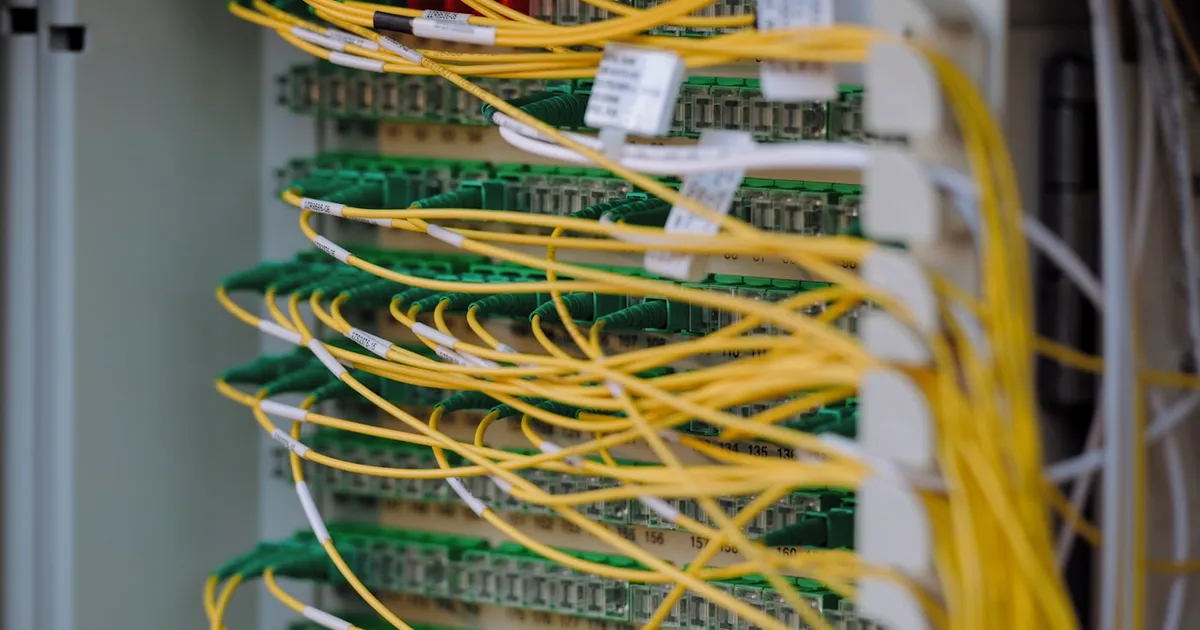
Anthropic has found a new way to secure the enormous computing capacity its models require without shouldering the full cost of building it. On August 10, 2026, the maker of Claude announced a strategic partnership with Macquarie Asset Management and Singapore’s sovereign wealth fund GIC to form Theseus Infrastructure, a new platform that will develop, own, operate and lease dedicated data center capacity to Anthropic under long-term agreements. The venture was reported by Bloomberg and confirmed in a joint statement from the three parties.
The structure is the point. Rather than financing and building data centers on its own balance sheet, Anthropic will act as the anchor tenant — the guaranteed, long-term customer — while Macquarie and GIC put up the majority of the equity to fund each project. It is a template that lets a fast-growing AI lab lock in capacity for years while pushing the capital-intensive construction risk onto investors built to hold long-dated infrastructure assets.
What Theseus is
According to the announcement, Theseus Infrastructure is a purpose-built platform whose sole initial mission is to serve Anthropic. The three partners will jointly identify and develop new sites, each designed around Anthropic’s capacity requirements, with an initial focus on the United States. Funds managed by Macquarie Asset Management will, together with GIC, own the platform and fund the majority of the equity for each individual project.
The name is a deliberate nod to the philosophical “Ship of Theseus” — the thought experiment about whether an object that has every component gradually replaced remains the same object. For a compute fleet that will be continually refreshed with new generations of accelerators as older hardware ages out, the metaphor is apt: the racks change constantly, but the platform serving Anthropic endures.
Notably, the release named no headline capital figure, no gigawatt target, no specific sites and no completion timeline. That reticence is itself informative. These deals are typically announced as frameworks first, with the concrete numbers — capacity, cost, delivery dates — attached later as individual projects reach financial close. What the parties did commit to was a model: Anthropic signs long-term leases, the investors build to suit, and capacity comes online site by site.
Why Anthropic keeps doing this
Anthropic’s appetite for compute has outrun what any single supplier or financing approach can satisfy, and Theseus is the latest entry in a rapidly lengthening list. The company already leases capacity from Amazon Web Services and Google Cloud, its two largest strategic investors, and has layered on specialist arrangements — including a recently reported six-year, $10 billion deal for Nvidia Vera Rubin capacity at a hydro-powered campus in Norway, and a strategic memory-supply agreement with Micron to guarantee high-bandwidth memory for its accelerators.
The logic behind spreading these bets is straightforward. Training frontier models — and, increasingly, serving inference to a customer base generating tens of billions of dollars in annualized revenue — requires accelerators at a scale no single vendor can guarantee on Anthropic’s timeline. Multiple, overlapping commitments across hyperscalers, specialist providers and now a dedicated build-to-suit vehicle reduce the risk that any one delay starves the model roadmap. A fab slip, a power-interconnect holdup, or a shortage in high-bandwidth memory can each stall a lab; diversification is how Anthropic insures against all of them at once.
Theseus adds a distinct capability to that portfolio: purpose-built facilities engineered from the ground up for Anthropic’s workloads, rather than leased slices of a hyperscaler’s shared cloud or a converted crypto-mining site. Owning the design of a facility — its power density, cooling, and network topology — lets a lab optimize for the specific economics of large-scale training and inference in ways a generic colocation lease cannot.
The financing model is the story
The most consequential detail is not any single facility but the ownership arrangement behind it. By having Macquarie and GIC fund the majority of the equity, Anthropic converts what would be tens of billions of dollars in capital expenditure into a stream of long-term lease obligations. The buildings, the land, and the depreciating hardware sit on the investors’ books; Anthropic’s commitment is contractual — a promise to pay rent for guaranteed capacity over many years.
This is the same financial engineering reshaping the entire AI buildout. Hyperscalers have been moving AI infrastructure into off-balance-sheet vehicles to fund capacity without inflating reported debt, and Nvidia itself is reported to be weighing a $250 billion financing guarantee tied to OpenAI’s data center ambitions. For patient institutional capital — an asset manager like Macquarie, a sovereign fund like GIC — a long-term lease from a creditworthy AI lab looks like exactly the kind of stable, inflation-linked cash flow they exist to hold. For Anthropic, it is a way to guarantee compute for the next decade without the capital markets penalizing it for the debt.
The arrangement also carries an unusual community commitment. As part of the partnership, Anthropic pledged to cover any increases in consumer electricity rates that result from the construction and operation of the facilities, and to shoulder the associated grid-upgrade costs. The pledge is a direct response to mounting public backlash over data centers driving up local power bills — a tension that has already produced electricity-price fights near hyperscaler campuses and even construction moratoriums in some states. By promising residents will not foot the bill for its power demand, Anthropic is trying to defuse the single most reliable source of local opposition before shovels hit the ground.
The timing
The venture lands as Anthropic prepares for public markets. The company confidentially filed for an IPO earlier in the summer, and its shares have traded on secondary markets at a valuation well above $1 trillion on the strength of rapidly growing revenue. When a prospectus lands, long-term compute commitments like the Theseus leases will appear as multi-year obligations — line items that show public investors how much of an AI lab’s future cash is already spoken for, and how it has structured those commitments to keep them off its own balance sheet.
For Macquarie and GIC, the deal is a way into one of the most sought-after infrastructure themes of the decade on terms that limit downside. Their exposure is anchored by a single, contractually committed tenant with strong revenue growth, rather than the speculative “build it and they will come” risk that haunts merchant data center development. If Anthropic thrives, the leases pay out for years; the risk they are underwriting is concentrated in one counterparty’s staying power.
What it means
Theseus is a small announcement about a new company and a large statement about how AI infrastructure now gets built and financed.
For Anthropic, it is capital efficiency, not extravagance. Securing purpose-built, long-term capacity while keeping the construction cost off its own books is precisely what a lab wants heading into an IPO. It guarantees the compute the model roadmap depends on without forcing Anthropic to raise and deploy tens of billions in capex itself — leaving that to investors structurally suited to hold the assets. Expect the framework to be filled in over the coming quarters with named sites, capacity figures and delivery dates as individual projects close.
For Macquarie and GIC, it is infrastructure investing meeting the AI boom. Long-dated, contracted cash flows from a creditworthy anchor tenant are the core of what these institutions do. The bet is not on any single technology cycle but on Anthropic’s durability as a customer — a wager that the demand for frontier AI compute is here to stay and that the lab signing the lease will still be paying rent a decade from now.
For the communities that will host these facilities, the electricity pledge is the tell. Anthropic’s promise to absorb grid-upgrade costs and shield consumers from rate increases is an acknowledgment that local power economics have become the binding constraint on the AI buildout. The economics of these campuses — power costs, utilization, and the fast depreciation of AI hardware — will determine whether this model looks prescient or overextended in hindsight. Watch which sites Theseus names first, how much power they draw, and whether the electricity pledge survives contact with a real utility bill. The framework is the easy part; the megawatts are where the money and the friction actually live.
Keep reading
 Chisato · · 5 min read
 Nvidia Australia AI Factories: 2 GW Buildout by 2027
Nvidia lined up eight Australian data center operators to build up to 2 GW of AI factory capacity by 2027, roughly doubling the nation's compute footprint.
 Chisato · · 6 min read
 Anthropic Lambda $35B Deal: Texas Data Center, Nvidia Twist
Anthropic signed a six-year, $35B cloud deal with Nvidia-backed Lambda for 350MW at a Hut 8 site in Texas. Here's the structure and the circular-financing question.
Chisato · · 5 min read Anthropic Volta $10B Compute Deal: What to Know
Anthropic signed a $10B, six-year deal for 121MW of Nvidia Vera Rubin capacity at a Bitdeer data center in Norway, delivered by Volta. Here's the breakdown.