Microsoft Maia 300: TSMC Order and Nvidia Challenge
Microsoft is in talks with TSMC to build 300,000+ Maia 300 AI chips, aiming for over 1 million units to cut its reliance on Nvidia. The plan and what it means.
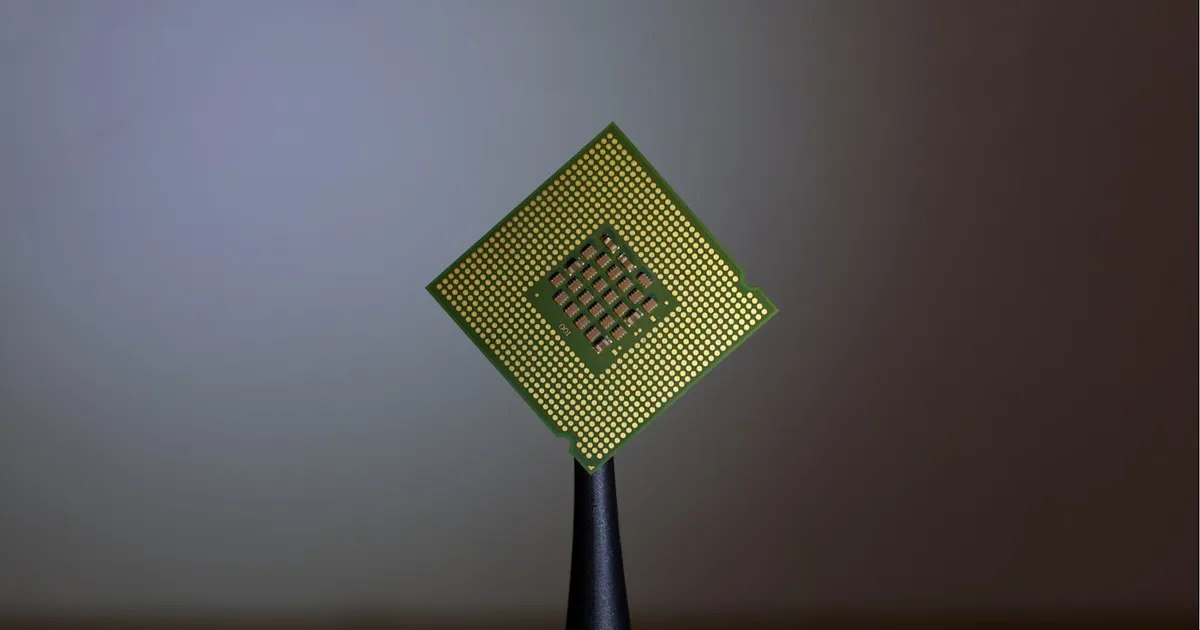
Microsoft is preparing to manufacture its own AI chips at a scale it has never attempted before. According to a report from The Information published August 10, 2026, Microsoft has been in talks with Taiwan Semiconductor Manufacturing Company (TSMC) to reserve capacity for more than 300,000 of its next-generation Maia 300 AI accelerators, with delivery planned for 2027. The company intends to reveal the Maia 300 publicly as soon as September, and one Microsoft manager described the ultimate ambition as producing “gigawatts’ worth” of the chips — a figure that implies eventual volumes above one million units.
The report reframes Microsoft’s in-house silicon program from a hedge into a central pillar of its infrastructure strategy. To date Microsoft has produced only tens of thousands of the prior-generation Maia 200, according to the reporting, meaning the Maia 300 order would dwarf everything the program has shipped so far. Microsoft shares hit their highest level of the year on the news.
From Maia 200 to a 300,000-chip commitment
Maia is Microsoft’s family of custom AI accelerators — application-specific chips, or ASICs, built to run the specific machine-learning workloads that dominate its data centers rather than the general-purpose math a graphics card handles. The first two generations were, by the standards of the AI buildout, modest deployments. The Information’s reporting puts Maia 200 production in the tens of thousands of units, enough to run internal workloads and prove the design but nowhere near the volume Microsoft buys from Nvidia each year.
The Maia 300 order is a different order of magnitude. Reserving capacity for more than 300,000 chips — with 2027 delivery — signals that Microsoft believes its custom silicon is ready to carry production traffic at scale, not just pilot projects. The manager quoted by The Information framed the goal in power terms rather than unit counts: “gigawatts’ worth” of Maia capacity. Because a single high-end AI accelerator draws on the order of a kilowatt once networking, memory, and cooling overhead are included, gigawatt-scale ambition points toward a fleet numbering in the hundreds of thousands to over a million chips over time.
The reporting is careful on that last figure. Microsoft’s stated aim of surpassing one million units is a target, not a booked order, and The Information notes it may be difficult to hit given component availability and where negotiations with TSMC currently stand. The 300,000-plus figure for 2027 is the concrete number; the million-unit goal is the direction of travel.
The economics that make custom silicon attractive
The strategic logic behind Maia is cost. According to the reporting, the Maia 200 is roughly 30% to 40% cheaper to operate than top-tier Nvidia chips when running the OpenAI and Microsoft models that Microsoft serves to customers through Azure and its Copilot products. For a company spending tens of billions of dollars a year on AI infrastructure, a 30-to-40% reduction in the cost of running inference — the day-in, day-out work of answering user queries — compounds into enormous savings.
That math is why every major cloud provider is now designing its own accelerators. Amazon has its Trainium and Inferentia lines, Google has its TPUs, and Meta is bringing its own accelerator into production; its Iris chip is slated to enter manufacturing in September as part of a plan to reach 14 gigawatts of compute by 2027. Microsoft’s Maia sits in the same category. The pitch is not that custom chips beat Nvidia’s best on raw performance — they generally do not — but that for a known, high-volume workload, a purpose-built chip the buyer already owns is cheaper to run than a merchant GPU bought at Nvidia’s margins.
Owning the design also loosens Microsoft’s dependence on a single supplier. Nvidia’s Rubin platform remains the reference standard for AI training and the chip Microsoft and its peers compete to buy, and demand has consistently outstripped supply. A credible in-house accelerator gives Microsoft leverage in those negotiations and a fallback if Nvidia allocations fall short of what its data centers need.
The bottleneck is packaging, not design
The hard part of the Maia 300 ramp is not designing the chip — it is manufacturing it in the volumes Microsoft wants. The report notes that TSMC would fabricate the accelerators, and analysts quickly flagged the supply constraints that come with that.
J.P. Morgan analysts pointed out that projects concentrated on TSMC’s N3 (3-nanometer) process node and its CoWoS advanced-packaging technology face tightness that is expected to persist through 2027 — precisely the window in which Microsoft wants its 300,000-plus chips delivered. CoWoS, short for chip-on-wafer-on-substrate, is the packaging step that stitches a logic die together with the stacks of high-bandwidth memory (HBM) that modern AI chips depend on. It has been the industry’s single tightest chokepoint for two years, and TSMC’s advanced-packaging lines are booked heavily by Nvidia, AMD, and the other hyperscalers building their own silicon. Microsoft is not reserving capacity in a vacuum; it is competing for the same scarce packaging slots as everyone else, and alternative approaches to CoWoS-style advanced packaging remain immature.
That competition for wafer starts and packaging capacity is the reason the million-unit goal carries a caveat. Reserving fabrication capacity is a negotiation, and TSMC allocates its most advanced nodes and packaging lines years in advance. Whether Microsoft’s Maia 300 target translates into delivered chips depends less on Redmond’s ambition than on how much N3 and CoWoS capacity TSMC can carve out for it against a queue of equally hungry customers.
Part of a much larger spending picture
The Maia 300 plan lands inside a capital-spending boom that has redefined what “large” means in technology. The five biggest U.S. cloud and AI infrastructure providers — Microsoft, Alphabet, Amazon, Meta, and Oracle — have collectively signaled $660 billion to $690 billion in capital expenditure for 2026, most of it aimed at AI data centers, chips, power, and networking. Microsoft has publicly committed to roughly doubling its AI infrastructure over two years, and the hyperscaler capex boom has become the market’s central preoccupation, with investors grading every earnings report on whether that spending is converting into revenue.
Custom silicon is one of the few levers that can bend the cost curve of that buildout. Microsoft’s compute crunch has been acute enough that it has prioritized Copilot and Azure workloads internally; a large fleet of cheaper-to-run Maia chips is a direct response to that squeeze. Every inference query served on a Maia accelerator instead of a rented or purchased Nvidia GPU improves the unit economics of the AI products Microsoft is racing to monetize.
It is worth keeping the reporting’s provenance clear. The 300,000-unit figure, the 2027 delivery window, the September reveal, and the gigawatt ambition all come from The Information’s sources, not from a Microsoft announcement. Microsoft has not publicly confirmed the order, and the specifics of any TSMC agreement — pricing, volumes, exact timing — remain private until the company chooses to disclose them or the Maia 300 is formally introduced.
What it means
If the reporting holds, the Maia 300 is Microsoft’s most serious attempt yet to build its way out of Nvidia dependence, and the scale is what makes it notable. A jump from tens of thousands of Maia 200 chips to more than 300,000 Maia 300s — with a stated ambition beyond a million — is the difference between a science project and a second supply chain.
Who benefits. Microsoft wins most if the chips deliver on the 30-to-40% operating-cost advantage at volume, because inference is the workload that scales with every Copilot user and every Azure OpenAI customer. TSMC wins regardless of how the Nvidia-versus-custom battle plays out: whether Microsoft buys merchant GPUs or builds its own accelerators, the wafers and the advanced packaging come from the same foundry. That is the quiet lesson of the custom-silicon era — the hyperscalers can design their way around Nvidia, but not around TSMC.
Who feels pressure. Nvidia’s near-term business is not threatened; demand for its training silicon still exceeds supply, and custom chips like Maia target inference rather than the frontier training runs where Nvidia is unrivaled. But a credible in-house accelerator at Microsoft, layered on top of Amazon’s and Google’s own programs, chips away at the assumption that every AI dollar must flow through Nvidia’s margins. Over a multi-year horizon, that is the more meaningful shift.
What to watch. Three things. First, the September reveal — whether Microsoft confirms the specifications, the workloads Maia 300 is built for, and how it positions the chip against Nvidia’s Rubin generation. Second, TSMC capacity — whether Microsoft actually secures the N3 and CoWoS slots for 2027 delivery against a packaging bottleneck that analysts expect to stay tight. Third, the gap between target and delivery — the distance between a “more than one million units” ambition and the chips that ship. In this buildout, capacity reserved is a promise; capacity delivered is the only number that ultimately moves the cost of AI.
Keep reading
 Chisato · · 5 min read
 Meta Iris AI Chip Enters Production in September
Meta will start manufacturing its in-house Iris AI accelerator in September, part of a plan to double compute to 14 gigawatts by 2027. The plan and why it matters.
 Chisato · · 5 min read
 Nvidia Australia AI Factories: 2 GW Buildout by 2027
Nvidia lined up eight Australian data center operators to build up to 2 GW of AI factory capacity by 2027, roughly doubling the nation's compute footprint.
 Chisato · · 6 min read
 Microsoft MAI-Transcribe-2: Speed, Price, Benchmarks
Microsoft's MAI-Transcribe-2 tops the FLEURS speech benchmark across 60 languages at $0.10 an hour, undercutting OpenAI, Google and ElevenLabs on price.