IBM's Worst Day on Record: Q2 2026 Earnings Miss Explained
IBM stock fell 25% on July 14, 2026 — its worst day on record — after preliminary Q2 revenue missed estimates as clients shifted budgets to AI hardware.
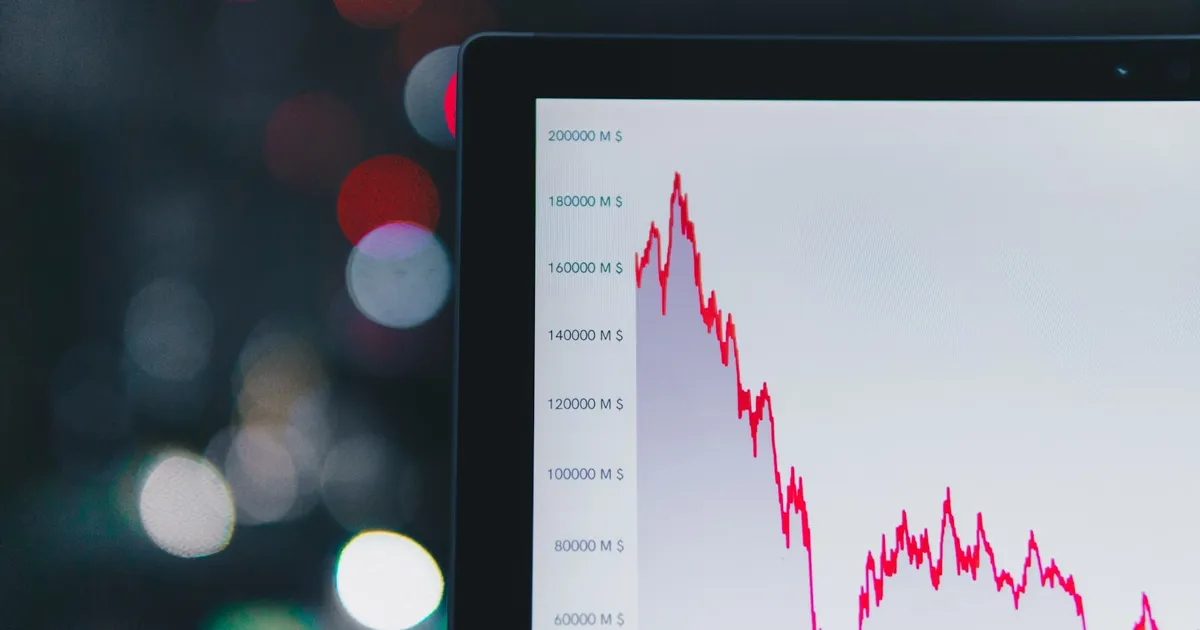
A revenue miss is bad. A revenue miss that says your customers would rather spend their money on someone else’s products is worse. On July 14, 2026, IBM pre-announced disappointing preliminary second-quarter results, and the stock suffered the steepest single-day decline in its recorded trading history. The number that spooked the market wasn’t the size of the shortfall — it was the reason the company gave for it.
What IBM reported
IBM disclosed preliminary Q2 2026 revenue of about $17.2 billion, up roughly 1% year over year but well short of the consensus estimate of around $17.9 billion, with adjusted earnings of $2.93 per share against expectations of about $3.01. The company said final results, along with full segment detail and updated guidance, will arrive with its scheduled earnings report on July 22, 2026. Pre-announcing a week early is itself a signal: companies rarely rush out preliminary numbers unless the gap between expectations and reality is large enough that management would rather control the message than let it leak through the report.
The July 14 pre-announcement, in four numbers
Preliminary Q2 2026 · final results due July 22
Revenue (preliminary)
$17.2B
+1% YoY · ≈$0.7B below the ~$17.9B consensus
Adjusted EPS
$2.93
vs ≈$3.01 expected
Infrastructure revenue
−7%
YoY — the mainframe-led shortfall
Stock, July 14
−25.2%
worst day in records back to 1968
Source: IBM preliminary release and same-day market data; consensus figures as compiled by major outlets (estimates vary slightly by provider).
The market reaction was brutal. IBM shares closed down more than 25%, the worst single day in the company’s recorded trading history — steeper than the 23.7% plunge of October 19, 1987, with records reaching back to 1968. The session erased roughly $67 billion in market value, leaving the company worth just under $205 billion. For a stock that had been treated as a steady, dividend-paying hybrid-cloud story rather than a high-beta AI trade, a drop of that magnitude is a repricing, not a wobble.
The weakness was concentrated in hardware. Infrastructure revenue fell about 7%, dragged down by a shortfall in sales of IBM’s Z System mainframes and the high-margin software that runs on them, particularly in Transaction Processing. Mainframe revenue is famously lumpy — it moves in cycles tied to new hardware generations — but a 7% decline in the quarter was steeper than analysts had modeled, and it landed on the segment IBM can least afford to see soften.
Quarterly revenue (US$B)
Q1 2024 – Q2 2026 · Q2 2026 is the July 14 preliminary figure
The hairline marks the year-ago (Q2 2025) level — after three quarters of accelerating growth, Q2 came in nearly flat. Every figure is in the table below. Source: IBM quarterly results; Q2 2026 preliminary.
The deceleration is what stands out. IBM had just strung together three quarters of accelerating growth — the strongest run of its turnaround — before this print snapped the streak:
| Quarter | Revenue (US$B) | YoY |
|---|---|---|
| Q1 2024 | 14.46 | +1.5% |
| Q2 2024 | 15.77 | +1.9% |
| Q3 2024 | 14.97 | +1.5% |
| Q4 2024 | 17.55 | +1.0% |
| Q1 2025 | 14.54 | +0.6% |
| Q2 2025 | 16.98 | +7.7% |
| Q3 2025 | 16.33 | +9.1% |
| Q4 2025 | 19.70 | +12.3% |
| Q1 2026 | 15.90 | +9.4% |
| Q2 2026 (preliminary) | 17.20 | +1.3% |
Source: IBM quarterly results; Q2 2026 is the preliminary figure disclosed July 14. IBM's fourth quarters are seasonally its largest.
The reason that rattled the market
The headline miss would have been survivable. What turned it into a rout was CEO Arvind Krishna’s explanation.
According to Krishna, an unexpected shift in how clients allocate their budgets was the primary culprit. “In the last few weeks of June, we saw clients shift their quarterly capex spend toward servers, storage, and memory purchases to secure supply-constrained infrastructure ahead of expected price increases,” he wrote. “While we anticipated some supply chain related impact in our expectations, we did not anticipate the magnitude of the capex reprioritization.” In other words, IBM’s customers didn’t cut their IT budgets; they spent them somewhere else — on AI hardware instead of IBM’s traditional software and mainframe stack.
Krishna was unusually blunt about the execution side, too: “These conditions require our teams to execute perfectly, and this quarter we faltered. We did not adapt and move quickly enough, and numerous large deals failed to close on the timelines we expected, driving the majority of our shortfall.”
That framing is what makes this report matter beyond IBM’s own P&L. It is a direct, dollars-and-cents confirmation of the memory supercycle squeezing the entire technology stack. When enterprises pull spending forward to secure supply-constrained AI infrastructure, the money has to come from somewhere — and this quarter, some of it came out of IBM’s mainframe and software lines. The same price pressure driving record profits at the memory makers is now visibly crowding out demand for legacy enterprise IT.
Krishna also pointed to a second distraction: clients, he said, were preoccupied with rapidly evolving industry-wide cybersecurity concerns during the quarter, delaying decisions on the broader software portfolio. “Mythos is making people pause to say, wait, how much do I need to spend on cyber? They’re pausing on new deals until they know,” he told CNBC on Tuesday, referring to Anthropic’s AI cybersecurity model — while insisting, “We don’t see our software being disrupted by AI at all.” That comment rippled straight into the security sector, where it was read as evidence that enterprises are reprioritizing spend toward defense.
Why this is a strategic problem, not just a bad quarter
IBM’s entire multi-year turnaround under Krishna has rested on a specific bet: reposition the company from a hardware-and-services relic into a hybrid-cloud and AI-software business. That’s the logic behind years of portfolio surgery — the Kyndryl infrastructure-services spinoff, the Red Hat acquisition, the steady divestment of lower-margin operations. The pitch to investors was that software and consulting would provide durable, recurring, higher-margin growth while the old mainframe business threw off cash.
And until three weeks ago, the story was working. In the first quarter, IBM’s software revenue grew 11% to $7.05 billion, and the company beat on both earnings and revenue. That makes the Q2 stumble land harder: this isn’t a business that was visibly deteriorating — it’s one that hit an air pocket the moment its customers’ AI purchasing collided with its own sales cycle.
This quarter complicates the story in two ways.
The cash-cow wobbled. The mainframe and its attached software are supposed to be the reliable engine that funds the transformation. A 7% Infrastructure decline driven by deferred hardware purchases raises the question of whether that engine is as steady as the model assumes — or whether it, too, is now exposed to the AI-spending vortex pulling budgets elsewhere.
The AI upside isn’t showing up fast enough to offset it. IBM has its own AI franchise, from watsonx to consulting engagements, and management has repeatedly pointed to a growing book of generative-AI business. But if that book were compounding fast enough, it would have cushioned a soft hardware quarter. Instead, the AI boom appears to be a headwind here — customers are buying other people’s AI infrastructure — rather than a tailwind flowing to IBM.
The read-through to the rest of tech
IBM is the first large enterprise-IT name to put a hard number on a dynamic the market has been debating all year: whether the AI capital-spending boom is purely additive to technology budgets or whether it is beginning to cannibalize spending on everything else.
Tellingly, the damage stayed contained to the names on the losing side of that reallocation. Software stocks sold off in sympathy, but the broader market barely blinked — the S&P 500 finished the day up about 0.4% and the Nasdaq gained 0.9%, as investors rotated the money straight into the AI hardware and cybersecurity names IBM’s warning implicitly endorsed. The market didn’t read this as a demand problem. It read it as a market-share problem.
The bullish framing all year has been that AI is a new layer of spend on top of existing IT — incremental, not substitutive. IBM’s quarter is the first prominent data point suggesting the substitution effect is real at the margin. When a CFO decides to pull forward server and memory purchases to beat price hikes, the budget for that quarter is finite, and something gets deferred. This time it was mainframes and enterprise software.
That is a warning for a specific cohort: legacy enterprise-IT vendors whose products compete for the same corporate budget as AI infrastructure. Companies selling traditional software licenses, on-premise hardware refreshes, and services engagements now have to prove their spend is protected from the gravitational pull of AI capex. The names most exposed to AI hardware demand — the memory makers, the accelerator vendors, the equipment suppliers — are on the winning side of the same trade, which is exactly why the broader chip complex has been so volatile even as its underlying demand runs hot.
What it means
IBM’s July 14 pre-announcement is a small miss with a large message. Revenue came in about $700 million light of expectations and the stock lost a quarter of its value in a single session — its worst day on record — but the enduring takeaway is why: customers redirected budgets toward AI hardware, servers, and memory, and away from IBM’s traditional stack.
The near-term loser is IBM itself, which now has to convince investors on July 22 that this was a one-quarter timing problem — deferred deals and a lumpy mainframe cycle — rather than a structural sign that its transformation is being outrun by the AI spending wave. Watch the full report for three things: whether management reaffirms or cuts full-year guidance, whether the software segment (the heart of the turnaround thesis) held up better than infrastructure, and whether the deferred large deals reappear in the pipeline or simply vanished.
The near-term winners are the AI-infrastructure suppliers IBM’s customers are spending with instead. Krishna’s explanation is, functionally, unpaid marketing for the memory and server vendors: he told the market that enterprises are so eager to secure AI supply that they’ll defer a mainframe purchase to do it. That is bullish for the HBM and DRAM makers and consistent with the demand signals that drove Samsung’s record quarter — even as those same stocks whipsaw on valuation nerves, as we’ve tracked in why Micron’s stock keeps swinging.
The broader signal for investors is the one worth internalizing before the coming earnings season: the AI trade is not neatly ring-fenced. It is pulling corporate spending toward itself and away from everything that isn’t AI, and the first companies to report the drain will be the ones whose products sit closest to the budget line item that AI is eating. IBM went first. It will not go last. When judging any legacy tech name this quarter, the question is no longer just “how are sales?” — it’s “how much of your customer’s budget did AI take?” On that measure, the market just marked IBM down hard, and it will be watching the rest of the sector for the same tell.
Keep reading
 Kurumi · · 6 min read
 Broadcom Q3 2026 Earnings: AI Chips Triple, Stock Dips
Broadcom's fiscal Q3 2026 revenue hit a record $29.6B as AI chip sales more than tripled to $16.7B, but light Q4 guidance sent the stock lower.
Kurumi · · 5 min read Marvell Q2 Earnings: Record $2.74B, Raised Guidance
Marvell posted record Q2 FY2027 revenue of $2.74B on a 46% data center surge, raised its outlook again, and guided Q3 to $3.15B. The numbers and what they mean.
 Kurumi · · 6 min read
 Alibaba Earnings: AI Cloud Jumps 45%, Profit Drops 75%
Alibaba's June-quarter revenue rose 9% and cloud grew 45% on AI demand, while net income fell 75% as capex surged to nearly $10B. Full breakdown.