Anthropic $1.2 Trillion Valuation: How It Passed OpenAI
Anthropic shares now trade at a $1.2 trillion implied valuation on secondary markets, passing OpenAI. What's driving the surge, and why it may not hold.
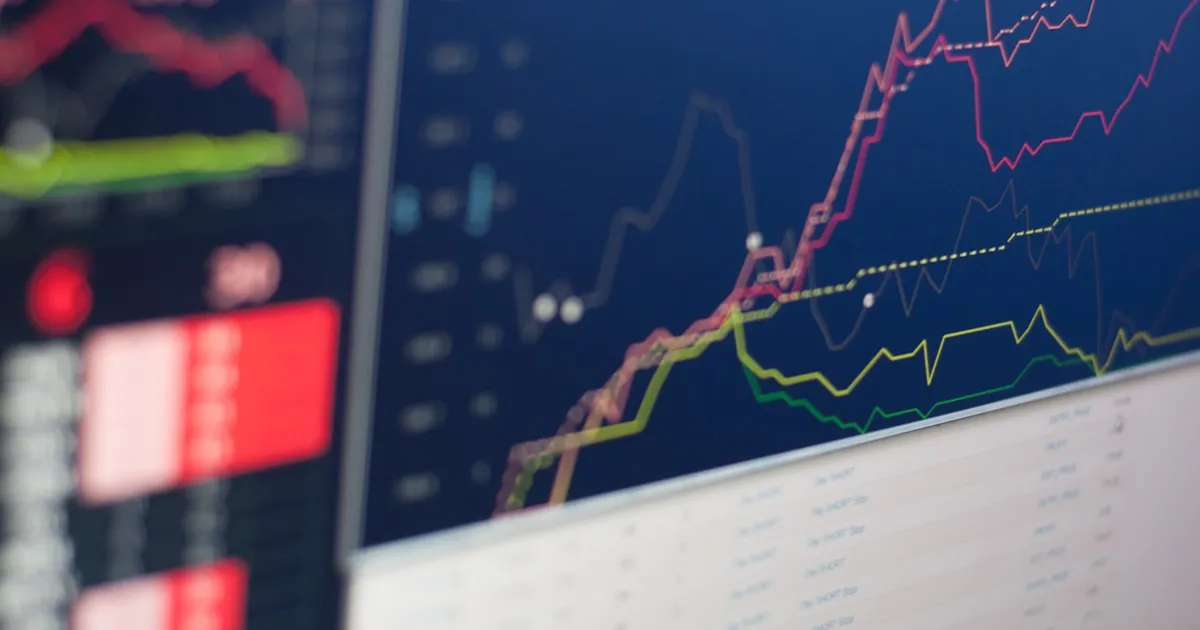
Anthropic has quietly claimed a title that would have seemed implausible a year ago. Shares in the maker of Claude are changing hands on private secondary markets at an implied valuation of roughly $1.2 trillion — a level that, for the first time, pushes it past rival OpenAI, whose shares trade at approximately $908 billion on the same platforms. The move, first reported around July 9, 2026, reflects a roughly 550% surge in Anthropic’s implied worth over about a year.
The figure did not come from a new fundraising round or an official company disclosure. It emerged from the murky, demand-driven world of venture secondaries — the informal market where employees and early investors sell existing shares to buyers hungry for exposure to the AI boom. That distinction matters, and it is the key to understanding both how impressive the number is and how much weight to put on it.
A price set by scarcity, not a new round
Anthropic’s most recent primary fundraising — a Series H that closed in late May — valued the company at $965 billion and raised about $65 billion, the same round in which Micron took a strategic stake. The $1.2 trillion figure sits well above that, and it was not set by a lead investor negotiating terms. It was set by whoever is willing to pay the most for the few shares anyone is willing to sell.
Javier Avalos, CEO of the trading platform Caplight, confirmed that shares are trading at the $1.2 trillion level and called Anthropic “the most sought-after company the venture secondary market has ever seen.” Glen Anderson, CEO of Rainmaker Securities, said his firm is seeing trades at the same implied valuation — but stressed a crucial caveat: completed transactions remain rare. Almost no one is selling.
That scarcity is the engine behind the headline. When demand vastly outstrips the supply of available shares, the clearing price can climb far above what a broad, negotiated primary round would produce. In Anthropic’s case, employees and early backers are largely choosing to hold, betting the company is worth more still. The result is a price discovered by a handful of trades rather than by the market as a whole — a number that is real, but thin.
How Anthropic got here
The valuation would be a curiosity if the underlying business were not growing so fast. Anthropic enters this moment with roughly $47 billion in annualized revenue, driven heavily by enterprise adoption of Claude and, in particular, its coding assistant Claude Code. The company reported profitability in the fourth quarter of 2025 and has framed itself as a business already making money on current operations.
The contrast with OpenAI is the story the market is pricing. The two labs have diverged in strategy: Anthropic sells enterprise contracts to businesses, while OpenAI’s revenue leans on consumer subscriptions. OpenAI’s self-reported revenue sits in the $25 billion to $33 billion range for 2026 — a very large number in absolute terms, but below Anthropic’s run rate, and OpenAI has not reached profitability or offered a timeline for when it will.
Developer traction is the sharpest edge of Anthropic’s case. The rise of agentic coding tools has turned Claude into a default choice for a growing share of engineering teams, a shift reflected across the state of AI coding assistants in 2026. Revenue tied to how much work a model actually does — tokens consumed on real tasks — scales differently than a flat monthly subscription, and investors are extrapolating that curve aggressively.
What a secondary-market price actually means
It is worth being precise about what the $1.2 trillion number is and is not. A secondary-market valuation is an implied figure: take the per-share price of a completed trade and multiply it across the company’s share count. It is not a valuation the company set, not one an auditor blessed, and not one that priced a large block of stock.
Three features make these prices unreliable as a true measure of worth:
- Thin volume. When only a few shares trade, a small number of motivated buyers can set a price that a deep, liquid market would never sustain.
- Selection bias. The sellers who do transact are not a random sample; the people most convinced of the upside simply hold, which skews the available supply toward higher prices.
- No downside test. A primary round forces a large investor to commit real capital at a negotiated figure. A secondary trade of a few shares faces no such discipline.
None of this makes the number meaningless — a market this lopsided toward buying is itself a signal of extraordinary demand. But the gap between a $965 billion primary round in May and a $1.2 trillion secondary print in July is better read as a measure of scarcity and enthusiasm than as a firm revaluation of the company. For a primer on why market values swing on sentiment as much as fundamentals, see our explainer on market capitalization.
The IPO on the horizon
The secondary frenzy is unfolding against a bigger backdrop: Anthropic filed a confidential IPO prospectus with the SEC in early June, a step we covered when Anthropic filed to go public. That filing puts the company on a path to let public investors — not just a closed circle of insiders and secondary buyers — price its shares directly.
That public test is what will ultimately settle the debate the secondary market can only gesture at. An IPO forces disclosure of the numbers that matter most: gross margins, customer concentration, the size of long-term compute commitments, and the durability of that $47 billion run rate. It also introduces price discovery at scale, with a broad base of buyers and sellers rather than a handful of trades.
The timing is not incidental. A record wave of venture funding in the first half of 2026 has poured capital into AI, and the largest labs are racing toward the public markets in part to secure durable access to the capital their compute bills demand. Anthropic’s secondary-market surge is the private market’s way of front-running that debut.
What it means
The $1.2 trillion figure is a genuine milestone and a warning label at the same time — a real trade at a real price, discovered in a market too thin to fully trust.
Who benefits. Anthropic’s employees and early investors hold paper worth dramatically more than it was a year ago, and the company gains a powerful narrative heading into its IPO: it is not only growing revenue faster than OpenAI but is now the more valuable company by the private market’s own reckoning. Enterprise customers reading these headlines get further reassurance that Claude is a durable platform to build on.
What’s genuinely at stake. The number reframes the OpenAI–Anthropic rivalry from a technology race into a business-model verdict. Anthropic’s enterprise-and-developer strategy is, for now, converting into revenue and profitability faster than OpenAI’s consumer approach — and the secondary market is rewarding that divergence with a $290 billion-plus premium.
What to watch next. The real signal will not be the next secondary print but the IPO prospectus, where audited financials replace implied valuations. Watch whether completed secondary transactions actually increase — a sign the scarcity is easing — or stay rare, which would suggest the $1.2 trillion price is more aspiration than market. And watch the margin lines when they finally surface: a frontier lab’s value ultimately rests not on how fast revenue grows, but on how much of it survives the cost of serving every query.
Tagged
Keep reading
 Kurumi · · 5 min read
 Anthropic IPO: Investors Want Revenue-Per-Token Data
Ahead of Anthropic's IPO, would-be investors are demanding granular metrics like revenue per token and per gigawatt of compute. Here's what the numbers show.
 Kurumi · · 6 min read
 Anthropic $30 Trillion TAM: The IPO Pitch, Explained
Anthropic is pitching IPO investors a $30 trillion total addressable market and a valuation near $2 trillion. Here's what's behind the number and the risks.
 Kurumi · · 6 min read
 Anthropic Hits $65B Run Rate Ahead of Its Fall IPO
Anthropic told investors its annualized revenue run rate reached $65 billion in July, up from $47B in May, as it lines up a record fall IPO. The numbers.